Puglia / PLACES, FOOD, CULTURE
Bisceglie: stone across different ages
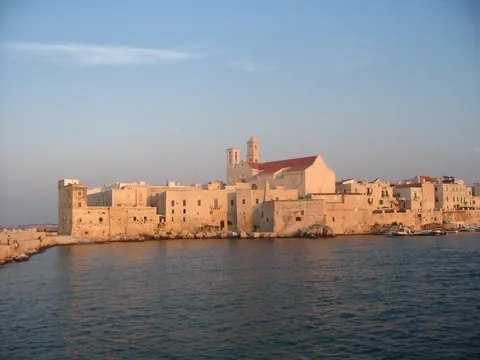
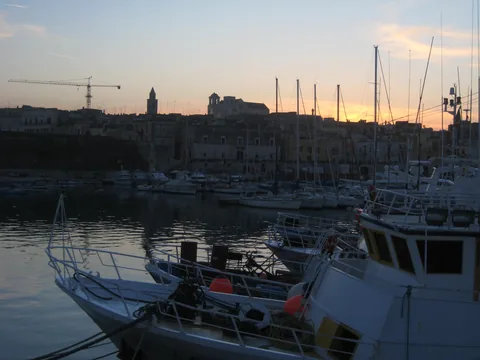
Bisceglie invites you to look beyond the harbour: the rural landscape preserves funerary traces and settlements, the centre tells of other ways of living, and pastry gives local craft a recognisable name. The journey finds a thread in materials and gestures. A great stone slab, a narrow street and a light cake belong to different ages, yet all invite a question: how have people given shape to this place?
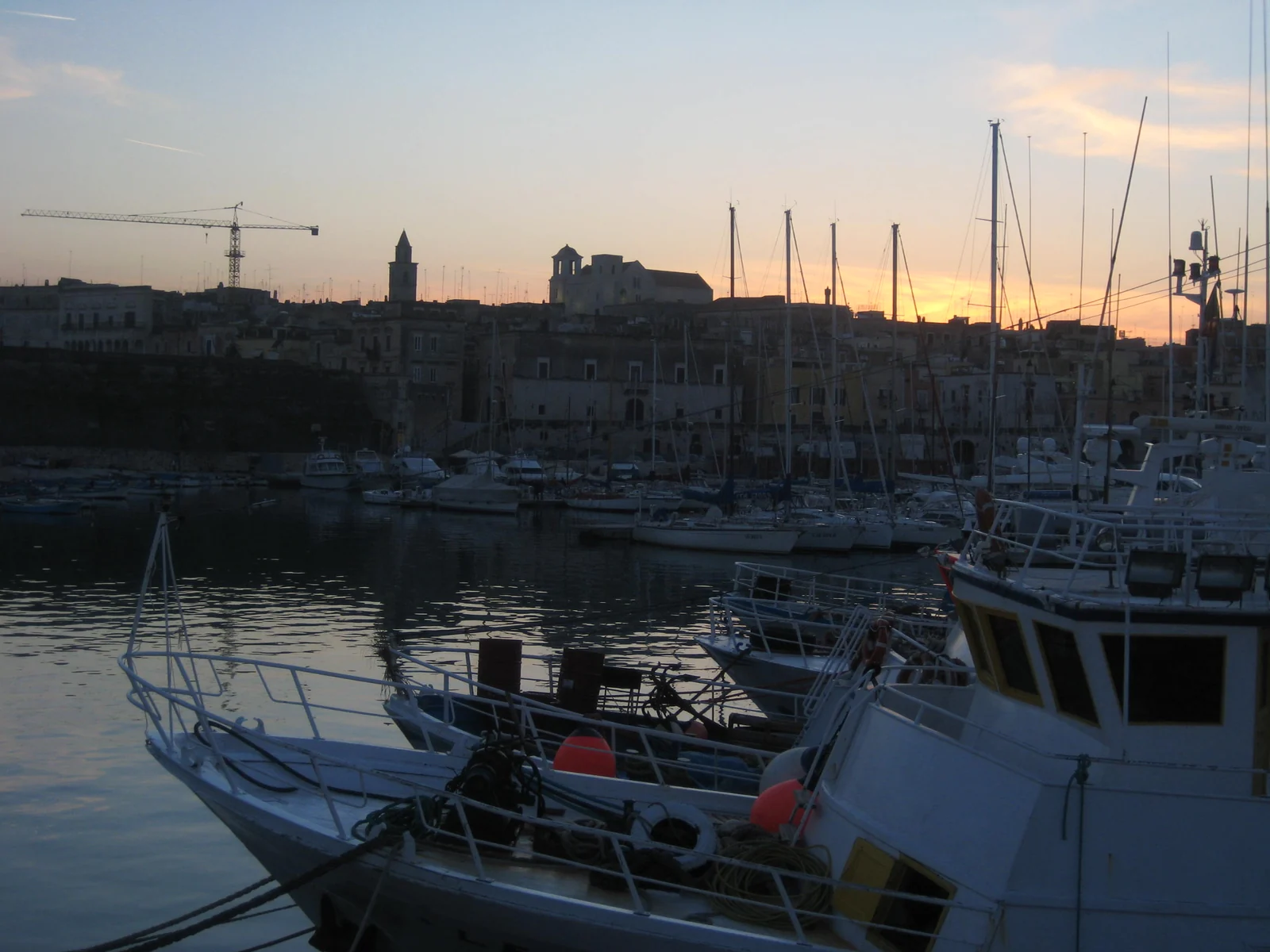
Photo: Geppisimone at Italian Wikipedia · Wikimedia Commons · CC BY-SA 3.0 · Resized and converted to WebP.
La Chianca: reconstructing a space, not a mystery
La Chianca is a Bronze Age passage tomb, consisting of a burial chamber and a slab-lined approach. Its covering mound no longer survives, so today’s appearance differs from the original. Early twentieth-century investigations found multiple burials. Begin with that function: examine entrance and chamber, then imagine how the missing stone mound changed the relationship between inside and outside. The visit gains substance without resorting to esoteric interpretations.
The countryside: rural settlements give another scale
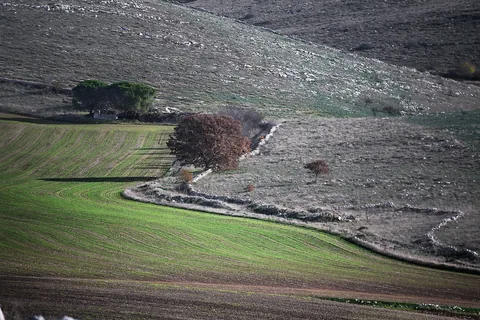
The municipality describes the casali as small medieval settlements with fortified boundaries, church and cemetery. Zappino preserves a small church and buildings; San Nicola has spaces gathered around a courtyard. These examples show that the coastal centre was not the territory’s only organising point. Rather than an indiscriminate circuit of buildings, choose a focus connecting habitation, protection and collective life. Comparison with the dolmen makes changes in the form of a community visible.
From the streets to the co-cathedral
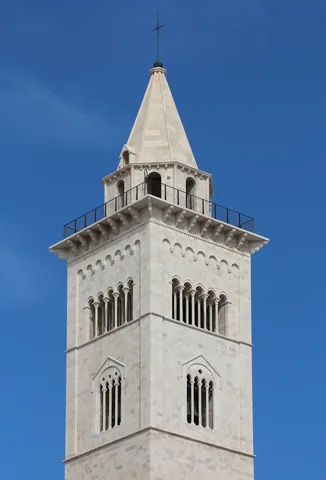
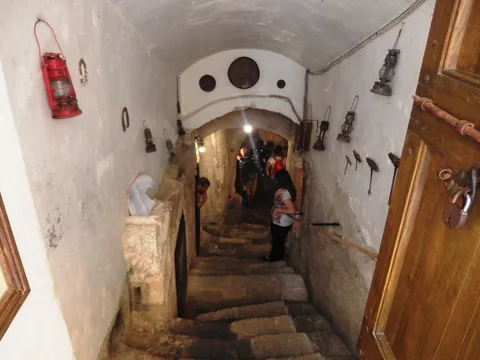
Narrow streets, vaults spanning passages and the relationship with the harbour introduce a more intimate scale in the old centre. The co-cathedral of Saint Peter has three naves and a transept above the crypt: recognising these parts helps read the church without turning the visit into architectural terminology. Examine the transition from street to entrance, then how movement changes inside. Stone creates different places, shaping routes of daily life and worship as well as monuments.
Sources: Comune di Bisceglie — monumenti e luoghi d’interesse
Sospiro: recognising the pastry maker’s work
Bisceglie’s sospiro combines sponge, custard and icing. The municipal page distinguishes its documented preparation from an unsupported legend involving Lucrezia Borgia’s wedding. Keep that distinction at the table: an appealing story should not become a fact. In tasting, look at the relationship between light casing, filling and coating, noticing what holds the cake together. The stop then explains real craftsmanship, with curiosity extending beyond the name or anecdote.
Sources: Comune di Bisceglie — Il Sospiro
Where to taste it: Bar Cattedrale
Bar Cattedrale at via Cardinale dell’Olio 25 lists the large sospiro and classic smaller version, alongside coffee and limoncello variations. For a first encounter, start with the classic and leave other flavours for a later comparison. This is an identifiable pastry shop to include among the journey’s editorial references, not a declared Apulica partner. The site also presents an Easter range: on a seasonal food journey, the calendar can frame questions for the workshop without implying an already arranged tasting.
How Apulica helps: a purposeful stop
We can shape the day around rural archaeology, the old centre and a pastry stop, adjusting the depth to the travellers. Those arriving from Molfetta can compare two coastal towns without repeating the same sequence; continuing to Trani brings religious architecture into a different relationship with the sea. Over several days, give the countryside time for an interpreted visit and the centre time for a walk with a seated pause. The coast remains a complement to the inland journey, rather than a race between harbours.
YOUR JOURNEY
How to shape a journey here
We can design a stop connecting dolmen, old centre and pastry, with heritage interpretation and time for the sospiro along a route between Molfetta and Trani.
Talk to us about it


.jpg)
