Puglia / PLACES, FOOD, CULTURE
Trani: stone, history and the sea
In Trani, stone connects the sea with histories of worship, defence and trade. The cathedral is not the whole journey: the castle reveals changing defensive needs, Jewish heritage adds other forms of urban life, and Moscato turns attention towards the countryside. A coastal ending can remain a day of discovery, with the harbour as a place to return between visits.
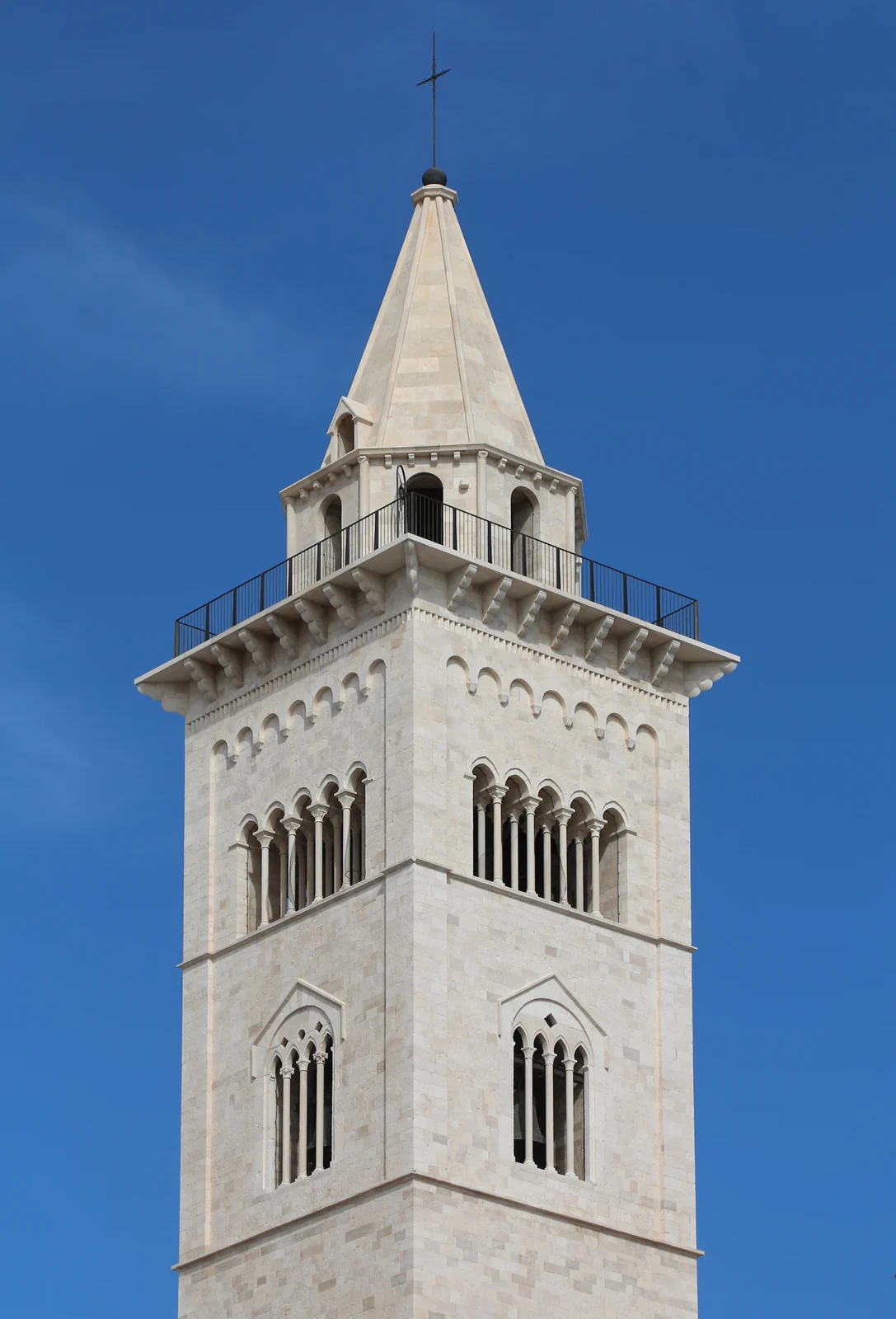
Photo: Bernard Gagnon · Wikimedia Commons · CC0 · Resized and converted to WebP.
The cathedral: light, stone and levels
The basilica is built from pale limestone quarried locally. It occupies the site of an earlier cathedral, whose San Leucio chapel and fragments of mosaic survive. Construction dedicated to Saint Nicholas the Pilgrim began in 1099. The high, light-filled crypt differs from the usual image of a hidden underground room; its columns and levels belong to a design responding to the sea. Exterior and interior reveal an architectural solution as well as a scenic position.
The castle: defence changes meaning
The castle built under Frederick II has a quadrangular plan with square corner towers. The bay and shallow water contributed to natural protection. Firearms brought changes to wall thickness and bastions; in the nineteenth century the building became a prison. Halls, courtyards and cells therefore reveal different uses of one complex. Stone and ceramic finds in the museum help imagine life behind a structure that appears primarily military from outside.
Sant’Anna: one building, several communities
The Sant’Anna synagogue museum interprets Jewish community history through a building later converted into a church. Its architecture belongs to the display: a place of worship, study and civic gathering became a space with a different religious purpose. The visit traces those changes without reducing Jewish memory to a map label. Look for traces still legible after the change of purpose: this question shifts attention from a museum label to the concrete history of the space.
Moscato: the harbour looks inland
Moscato di Trani DOP is based on Moscato bianco and includes Dolce Naturale and Liquoroso styles. The grape-growing area extends beyond the town to Bisceglie, Andria and other inland centres. Golden colour and aromatic character invite a different tasting from Puglia’s reds. Compare aroma, sweetness and mouthfeel without turning wine into a test of expertise. The designation chiefly connects a coastal town with its surrounding production landscape.
Our approach: choose a second chapter
Begin at the cathedral, studying the exterior before its levels. After walking by the harbour, choose the castle or Jewish heritage: the former develops defence and change, the latter community and worship. One carefully understood second visit can be more telling than rushing through both. At the table, Moscato can conclude the movement from stone to countryside. Leave time to return to the harbour and compare the first impression with the histories encountered: a second observation is part of recognising a town.
Connections: coast or Frederick II’s landscape
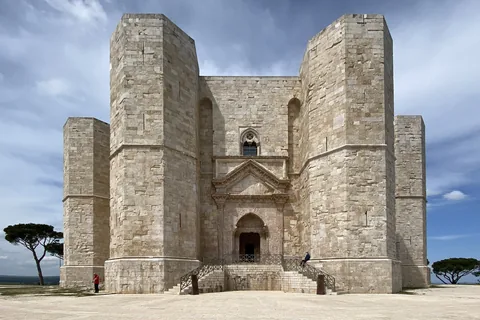
Giovinazzo and Molfetta provide comparisons with other coastal towns, but the journey need not remain along the shore. Andria and Castel del Monte change the scale, from a fortress by the bay to a monument in the inland landscape. Choose this connection to follow Frederick II’s history; Bisceglie instead combines town, countryside and stone archaeology. Let the theme determine the continuation, rather than the number of places that can be crossed.
YOUR JOURNEY
How to shape a journey here
We can design a day connecting the cathedral, a second cultural visit and a Moscato tasting, with onward links to the coast or Frederick II’s inland landscape.
Talk to us about it