Puglia / PLACES, FOOD, CULTURE
Giovinazzo: the sea within a story
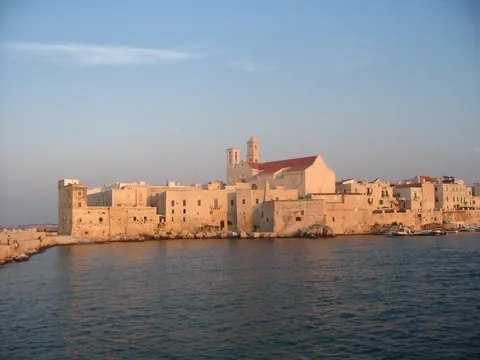
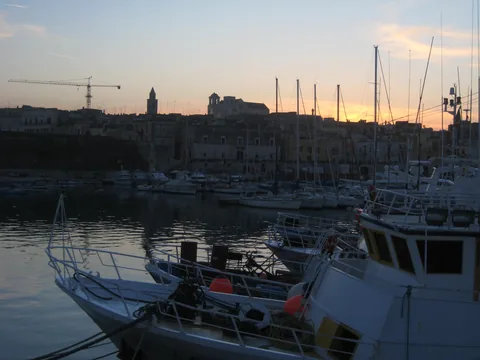
Giovinazzo is a coastal town that also looks towards its countryside. Harbour, cathedral and streets are more than a backdrop for resting after an inland journey: they reveal work, devotion and everyday life. Pizzella and olive oil provide a tangible entry into its food. An Adriatic ending can preserve the journey’s thread while changing pace and keeping people in view.
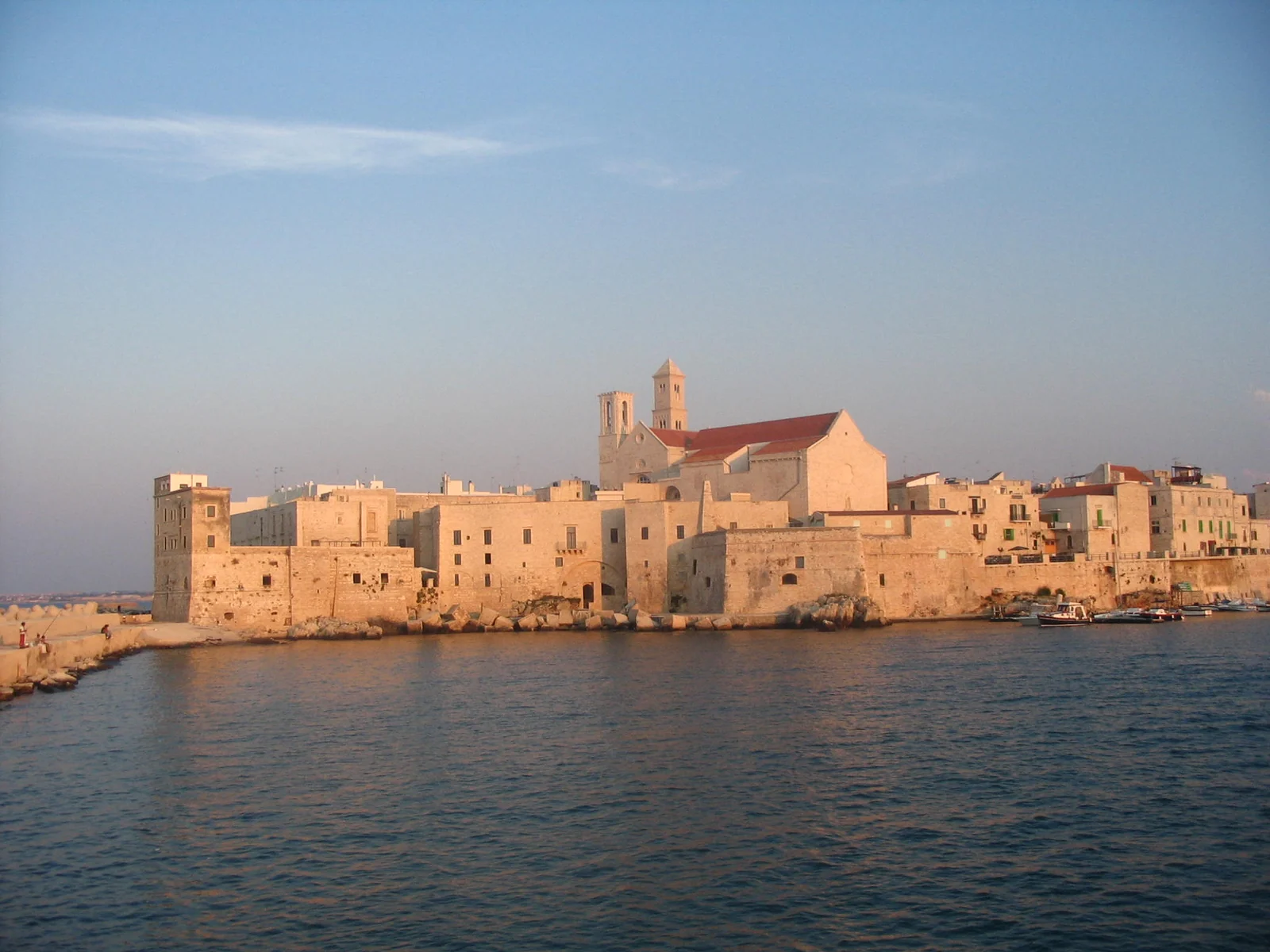
Photo: salviF · Wikimedia Commons · CC BY 2.0 · Resized and converted to WebP.
From harbour to square: two scales of town
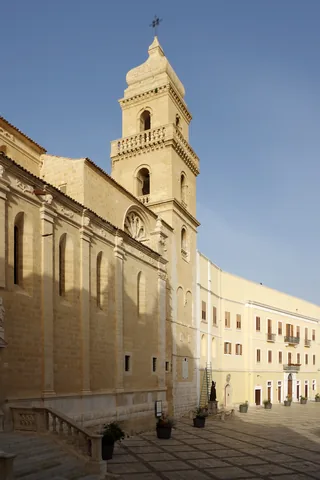
The old centre gathers beside the small harbour. Piazza Duomo brings together the cathedral and the Ducal Palace commissioned by Nicolò Giudice in the seventeenth century: religious and civic power occupy the same space. Different-period materials and capitals in the cathedral route also recall reuse. Follow these contrasts rather than looking only for sea views. Harbour, square and lane serve different purposes and invite different kinds of attention.
Sources: Discover Giovinazzo — visita della città; portale richiamato dal Comune
The cathedral: recognising change
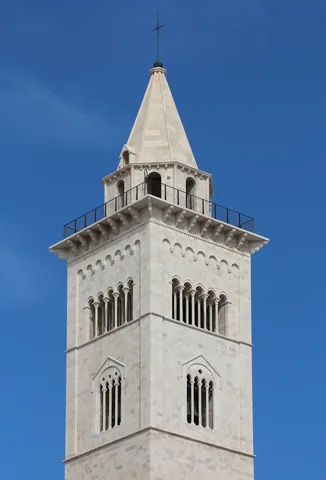
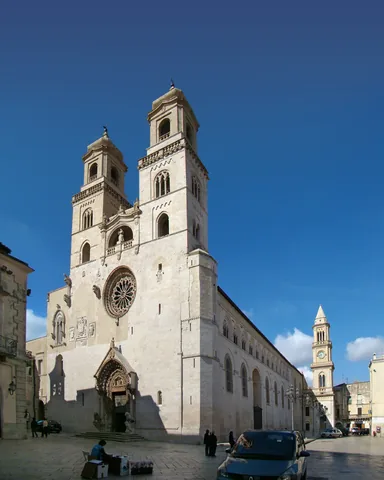
The Co-Cathedral of Santa Maria Assunta originated in the Norman period, but its present form reflects later changes. Two apsidal towers define the silhouette seen from the sea. Inside, three naves, chapels and different vaulting reveal enlargement and adaptation, particularly in the eighteenth century. The crypt, presbytery and outer transept preserve medieval evidence. Not every apparently old feature belongs to the same period: recognising this distinction avoids treating the church as one unchanged Romanesque image.
Pizzella and oil: work enters the stop
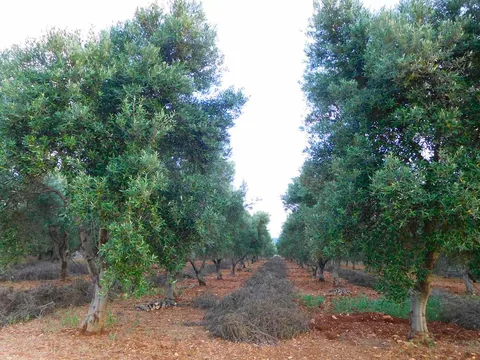
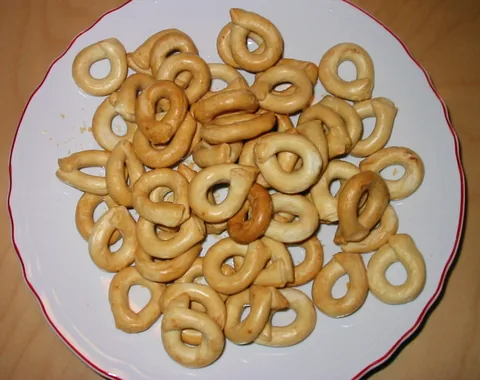
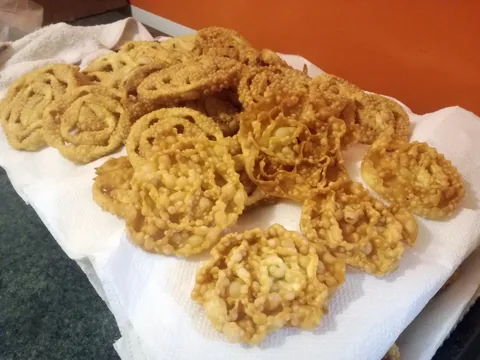
Pizzella is a local bakers’ product, crisp outside and soft inside, with tomato and no mozzarella. The town’s portal distinguishes it from both pizza and focaccia. Olive-growing adds another kind of work: local varieties include Ogliarola barese and Coratina. Gelato, granita and spumone also belong to the sweet traditions described by the town. These foods need no ceremonial lunch; they offer a simple stop where texture and everyday use matter as much as the speciality’s name.
Celebrations as neighbourhood memory
The historical procession accompanies the celebration of Madonna di Corsignano. The Fires of Saint Anthony bring bonfires into neighbourhoods, while the Gamberemo Palio connects districts through competitions including a regatta. These are different forms of participation, from devotion to shared competition. Knowing them reveals streets and harbour as community spaces even when a visit does not coincide with a festival. A particular edition’s calendar remains separate from the tradition’s history.
Sources: Comune di Giovinazzo — cultura, gastronomia e territorio
Our approach: return to the same view
Start at the harbour, cross the centre to the cathedral, then return to the water. The second view is not a repeat of the first: understanding square and interiors gives the skyline meaning. A pizzella stop can sit between the two walks; for food enthusiasts, comparing olive oils adds the agricultural side without multiplying dishes. At a journey’s end, leave real space to sit, revisit a street or choose one additional church. Unscheduled time is part of learning the place.
Connections: Molfetta, Trani and inland
Molfetta offers a nearby comparison between old centre, worship and sea; Trani emphasises cathedral and castle. Choose one comparison according to interests rather than linking every harbour automatically. Altamura and Gravina change the question: grain landscapes and inhabited rock lead here to a coastal town. San Silvestro dolmen, covered in our separate article, adds a reading of stone in the countryside. Giovinazzo retains its identity rather than becoming merely the final night before departure.
YOUR JOURNEY
How to shape a journey here
Harbour, cathedral and pizzella: an Adriatic ending connecting coastal town and olive-growing countryside.
Talk to us about it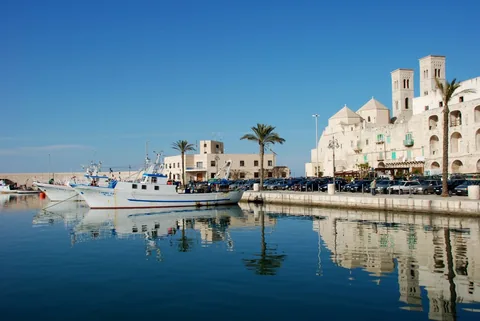


.jpg)

