Puglia / PLACES, FOOD, CULTURE
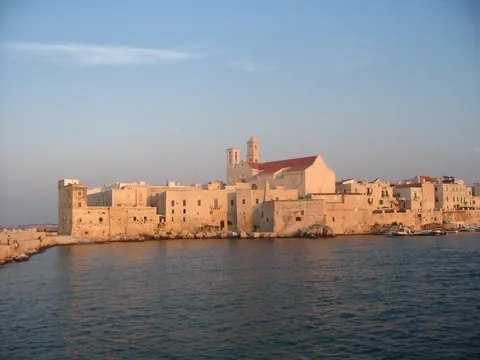
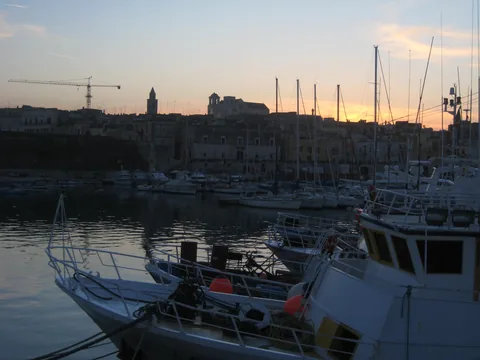
Molfetta: harbour and domes
Molfetta brings together three ways of looking: the church’s outline by the harbour, works made for a community and traces of labour preserved inland. The coast is not separate from the rest of Puglia; it offers another perspective on living, producing and telling stories. For our journey, we choose a main focus and let a walk and a meal carry it forward.
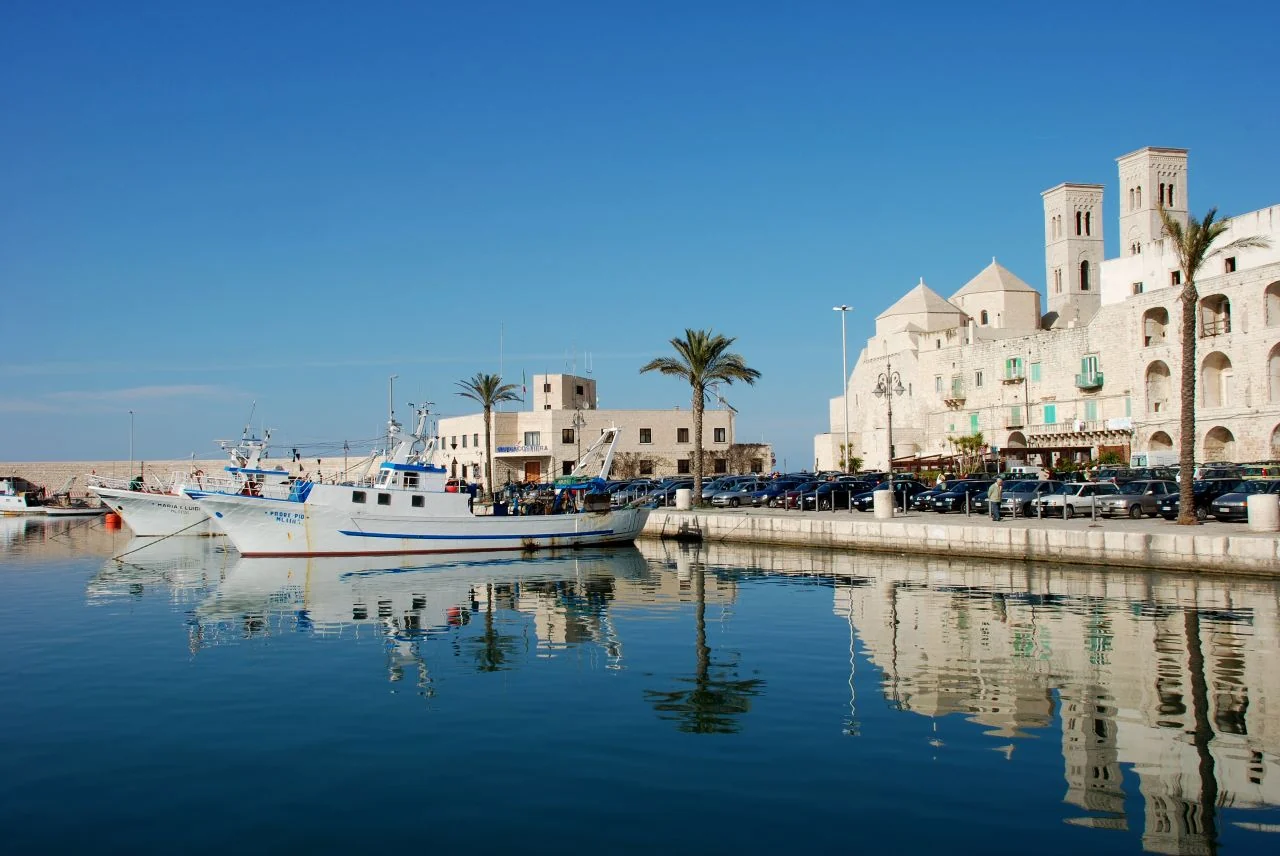
Photo: The original uploader was Michele Zaccaria at Italian Wikipedia. · Wikimedia Commons · CC BY-SA 2.0 · Resized and converted to WebP.
The church: look first, then enter
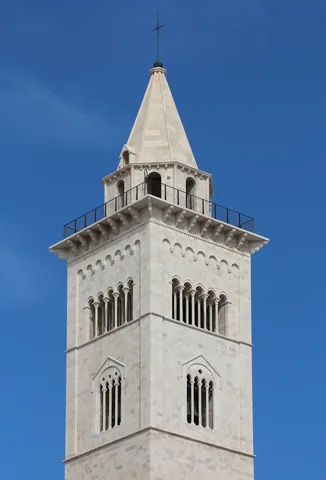
Three aligned domes and two towers make the Duomo Vecchio of San Corrado recognisable. It is distinct from the city’s cathedral, so the word “duomo” can mislead travellers expecting a single building. From the harbour, examine its volumes before moving inside. Notice how a church’s presence changes with the viewpoint. This simple exercise also makes a later comparison with Trani’s cathedral more legible.
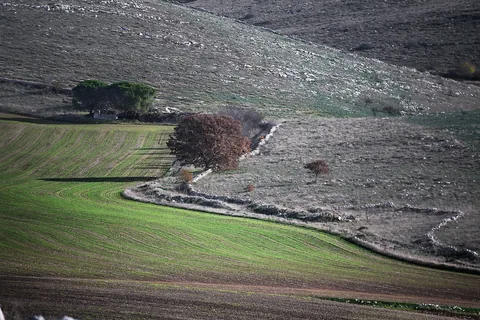
The Pulo: landscape and production before the town
The Museo Civico Archeologico del Pulo in Casina Cappelluti brings together finds from the Pulo and the Azzollini site. Its displays connect landforms with human history: Neolithic life, stone and pottery working, domestication, and later the Capuchin convent and Bourbon saltpetre works producing material for gunpowder. These are very different uses of one place. Look for people’s practical choices in the objects rather than reducing prehistory to a distant date.
Sources: Comune di Molfetta — Museo Civico Archeologico del Pulo
Painting: a work returns to its community
The diocesan museum’s picture gallery includes the Dormitio Virginis attributed to Marco Cardisco. The panel was intended for the old cathedral’s high altar at Bishop Giacomo Ponzetti’s request; the museum places it around 1530–1532. This connection allows a walk through town to continue in a work linked to the building just seen. Prior knowledge of the painters is unnecessary: ask who commissioned it, where it belonged and what the image meant to those who saw it.
When to go: food also follows the calendar
Around Easter, the Puglian tradition includes scarcelle: sweet biscuits with an embedded hard-boiled egg and sugar decorations. The regional atlas places preparation in Holy Week or the preceding week. This is a food reason to choose that period, not a speciality exclusive to Molfetta. A tasting can distinguish a shared tradition from individual bakeries’ interpretations.
Sources: Atlante PAT Puglia — Scarcelle
Where to eat: one table to consider
Il Vecchio Gazebo at via Marconi 18/20 describes itself as a restaurant and pizzeria, with long-fermented dough and cooking that reinterprets Puglian preparations. It is a concrete editorial reference for a dinner distinct from a quick tasting during the walk. Consider it after choosing the day’s character: contemporary dining can be relevant even on a heritage-focused route. Mentioning it implies no commercial relationship with Apulica; the menu and proposal for your group must relate to your dates.
How we connect it: a coastal return with substance
We suggest Molfetta after an Alta Murgia day, or along the route between Giovinazzo and Bisceglie. The theme determines the sequence: art-minded travellers can pair the church with the gallery, while landscape interests can give more time to the Pulo and its museum. We would not fit every focus into one afternoon. Apulica can design the transition inland-to-coast with interpretation, transfers and a meal: the value lies in connecting encounters rather than multiplying admissions.
YOUR JOURNEY
How to shape a journey here
We can design a day connecting architecture, museum and dining, or a focused Pulo visit, linking Molfetta with Giovinazzo, Bisceglie and the Murgia inland.
Talk to us about it