Puglia / PLACES, FOOD, CULTURE
Gravina: a town to explore in depth
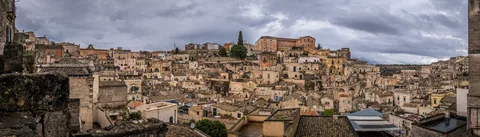
Gravina invites you to see stone as a space put to use: excavated for living and worship, crossed to connect two banks, built to house a collection. The pastoral landscape adds food history, with a cheese whose shape and maturation distinguish it from ordinary caciocavallo. The thread of the visit is the relationship between materials and purposes, from rock to table.
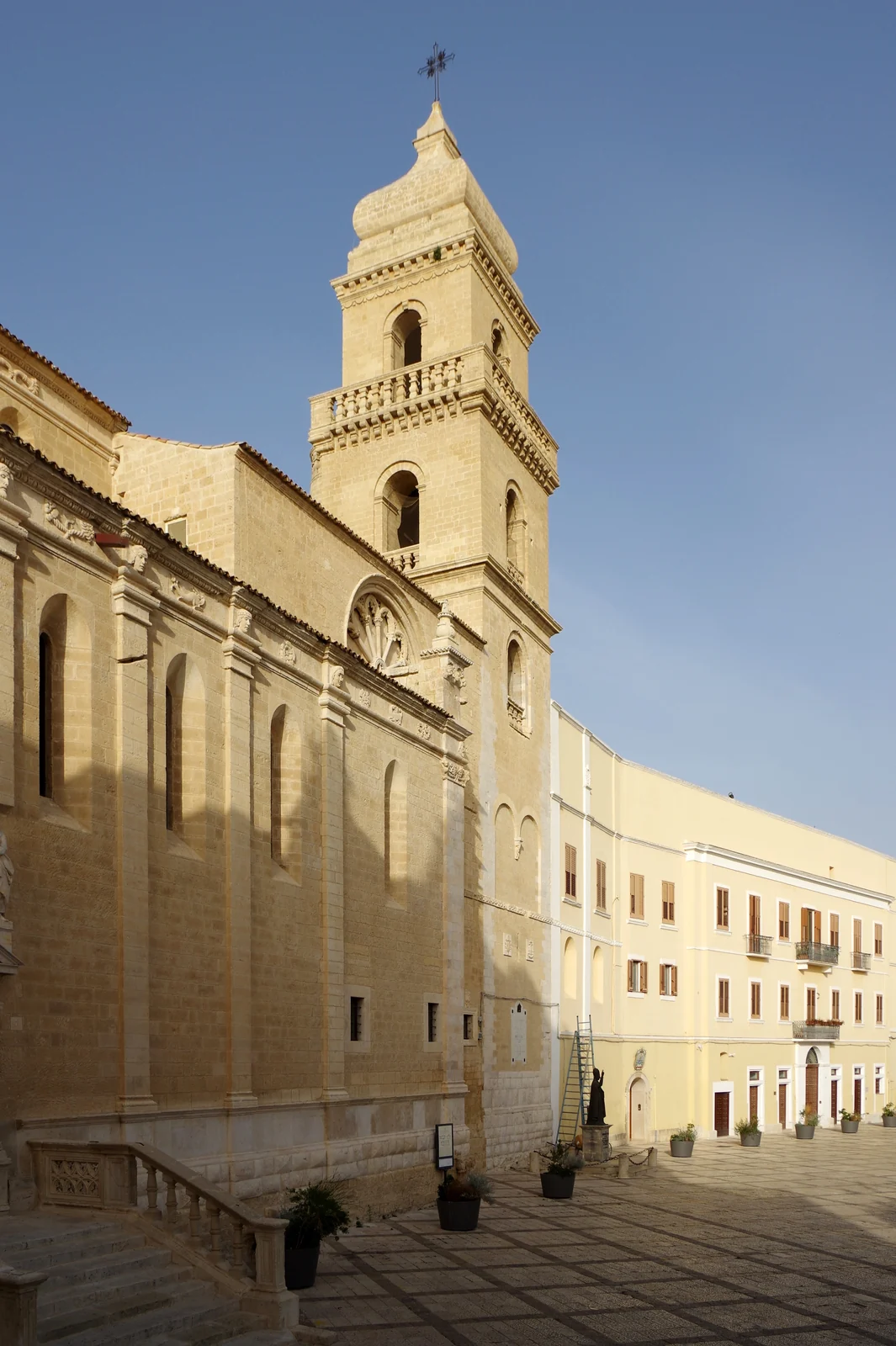
Photo: Berthold Werner · Wikimedia Commons · CC BY-SA 3.0 · Resized and converted to WebP.
Rock: living, worship and movement
Piaggio, Santovito and the rock church of San Michele reveal a town using stone as living and religious space. Botromagno adds an earlier archaeological history; the San Vito Vecchio frescoes preserved in the museum introduce another relationship between wall and image. Gravina was also an important stopping place on pastoral routes from Lucania. Town and countryside are not separate stories: movement of people and animals belonged to the territory’s life.
The bridge: reading a need
The aqueduct bridge connects the ravine’s banks and the sanctuary of Madonna della Stella. Its interest extends beyond the view: it makes visible the problem of crossing an incision in the ground while keeping places connected. Before focusing on the most photogenic arch, consider the approaches on both sides and their relationship with the town.
A palace, a school and a collection
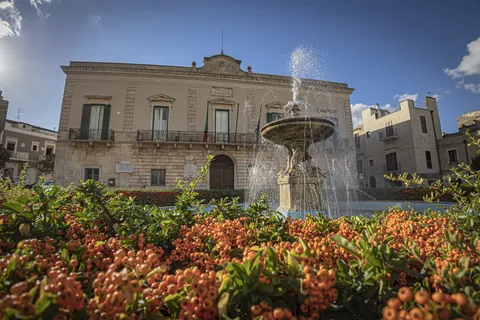
Ettore Pomarici Santomasi’s bequest included the palace and a farm. The Foundation established in 1920 combined an agricultural and dairy school, museum and library: a project linking knowledge with work. The complex now contains a museum, picture gallery, library and archive. Its agricultural origins offer a different perspective on a historic home: the collection began not merely to display objects, but within a commitment to the territory.
Sources: Ministero della Cultura — Fondazione Pomarici Santomasi
Pallone: a shape with a story
Pallone di Gravina is a round cow’s-milk stretched-curd cheese without caciocavallo’s small neck. The Slow Food Presidium promotes raw-milk production and the possibility of extended maturation. After stretching and brining, ageing changes texture and aromas; tradition also recalls caves used for storage. The name alone does not explain a tasting: young and mature examples show different textures and intensities. Transhumance connects the cheese with Murgia pastures.
Our approach: from the edge to the table
Begin with the relationship between town and ravine, understanding the ground before entering buildings. Then choose a focus: rock spaces or the museum, depending on an interest in environments or images. The bridge becomes a passage in the story rather than an isolated stop. At the table, compare Pallone with bread, asking about maturation and observing changes in texture. Two kinds of work meet: transforming milk and transforming grain. This sequence creates a recognisable memory rather than relying entirely on a list of monuments.
Two Murgia towns, then Matera
Altamura offers the most direct comparison, shifting attention to bread and prehistoric food. Alta Murgia reveals the working landscape between towns; Matera develops the theme of dwelling in rock. Avoid treating Gravina merely as an introduction to the Sassi: it has a cuisine and history of its own. If continuing towards Matera, give the next town a separate day so the comparison remains clear.
YOUR JOURNEY
How to shape a journey here
Inhabited rock, bridge and agricultural culture: discover Pallone di Gravina after understanding land and work.
Talk to us about it


.jpeg)

