Puglia / PLACES, FOOD, CULTURE
Altamura: bread and the town
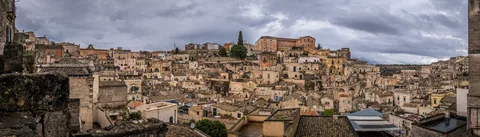
In Altamura, bread is not a break between monuments: it connects work in the countryside with life in town. The medieval centre, prehistoric evidence and baking offer different scales of the same territory, from deep time to a freshly cut loaf. The visit becomes meaningful when these elements speak to each other rather than becoming three unrelated stops.
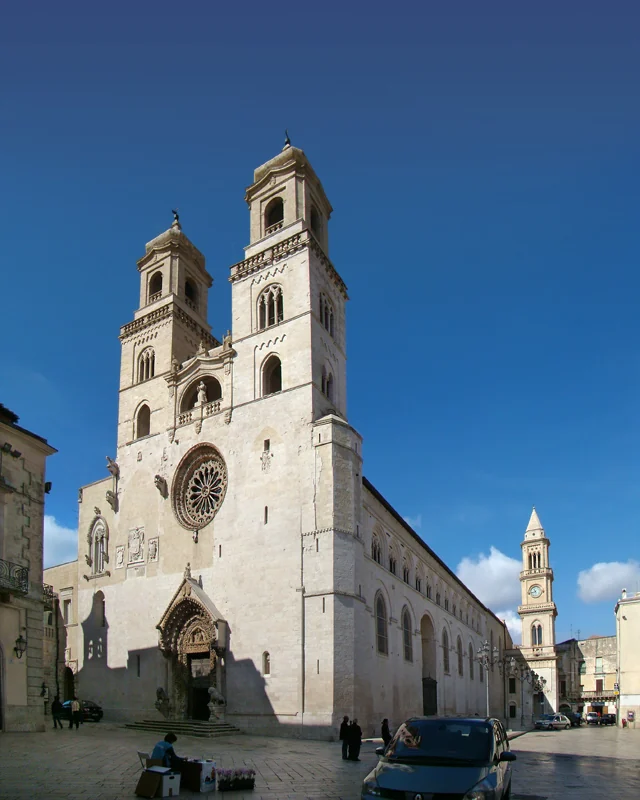
Photo: Tango7174 · Wikimedia Commons · CC BY-SA 4.0 · Resized and converted to WebP.
Town: from monument to courtyard
Frederick II’s cathedral structures the medieval centre; the claustri introduce a smaller scale of shared spaces. The megalithic walls belong to an earlier history. These layers should not be conflated: the town has several origins and forms, visible in relationships between streets, boundaries and gathering places.
Bread: ingredients and everyday life
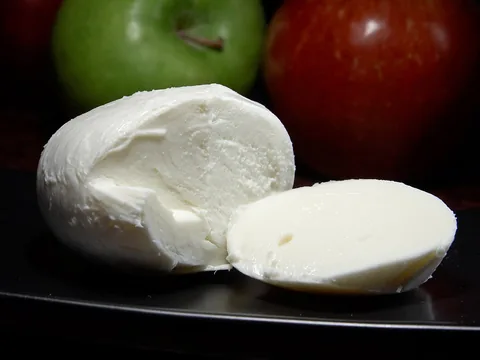
Pane di Altamura DOP is made with remilled durum-wheat semolina, sourdough, water and salt. Its crumb is straw-yellow, and the thick crust is apparent when sliced. Traditional shapes include the folded loaf and the priest’s-hat form. Historically, household dough went to public ovens, marked to identify the owning family; keeping qualities mattered for farmers and shepherds working away from home.
Before the town: people and food
The archaeological museum brings together Alta Murgia finds from prehistory to the Middle Ages. Its prehistoric food displays connect cultivation with food processing. The Neanderthal skeleton known as the Man of Altamura was found at Lamalunga in 1993; the museum presents its context and a reconstruction, while the discovery site is not an ordinary show cave. Connecting the find with its landscape is more useful than simply photographing the model.
Sources: Musei nazionali di Puglia — Museo archeologico di Altamura
A palace for understanding the cave
Palazzo Baldassarre houses a human-evolution display and a life-size reproduction of the part of Lamalunga containing the skeleton. The building originated with the family of masons and building entrepreneurs whose name it bears. Two histories of building and habitation meet here: a town palace and the natural space that preserved a much earlier human being.
Our approach: a day with a thread
We would start in the centre, using the cathedral and a route through the claustri to give the place a shape. Then choose a museum focus according to an interest in archaeology or human evolution; duplicating both without a reason can dilute attention. Bring a question from the visit to the table: how does work transform an ingredient? Taste bread alone first, then with a simple accompaniment, comparing crust, crumb and absorption. Lunch need not become a technical class; the point is to give the flavour a context.
Continue towards Gravina and Matera
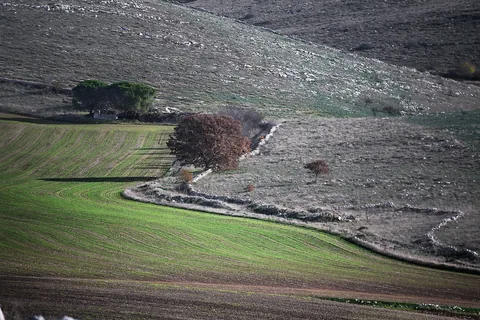
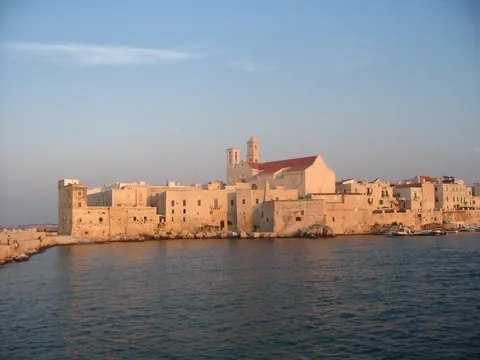
Gravina develops the relationship between rock and settlement, while Alta Murgia restores the agricultural landscape crossed on the way here. Matera continues the theme of habitation but deserves time of its own. Treat Altamura and Gravina as neighbouring chapters rather than a competition in sightseeing: bread and built space already offer a meaningful contrast. For an Adriatic ending, Giovinazzo changes the pace and carries the theme of work into a coastal town.
YOUR JOURNEY
How to shape a journey here
From courtyard to bread: medieval town, prehistory and agricultural work, followed by Gravina or the Murgia landscape.
Talk to us about it


.jpeg)

