Puglia / PLACES, FOOD, CULTURE
Castel del Monte: looking at geometry
Castel del Monte becomes more interesting when it stops being a riddle to solve and becomes a building to observe. A regular form, different materials and openings onto the landscape offer a concrete route. Apulica connects it with the territory still working around it: towns, vineyards and tables. The visit should end beyond a photograph of the octagonal outline, with a recognisable relationship between building and countryside.
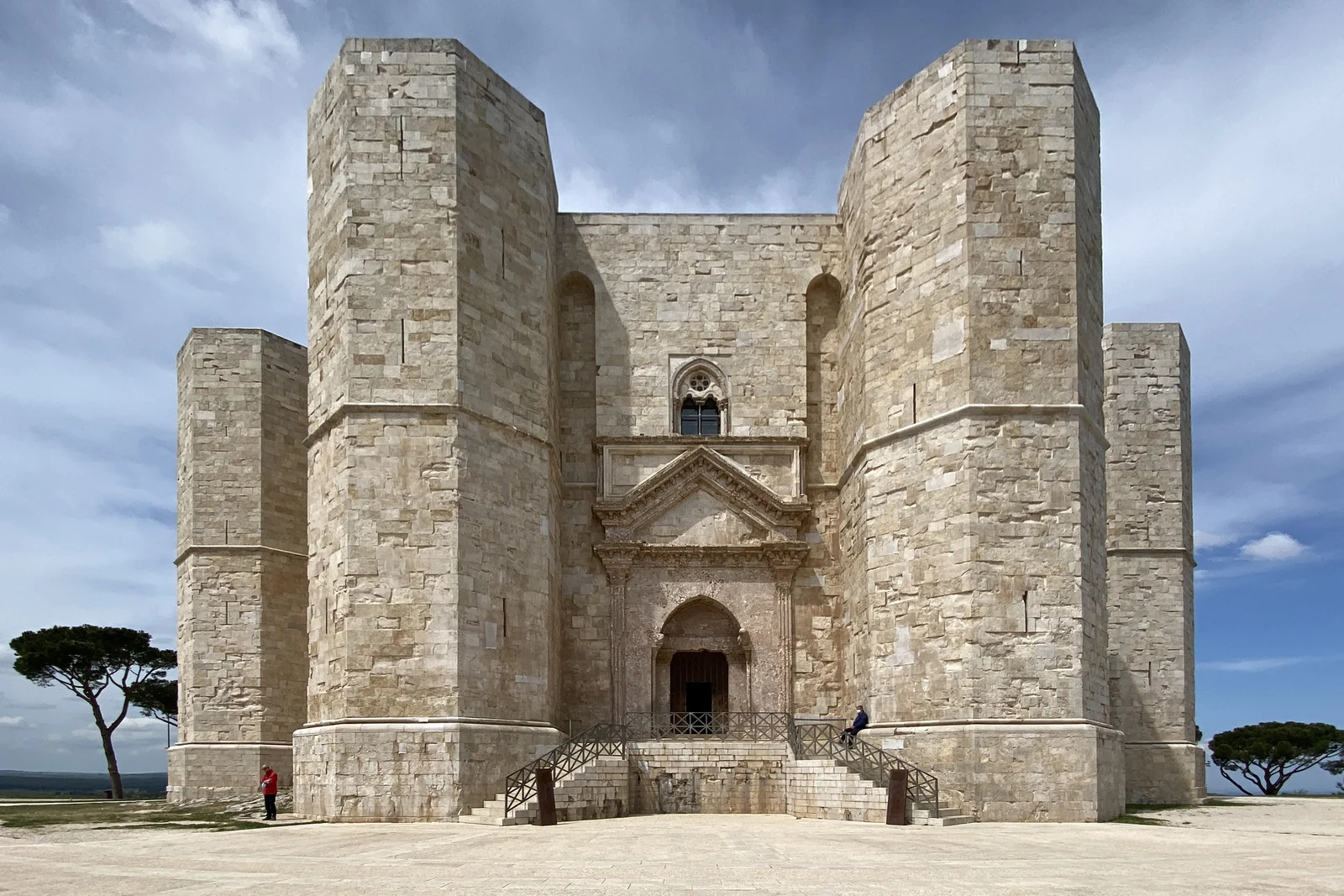
Photo: Bernard Gagnon · Wikimedia Commons · CC0 · Resized and converted to WebP.
Geometry that organises movement
Plan, courtyard and eight towers repeat the octagon; sixteen rooms occupy two levels. Surviving documentation begins in 1240, under Frederick II. The museum also recalls the route connecting Andria with Garagnone near Gravina: a position that now seems isolated belonged to a communication network. Looking at the courtyard and then back towards the landscape allows comparison between architectural regularity and a territory organised along other lines.
Materials: colour belongs to the design
Murgia limestone, coral breccia and marble-and-slate inlays reveal a design using the colour of its materials. Breccia marks the portal, certain room passages and details of fireplaces and windows. Today’s stripped building preserves only part of its former richness. Pause at one surviving detail: examine grain, tone and position, then ask why that element received different treatment. This offers an accessible way to read the builders’ work.
Sources: Ministero della Cultura — storia e struttura di Castel del Monte
The name enters wine: choosing a comparison
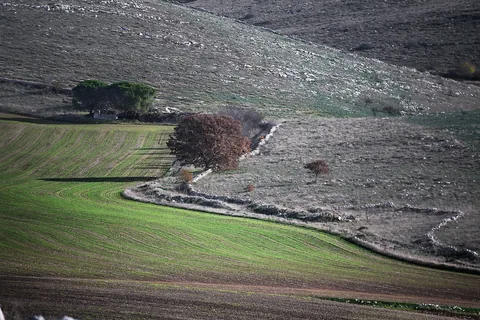
Castel del Monte Rosso Riserva DOP, with the traditional DOCG designation, requires at least 65% Nero di Troia and at least two years of ageing, including one in wood. Its area includes Minervino Murge and parts of other Murgia municipalities. It is therefore not a wine produced solely beneath the castle. Read the label through that distinction: territory, grape and maturation time provide different information to explore in the glass.
Sources: Regione Puglia — Castel del Monte Rosso Riserva DOP
A winery and a documented cost
Torrevento presents winery tours and tastings, and lists a winery-only visit at €10 per person, observed on 2026-10-06. This specific price includes neither a tasting nor a meal; the company separately proposes food experiences at Le Vigne al Castello and Osteria Ottolune. This is an editorial reference, not our partnership. In designing the day, distinguish castle, production visit and dining; services and applicable conditions belong in a quote for your dates.
When to go: choose the day’s content
For an architecture-led trip, begin with time for observation and a possible continuation in town. For a food-and-wine route, start with the productive encounter sought: visiting a winery, discussing a wine or pairing it with food does not mean watching the harvest. An autumn trip should not automatically promise seasonal work. Timing becomes meaningful when its purpose is concrete and the programme leaves room for questions, pauses and transfers.
How Apulica helps: from monument to territory
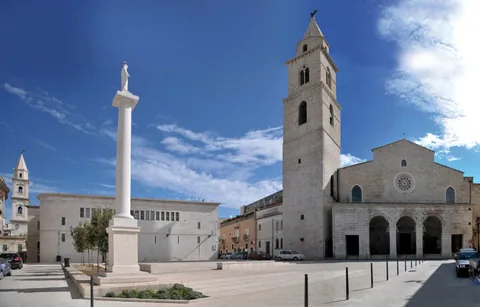
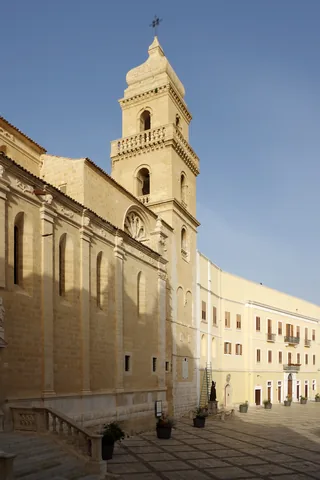
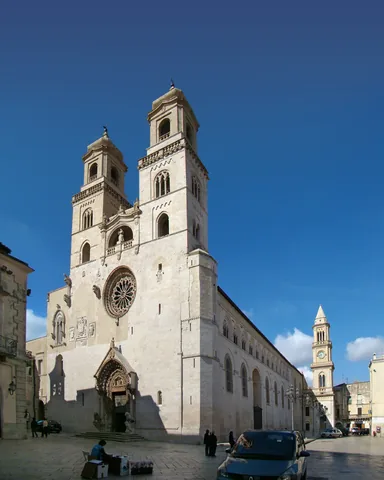
We can design a day in which an interpreted castle visit precedes a wine encounter, or connect it with Andria around memory and food craft. Continuing to Gravina and Altamura brings stone, habitation and landscape together in very different forms. The point is not to add every nearby place but to give the next transfer a reason. Interpretation, encounters and meals support that design: the monument retains its space, while the territory becomes more than a backdrop to cross.
YOUR JOURNEY
How to shape a journey here
We can organise an interpreted castle visit followed by a winery encounter and Murgia dining, or an Andria route centred on imperial memory and food crafts.
Talk to us about it