Puglia / PLACES, FOOD, CULTURE
Ostuni: from the town to the plain
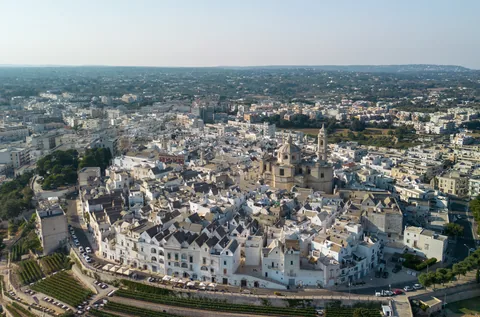
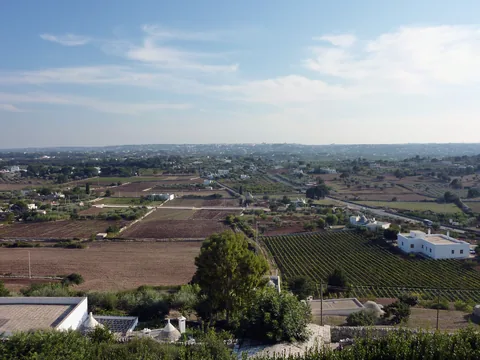
Ostuni makes sense when its white centre does not obscure what surrounds and underlies it: productive landscape, long human presence and work transforming olives into oil. We would climb to the cathedral, return to prehistory and continue into the countryside, with food chosen to carry the story forward. The sea can complete the stay without being its only purpose. This approach also helps select accommodation: not just a beautiful room but a position coherent with the days ahead.
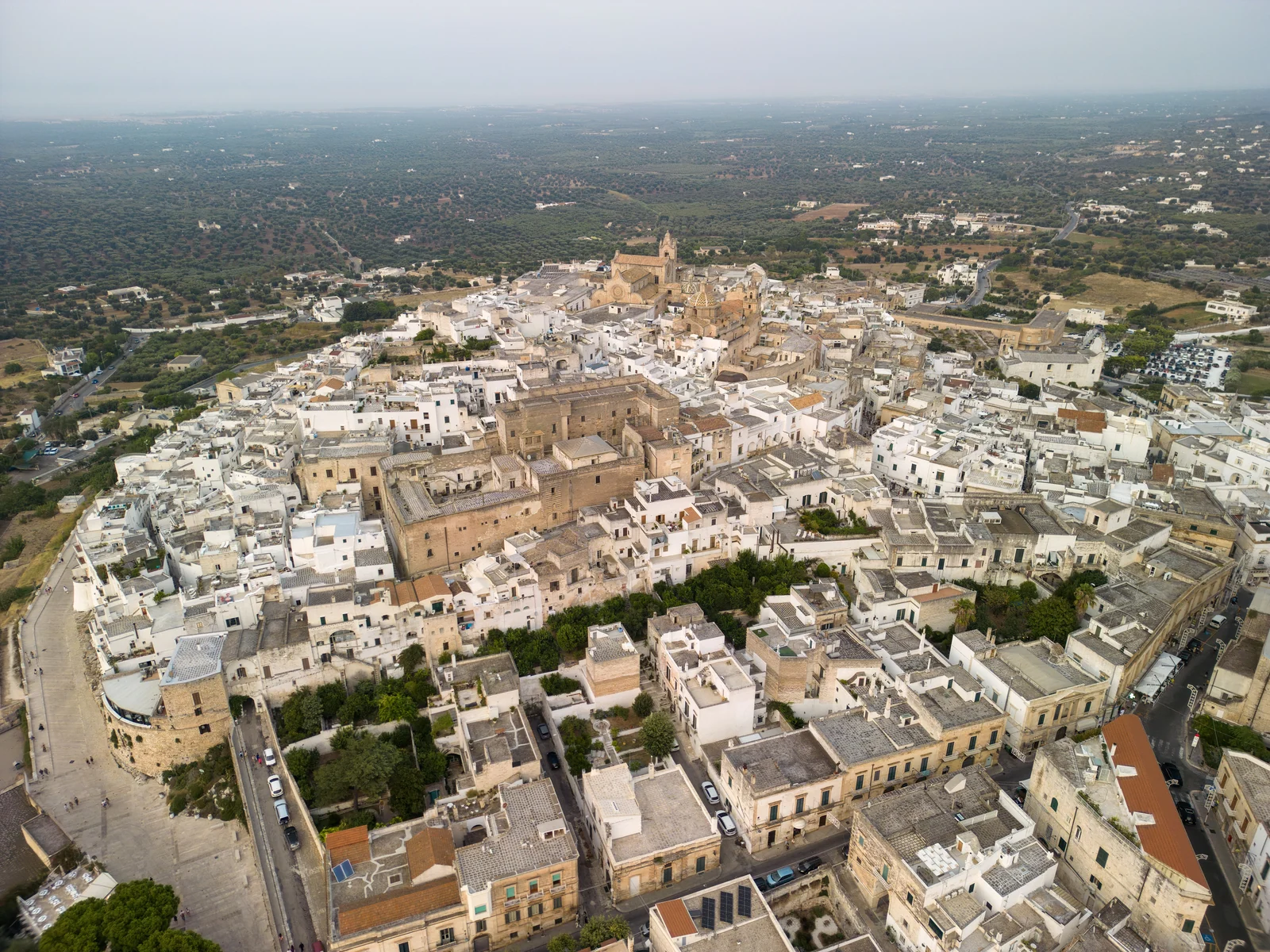
Photo: ParisTaras · Wikimedia Commons · CC BY 4.0 · Resized and converted to WebP.
Climb to change your perspective
Santa Maria Assunta cathedral stands at the highest point of the historic centre. The walk should do more than seek a white lane: the climb reveals changing town space and the relationship between enclosed places and openings. Choose a few viewpoints, then return asking how the surrounding landscape enters the view. A photograph becomes useful when it records a relationship rather than replaces observation. For a slower pace, keep the meal in the same part of town.
Sources: Comune di Ostuni — Cattedrale
Agnano: long before the white town
Santa Maria di Agnano lies around two kilometres from Ostuni. Research since 1991 has reconstructed long use of the cave; the pregnant woman’s burial known as Ostuni 1 belongs to the Upper Palaeolithic. Shell ornaments and burial ochre make otherwise distant time tangible. Pair this with the centre so “ancient” does not always mean the same thing: church, prehistoric object and agricultural landscape have different timescales that a visit can reveal.
Sources: Musei di Ostuni — Parco archeologico Santa Maria di Agnano
A museum within another history
The preclassical museum occupies the former Carmelite monastery of Santa Maria Maddalena dei Pazzi with San Vito Martire church, known as Monacelle. Local craftspeople rebuilt the church in 1750–1752 after the 1743 earthquake. The home of the collections therefore has its own story of work and transformation. Notice stone, altars and furnishings alongside objects: from a trace in the ground to what a community chooses to preserve and display.
Sources: Ministero della Cultura — Museo di civiltà preclassiche
Masseria and oil: from tree to work
Masseria Brancati describes a rural-civilisation museum and an underground oil mill beneath its storehouses. It provides a concrete reference for taking olive-tree landscape into a production space. Ask what tools did and distinguish historic work from present processing. Tasting oil follows those questions: what ingredient are we using and how does it relate to the landscape? This is an editorial reference, not evidence of partnership. The stop’s value is the link between tree, building, craft and cooking.
A table in the upper historic centre
Osteria Piazzetta Cattedrale lists its address as largo Arcidiacono Teodoro Trinchera 7 and presents small vaulted rooms opposite the cathedral. It is an identified option for continuing the visit at a table, without an alleged Apulica-agreed menu. Shape the meal around an ingredient already encountered and a preparation that makes it readable. For a stay, compare an urban base with a countryside masseria, prioritising transfers and daily rhythm over an abstract category.
Sources: Osteria Piazzetta Cattedrale — presentazione e contatti
When to go and where to continue
For walking, the centre and archaeology, spring or autumn would be the initial proposal. An oil-work focus should follow the selected producer’s actual activity, not a promised harvest on any date. Apulica can connect cultural interpretation, a rural encounter, food and accommodation; the coast can add a day or two. Cisternino continues cooking, Locorotondo wine and inhabited landscape, Brindisi Mediterranean connections. Continuity matters more than the number of stops.
YOUR JOURNEY
How to shape a journey here
We can design Ostuni around its centre, prehistory and olive-oil work, with coherent food and accommodation and the sea as a possible addition.
Talk to us about it