APULICA / Stories, people and traditions
Masserie: reading work through buildings
A masseria can become a journey’s subject before being somewhere to sleep. Begin with its spaces: where people lived, where they worked and what connected the buildings. This brings architecture and territory together and offers concrete questions to carry to the table.
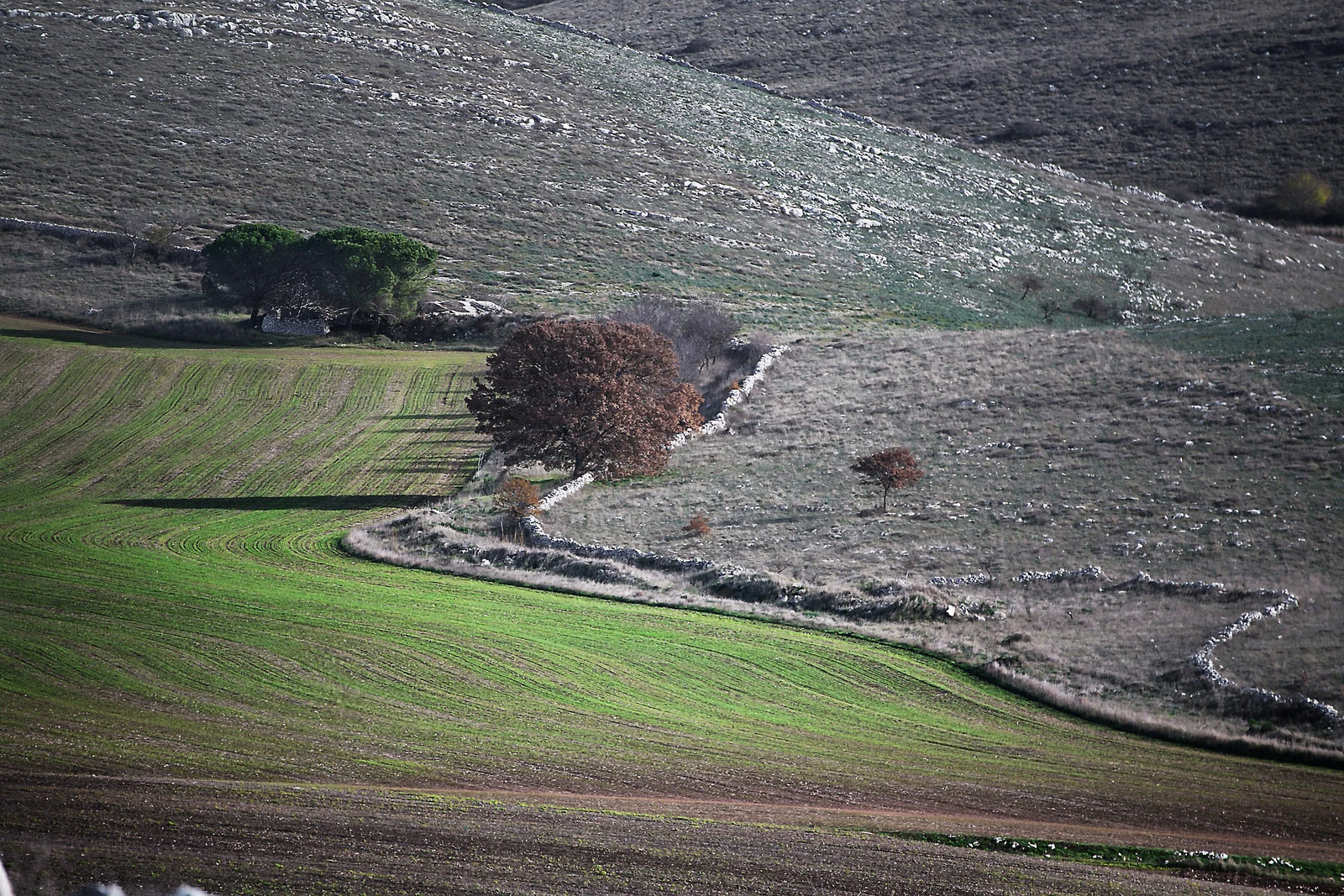
Photo: Acquario51 · Wikimedia Commons · CC BY-SA 4.0 · Resized and converted to WebP.
A collection of spaces, more than a façade
Regione Puglia includes masserie, olive mills, stables, mills, wells and dry-stone walls in the heritage documenting farming and landscape change. Look at the relationships between elements. An entrance, courtyard and store suggest questions about people and goods: who passed through, what was kept and which spaces belonged to work? The buildings become more understandable when their functions enter the picture.
Sources: Regione Puglia — Architettura rurale, patrimonio e paesaggio
Montalbano: an example of the courtyard’s role
In Ostuni’s territory, Masseria Montalbano preserves the structure of a fortified settlement. The main house faces a courtyard linking accommodation, stables, olive mills and a church dedicated to the Blessed Virgin of the Rosary. The regional account reveals a complex organisation of rural life. Use this example to read other masserie without assuming they are identical: compare the courtyard’s size, the arrangement of buildings and their relationship with farmland.
Fasano: the oil mill becomes a museum
The Ministry of Culture locates Fasano’s Olive Oil Museum in a restored eighteenth-century mill opposite the farm steward’s house. It records olive-processing equipment and a citrus grove behind the main building. Architecture, work and cultivation can therefore be explored through specific features.
Sources: Ministero della Cultura — Museo dell’Olio d’Oliva di Fasano
Three questions for reading a courtyard
Look first for movement: which entrance led in, what did people cross, and which rooms faced the courtyard? Then consider work: did spaces require light, access for goods or proximity to animals? Finally look towards the fields. A threshold, narrow passage or different room height can change your reading of the whole. Comparing two examples is useful precisely because their layouts need not match.
From building to product, with a clear thread
Choose one agricultural thread through Ostuni, Valle d’Itria and Murgia. For oil, reading a mill can precede a tasting; for rural life, compare its courtyard with a town’s smaller spaces. The meal continues the visit by asking how a product was transformed. Timing depends on the process of interest: tasting bottled oil and observing seasonal work involve different choices, whereas the building preserves traces throughout the year.
A thread for your journey
A rural thread between Alta Murgia, the Itria Valley and Ostuni, connecting architecture and food.
Talk to us