Puglia / PLACES, FOOD, CULTURE
Cisternino: a meal that starts at the counter
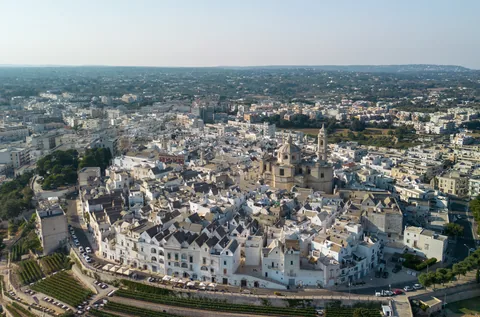
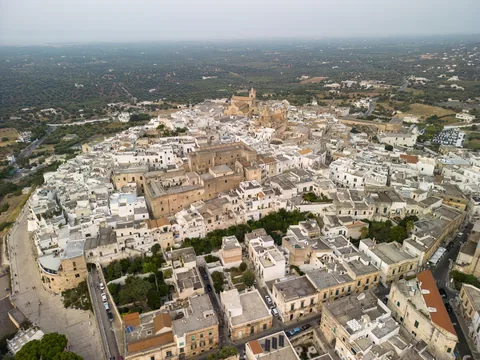
Dinner can be the reason to stop in Cisternino, but the town deserves attention before sitting down. Our proposal connects a fortified entrance, a church transformed over time and a tangible form of food commerce: choosing at the butcher’s counter and eating the meat cooked. This thread distinguishes the stop from a generic barbecue evening. It brings public space and food together, with Valle d’Itria’s countryside continuing the story.
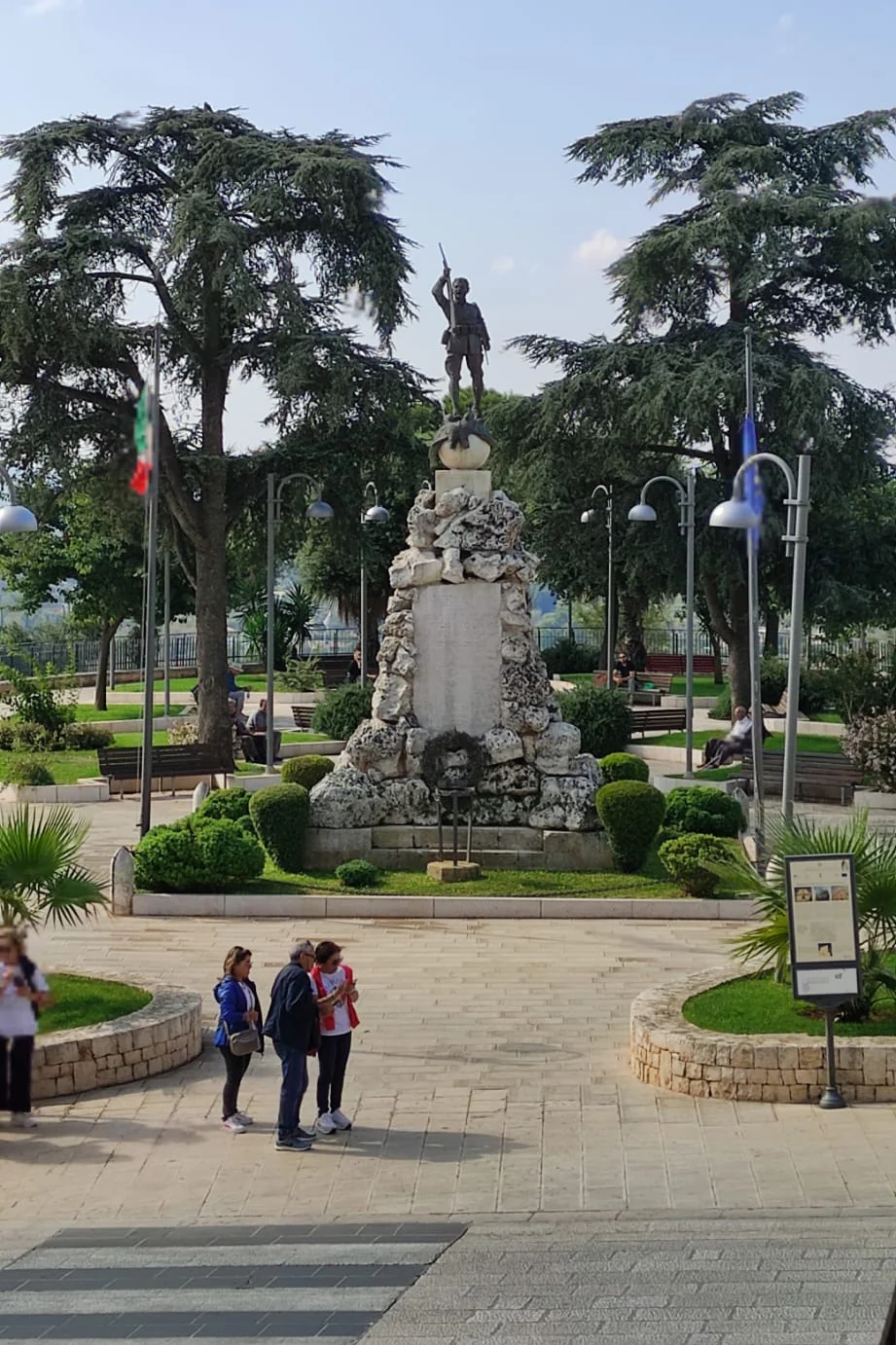
Photo: Kiuz · Wikimedia Commons · CC BY-SA 4.0 · Resized and converted to WebP.
An entrance to recognise
Torre Grande was an old entrance to the town. The municipality describes a Norman-Swabian tower, around seventeen metres tall, with a small statue of Saint Nicholas on top. Before seeking a viewpoint, read it as a threshold: what remains outside, how do you enter and how does street scale change? Return here later so the walk has a recognisable beginning rather than a random sequence of turns.
Sources: Comune di Cisternino — Torre Grande
San Nicola: the façade does not tell everything
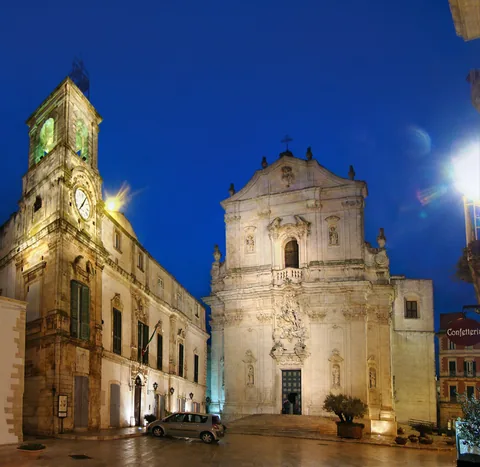
The mother church’s neoclassical façade was built around 1848, replacing its predecessor; inside, three aisles and stone capitals retain a medieval imprint. The Madonna del Cardellino, dated 1517, is another landmark. The contrast between exterior and interior reveals a town built in layers. Rather than list every artwork, compare these elements and let interpretation turn a date into something visible.
Bombetta: understanding a filled roll
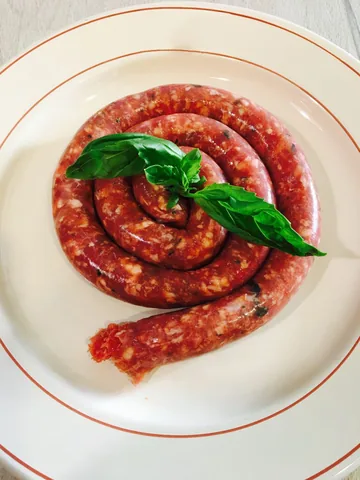
The regional PAT sheet describes bombetta as pork filled with cheese and other ingredients according to the variation, closed and cooked on a spit or grill. Cut, filling and cooking matter. Ask which version is prepared and compare surface with centre. The speciality explains the butcher’s role in cooking without arbitrarily attributing its invention to one venue.
Sources: PAT Puglia — Bombetta
From counter to table: an identified fornello
Arrosteria del Vicoletto, at via Giulio II 26, describes choosing meat at the counter before it is cooked in the fornello. Its website explains vertical spits exposed to the fire’s heat and the family butcher’s transformation into an arrosteria in 1996. It is an identified reference, not a declared Apulica partnership. Compare Martina Franca’s preservation and maturation with preparation and eating here. A few selected meats make technique and result easier to distinguish.
Sources: Arrosteria del Vicoletto — fornello, banco e contatti
Choosing the moment and pace
For travellers interested in walking, I would start with spring or autumn; for a summer evening, explore the centre before dinner rather than give streets only the time left afterwards. A festival is not needed to give the stop substance. Town, craft and cooking already provide a reason to travel. For vegetarian interests, keep the cultural route but explicitly change the food theme rather than present a butcher-focused experience as suitable for everyone.
How Apulica connects town and countryside
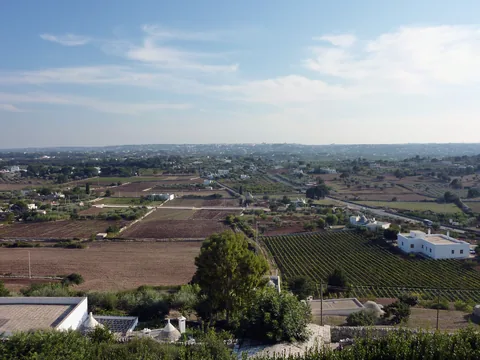
We can arrange Cisternino as a day combining interpretation of the centre and a fornello dinner, or as part of a Valle d’Itria stay. Compare a town base with countryside accommodation according to transfers rather than only a room photograph. Locorotondo links rooftops and wine production; Martina Franca continues meat through capocollo; Ostuni changes the relationship between hilltop town, olive groves and coast. The chosen thread determines the next stop, not a compulsory list of villages.
YOUR JOURNEY
How to shape a journey here
We can connect reading Cisternino, choosing at the counter and a fornello dinner with wine or charcuterie work elsewhere in Valle d’Itria.
Talk to us about it