Puglia / PLACES, FOOD, CULTURE
Locorotondo: rooftops and valley views
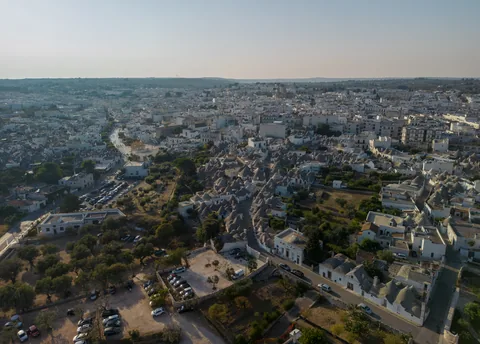
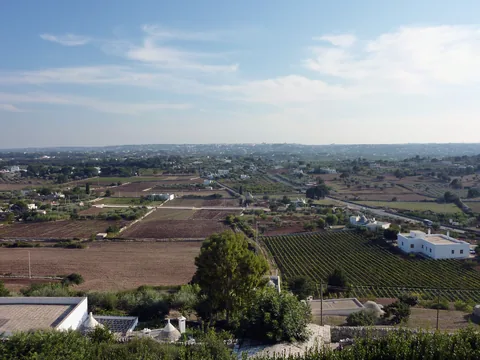
Locorotondo offers a different perspective on Valle d’Itria from Alberobello: our interest is not counting more rooftops but understanding how a town faces its countryside. We would connect its houses, a church examined in detail and wine production. Food completes the route without making every village compete for exclusive specialities. This is a place to inhabit for a few hours and, for travellers who prefer fewer transfers, a possible base for exploring the valley.
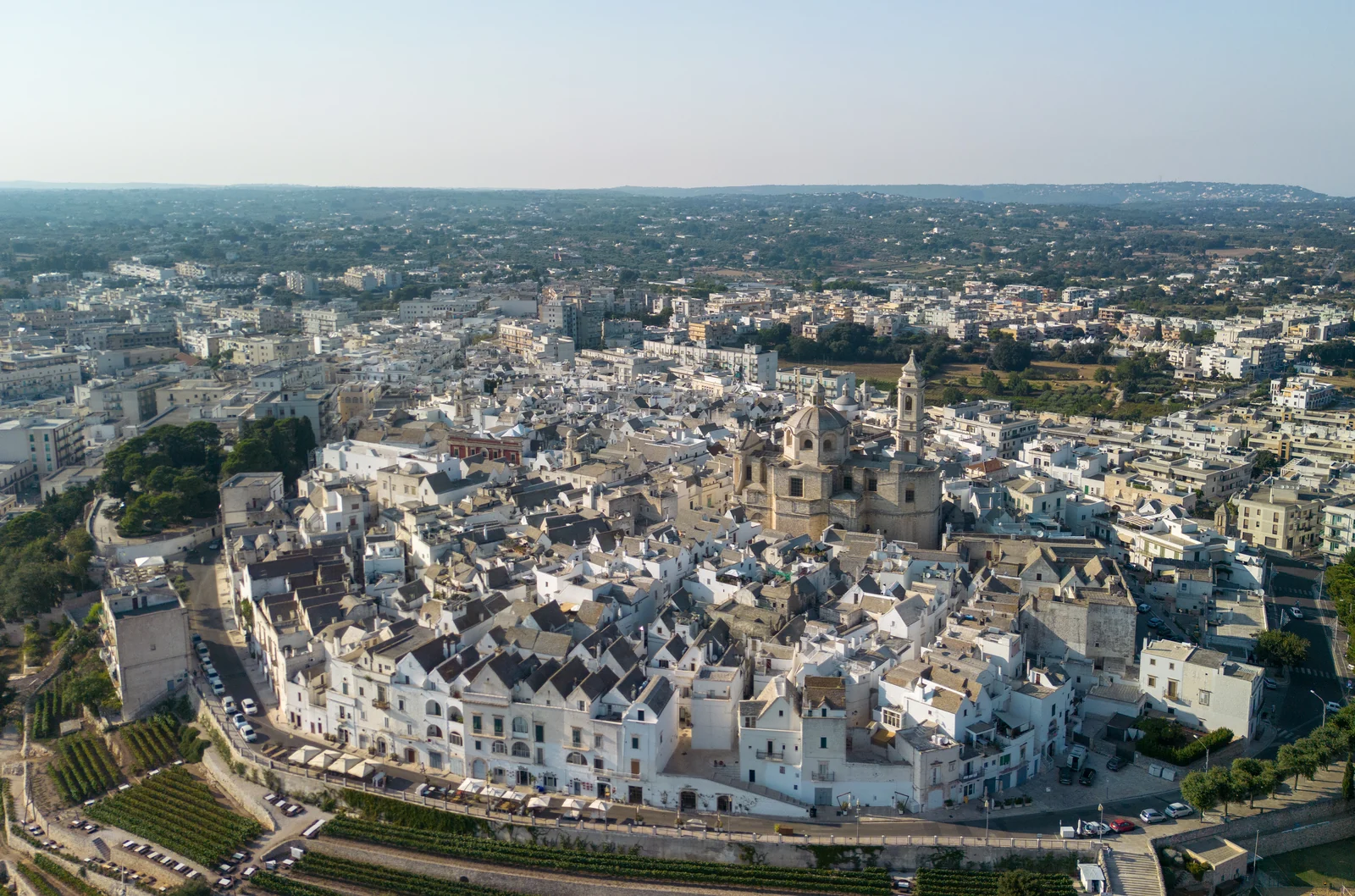
Photo: ParisTaras · Wikimedia Commons · CC BY-SA 4.0 · Resized and converted to WebP.
Cummerse and the town’s edge
Cummerse are the pitched-roof houses that distinguish Locorotondo; Via Nardelli opens a view over the valley, while Palazzo Morelli introduces a different treatment of the façade. Begin with the town’s overall shape, then seek these contrasts on foot. Landscape is more than a final view: it connects urban habitation with the countryside encountered later. Comparison with Alberobello’s trulli works best when you notice changing space rather than seek two equivalent photographs.
Sources: Italia.it — Locorotondo
San Giorgio: reading an interior
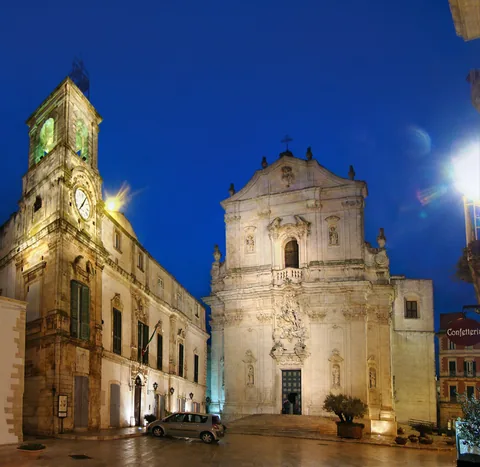
The mother church was built between 1790 and 1825. Its neoclassical façade leads to a Greek-cross interior with a polychrome marble altar and works by Neapolitan artists, including Gennaro Maldarelli. Choose two elements: the relationship between plan and light, and the difference between painted surface and altar material. This makes a church readable without knowing every artist, adding depth beyond a succession of white lanes.
Sources: Comune di Locorotondo — Chiesa madre
Wine as work, not just a tasting
Cardone, a family winery founded in 1970, describes visits combining cellar, vineyard and tasting; Verdeca is among the grapes it works with. Its stated address is via Martiri della Libertà 32. It is an identifiable contact for connecting landscape and production. Follow one wine through grape, process and the result in the glass. That comparison matters more than the number of labels. The winery offers the experience by reservation.
A table that continues the walk
Bina describes itself as a restaurant in the historic centre, within eighteenth-century cross-vaulted rooms, interpreting local recipes and ingredients. It is an editorial reference, not a claimed partner or an agreed menu. Rather than an indiscriminate assortment of everything Apulian, choose a dish to discuss alongside the wine just explored. Its interior can continue the theme of habitation while lunch returns the visit to work and ingredients.
Sources: Bina — ristorante di Puglia
Stay in town, explore the valley
Sotto le Cummerse identifies itself as a dispersed hotel and lists its contact address at via Vittorio Veneto 138. It is a named option for considering the town as a base rather than a brief stop. Compare staying centrally, with an evening walk close at hand, and staying in the countryside with a day here. The choice changes the journey’s rhythm more than the number of villages visited. This reference implies no commercial agreement.
When to choose it and how we connect it
For a walking-focused journey, spring or autumn would be my first proposal; summer visitors can move outdoor time towards the latter part of the day. This is a choice of rhythm, not a weather promise. Apulica can connect Locorotondo with a wine encounter, a table and a stay base. Martina Franca adds architecture and charcuterie; Cisternino moves the story towards its cooking tradition. Choose one continuation that matches the traveller’s interests rather than automatically combining both.
YOUR JOURNEY
How to shape a journey here
We can design a day linking cummerse, wine production and food, or use Locorotondo as a base for a Valle d’Itria stay.
Talk to us about it