Puglia / PLACES, FOOD, CULTURE
Monopoli: a harbour within the town
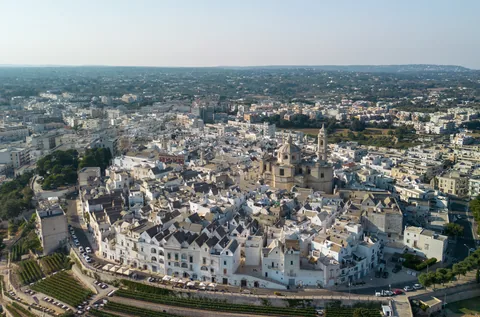
Monopoli can provide time by the sea without turning a journey into a beach-only holiday. Our thread connects harbour, devotion, reused buildings and inhabited countryside. Food becomes a place to compare land and coast rather than an interval after a walk. For a longer stay, the key is a coherent base: centre and harbour on foot, or rural districts and countryside routes. Apparent proximity does not replace this choice of rhythm.
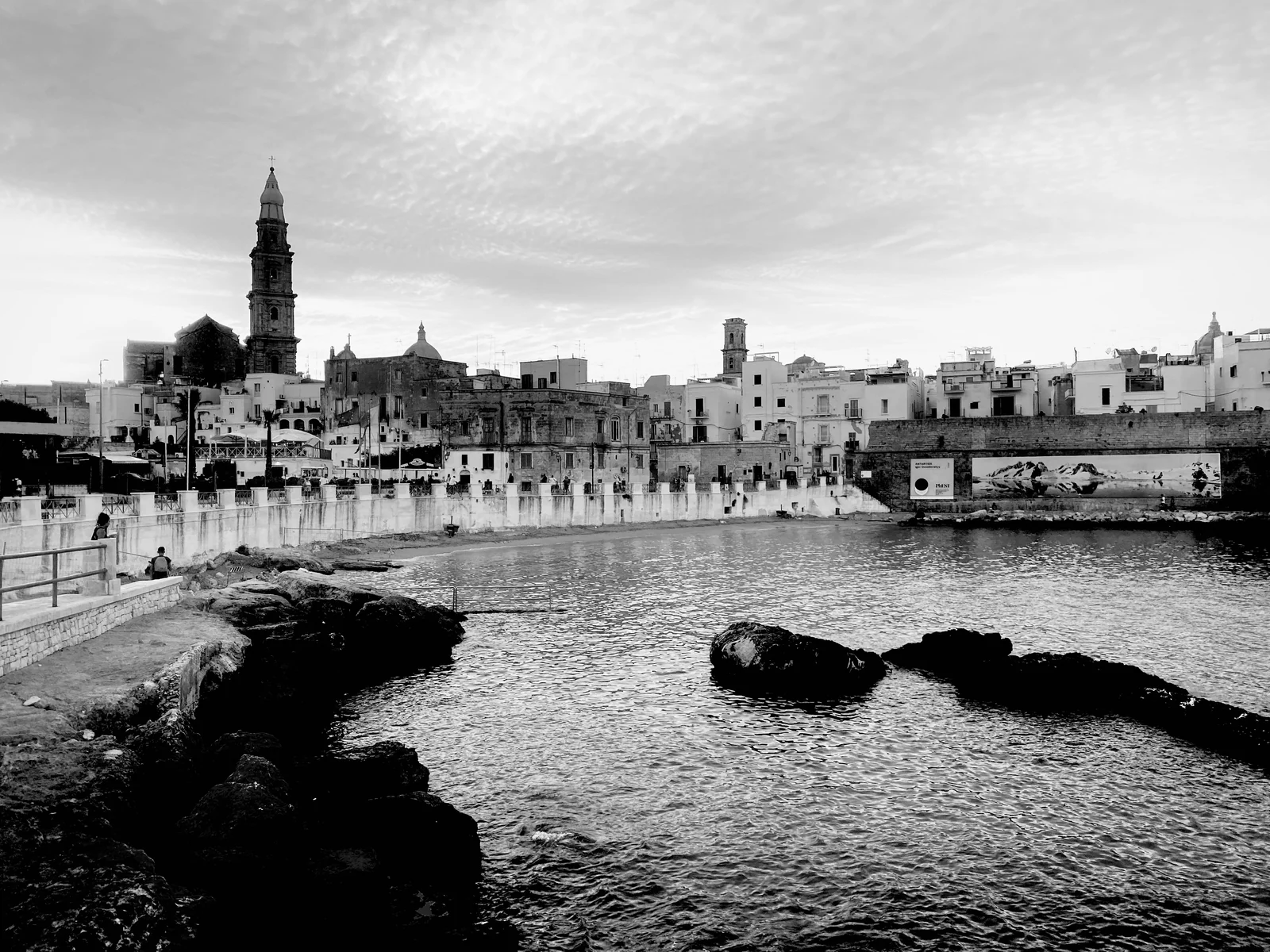
Photo: RaTio65 · Wikimedia Commons · CC BY-SA 4.0 · Resized and converted to WebP.
The harbour as a workplace
The municipality describes the new harbour as a commercial port sheltered by molo Margherita and the Tramontana breakwater. This is a useful reminder: the town lives through more than a visitor’s view. Distinguish observable spaces from operational ones without seeking access to working areas. Read water, buildings and public routes together, asking how the sea also becomes a route of exchange.
Sources: Città di Monopoli — Porto nuovo
The cathedral and reused forms
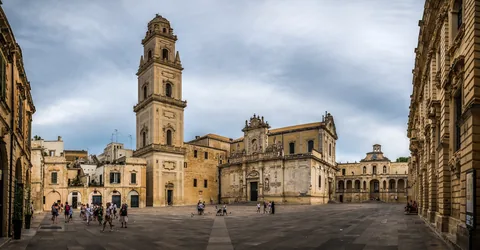
The cathedral’s construction history explains that a wall was built in 1786 to shelter its forecourt from wind. Sixteenth-century statues from the earlier Romanesque church were relocated there alongside reused elements. Parts had several lives, making the visit more concrete than a simple “baroque” label. First examine the façade against its small forecourt, then differences in materials and figures. Devotion and preservation also emerge through practical choices.
The castle as part of today’s town
Castello Carlo V is now a municipal cultural venue for exhibitions, conferences and events. The stop need not depend on a promised exhibition: begin with its relationship to the town, adding a specific programme when relevant. Heritage then appears as more than a closed past. Compare historic role and current use; let an event genuinely change the route instead of becoming another name in the day.
Sources: Città di Monopoli — Castello Carlo V
The rural districts: Monopoli’s other half
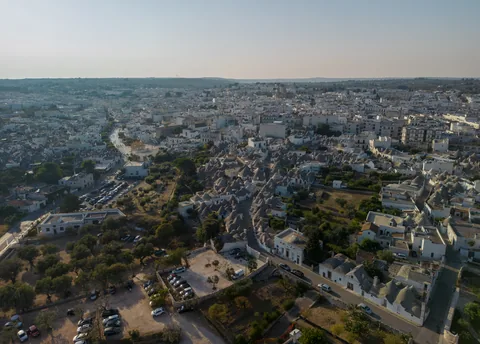
The institutional tourism site describes rural districts inhabited throughout the year. Olive groves and small gardens dominate the marina; the serre connect coastal plain and plateau. Masserie, trulli and rock settlements give the countryside a different structure from the centre. Ask what work explains a building, field or path. Seeing an olive tree does not explain its oil; an interpreted production stop can continue the journey and inform a town-versus-country stay choice.
Sources: Monopoli City Tourism — la campagna
A table between land and coast, with clear prices
Komera’s official PDF, observed on 2026-10-06, lists burnt-wheat troccolo with three tomatoes, rocket and cacioricotta at €15, with a separate €4 cover charge. These are one dish and cover, not a full lunch; drinks and other orders are excluded. The menu also includes seafood and vegetable preparations. This is an editorial reference, not a declared partnership. The meal can continue countryside-versus-coast comparisons without making raw seafood compulsory.
When to stay and how to continue
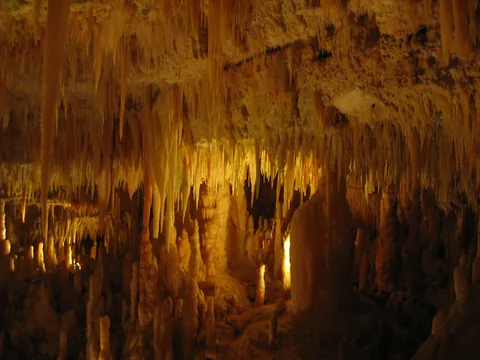
For our cultural and rural route, begin with spring or autumn. In summer, explicitly divide sightseeing and sea time, giving the coast its complementary role. Apulica can arrange interpretation, a production encounter, food and accommodation around that balance. Polignano offers another town–coast relationship; Castellana Grotte takes the story underground; Alberobello and Locorotondo change scale and read the countryside from within. One coherent continuation offers more than four hurried stops.
YOUR JOURNEY
How to shape a journey here
We can design a Monopoli stay connecting urban heritage, productive rural districts and food, with deliberately chosen, separate time by the sea.
Talk to us about it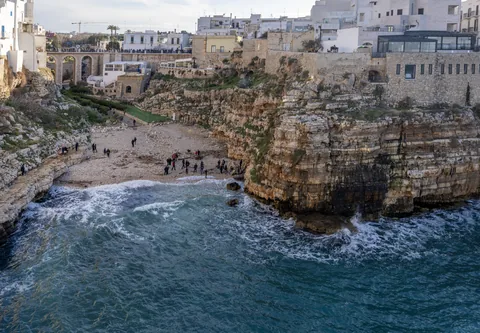

.jpg)


.jpeg)