Puglia / PLACES, FOOD, CULTURE
Alberobello: understanding a home
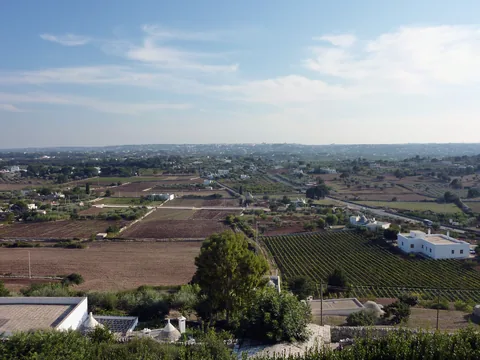
In Alberobello, a trullo can become a home again rather than just a roof to photograph. Our route begins with a question: how were rest, work, storage and cooking organised in such a recognisable space? The answer moves from streets to interiors and from builders’ craft to the countryside. This stop gives meaning to Valle d’Itria’s landscape when there is time to read it rather than collect views.
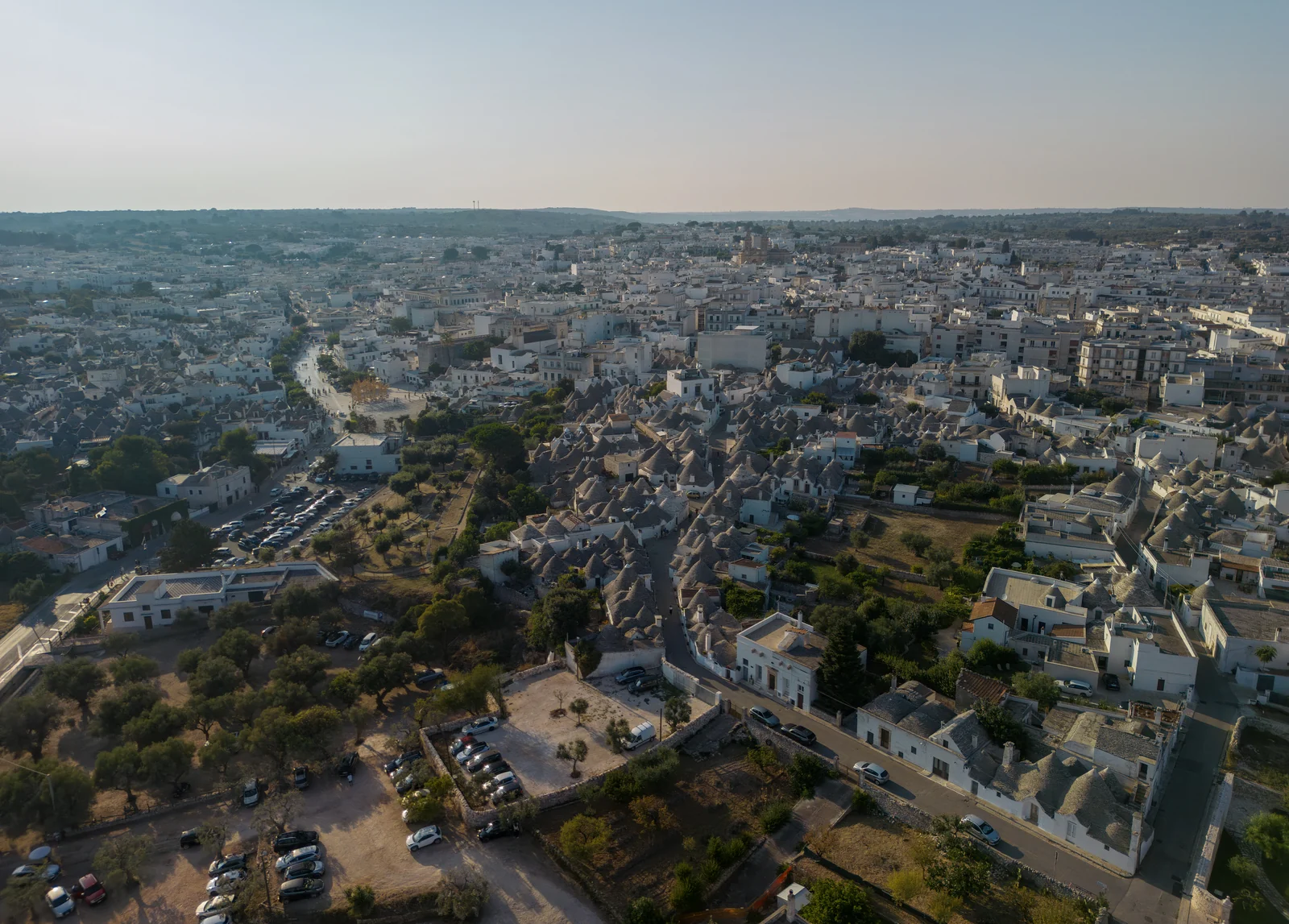
Photo: ParisTaras · Wikimedia Commons · CC BY-SA 4.0 · Resized and converted to WebP.
From viewpoint to threshold
Monti and Aia Piccola gather the centre’s trulli; Santa Lucia’s viewpoint offers an overview. Notice how roofs cluster, then return to the scale of one dwelling. A door, wall and street reveal relationships that disappear in a panorama. Alternate the shape of the district with domestic space. Looking more closely does not mean seeking entry to every building, but choosing places where an interior can be interpreted.
Sources: Italia.it — Alberobello
Casa Pezzolla: a home assembled over time
Casa Pezzolla’s fifteen communicating trulli are not uniform. The municipality distinguishes earlier structures with alcoves and fireplaces from later, more regular additions and a two-storey building. The museum also addresses farming, grain, viticulture and domestic life. These elements show habitation following changing needs rather than an unchanging form. Choose one room and one working object to reconstruct the relationship between available space and everyday activities.
Sources: Comune di Alberobello — Museo del Territorio Casa Pezzolla
Trullo Sovrano: construction changes technique
Trullo Sovrano has two storeys connected by an internal masonry staircase and is among the buildings introducing mortar. Its museum reconstructs rooms through furnishings and residents’ testimony. This exception prevents an oversimplified view of the trullo: one architectural family can contain different solutions. Comparison with Casa Pezzolla concerns that change. The two museums address different questions: how do spaces cluster, and how does a home develop vertically?
Sources: Ministero della Cultura — Casa museo Trullo Sovrano
The craft: building to understand
The Pro Loco describes an educational visit to Leonardo and Daniela’s Trullo Sotterraneo, including a miniature-trullo activity with master builder Leo, adapted to participants’ ages. This is a real example of heritage becoming a gesture rather than an abstract explanation. For a family, we could consider this kind of encounter; adults interested in the craft need interpretation suited to them. We do not present the workshop as included or already arranged with Apulica.
Sources: Pro Loco Alberobello — laboratorio con mastro trullaro
Where to stay: extending the theme of habitation
Trulli Holiday presents itself as a dispersed hotel in Alberobello, with its contact point at piazza XXVII Maggio 38. It is an identified option for travellers wanting a night in the centre instead of only a day visit. Staying can make habitation a more tangible theme, but a property name alone does not establish room, comfort or rate. This editorial reference implies no partnership. A stay proposal will identify the specific accommodation and its role among the other stops, with conditions for the requested dates.
Sources: Trulli Holiday Albergo Diffuso — contatti ufficiali
How we connect it: from home to productive territory
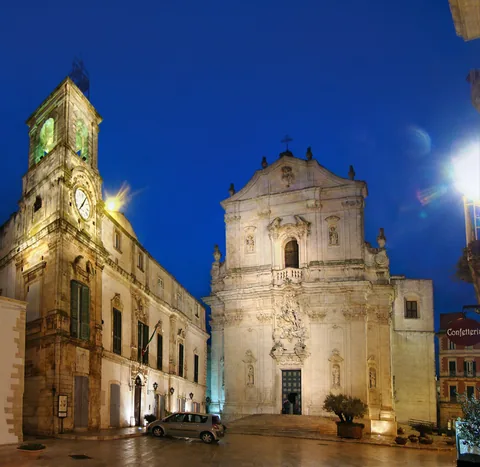
After the interiors, bring a question from the museum’s agricultural story to the table: how does an ingredient move from field to storage and cooking? A coherent food stop needs no invented dish exclusive to Alberobello. Locorotondo allows comparison with another form of habitation; Martina Franca opens the charcuterie story; Valle d’Itria’s countryside connects both with landscape. Apulica can arrange interpretation, a craft encounter and a stay base without fitting every village into one day.
YOUR JOURNEY
How to shape a journey here
We can shape Alberobello around reading a home and an encounter with trullo-building craft, with a possible stay in town and a food-focused continuation through Valle d’Itria.
Talk to us about it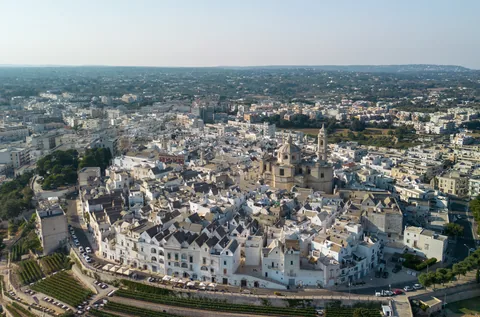


.jpg)