
APULICA / Stories, people and traditions
Families, returns and towns in Puglian films
Choose a film for its theme before travelling, rather than just its scenery. A family story, a return or a relationship across generations can shape a walk and a conversation over a meal. Puglia on screen has several voices beyond the image of a beach.
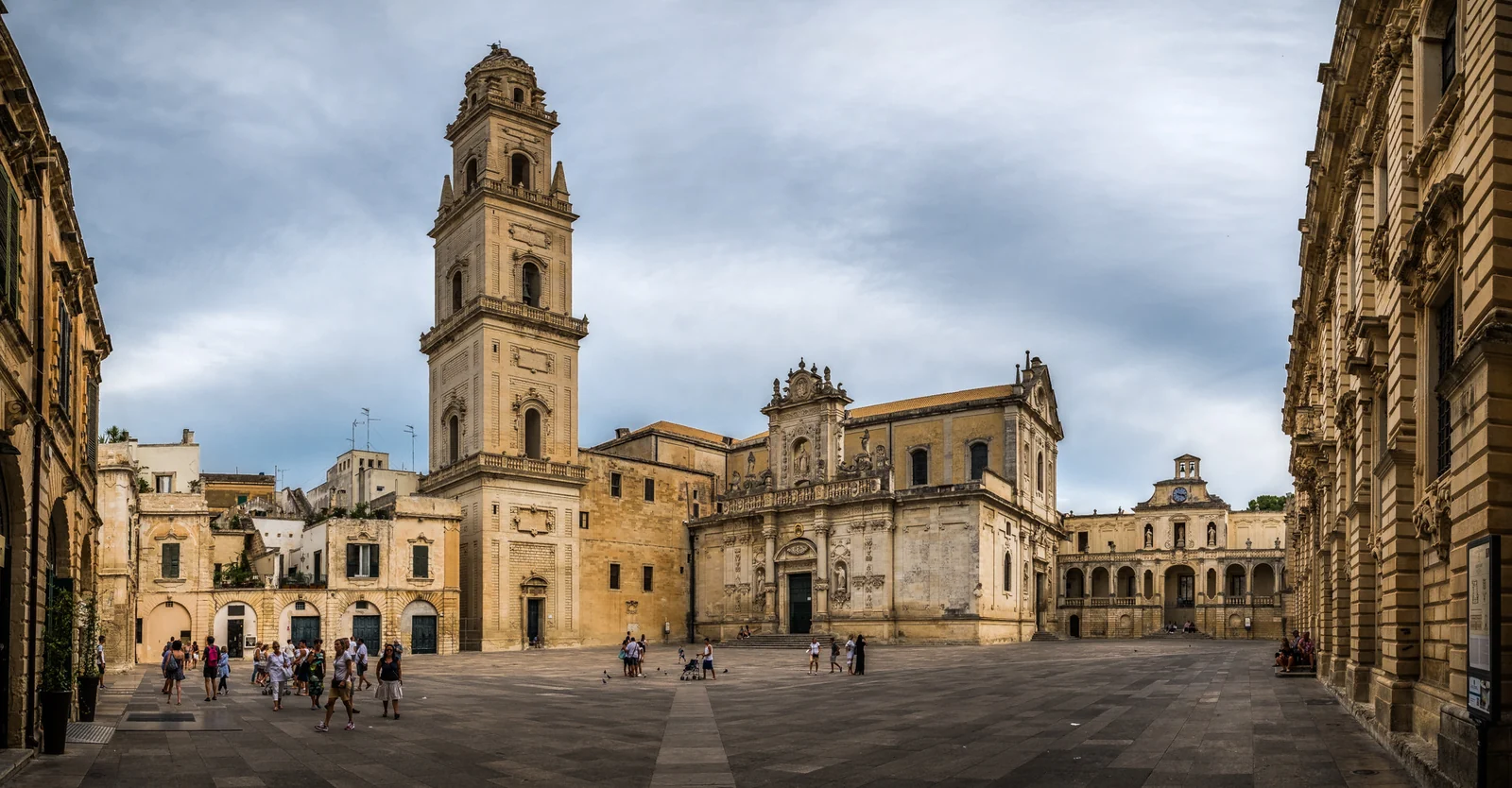
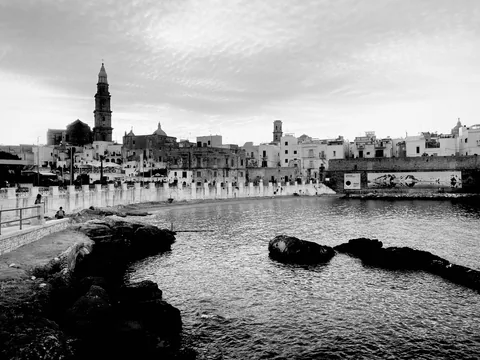
Photo: Giuseppe Milo · Wikimedia Commons · CC BY 3.0 · Resized and converted to WebP.
Lecce and Salento
Apulia Film Commission identifies Lecce and Salento for Ferzan Özpetek’s Mine vaganti, a family story involving succession in a business. For the British musical Walking on Sunshine it documents filming between Lecce, Nardò and Presicce. One territory enters two registers: family conflict and musical storytelling.
Sources: Apulia Film Commission — Mine vaganti · Apulia Film Commission — Walking on Sunshine, riprese in Puglia
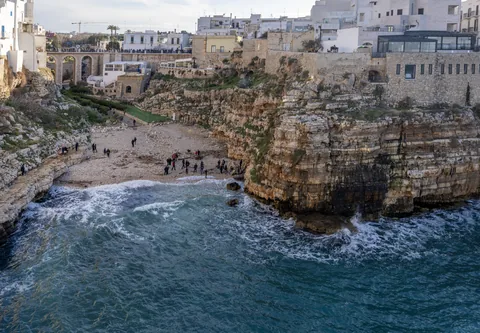
Polignano: two stories by Marco Ponti
Io che amo solo te tells a wedding story in Polignano; documented locations also include Turi, Monopoli and Martina Franca. La cena di Natale returns to family relationships, with filming in Polignano, Monopoli and Torre Guaceto. Snow in its Christmas story belongs to the fiction rather than being a coastal weather expectation.
Sources: Apulia Film Commission — Io che amo solo te · Apulia Film Commission — La cena di Natale
Rubini and Ponti: return and encounter
Sergio Rubini’s L’uomo nero begins with a return to Puglia and explores childhood memory; its official record lists several filming towns. Edoardo Ponti’s The Life Ahead, with Sophia Loren, is set in Bari and also has locations in Trani and Ostuni. They provide different approaches to people before scenery.
Sources: Apulia Film Commission — L’uomo nero · Apulia Film Commission — La vita davanti a sé
Lecce: from family story to urban space
Choose a question from the film for Lecce: what connects people to home, work or family expectations? Then notice entrances, courtyards and private versus urban space. The story focuses attention while the place adds what lay outside the frame. Over a meal, compare impressions rather than retell the whole plot. One film can supply a clear curiosity that changes through the day.
Polignano and Bari: comparing two rhythms
Keep Polignano and Bari as separate chapters. Begin one with family stories and the town’s image, the other with encounters and everyday urban space. Give each a walk and question. Rather than rank attractive locations, observe how storytelling changes from a wedding to a relationship, or from panorama to interior. Film variety opens different ways of looking at the territory.
Watch before, discuss afterwards
Choose no more than two films in different registers. Before departure, note an image, sound or gesture; after visiting, ask what changed. This thread does not necessarily depend on a festival. Choose the season around urban walks, interiors or coastal time. A screening on an actual official programme can add another occasion, while the journey remains a meeting between story and lived place.
A thread for your journey
Choose one or two films as an introduction to Lecce, Polignano or Bari, then discover the places beyond the scene.
Talk to us
.jpeg)


