Puglia / PLACES, FOOD, CULTURE
Castellana: understanding Puglia underground
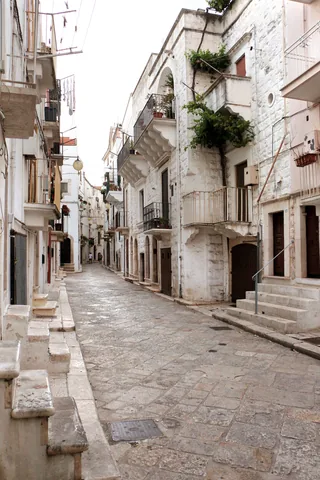
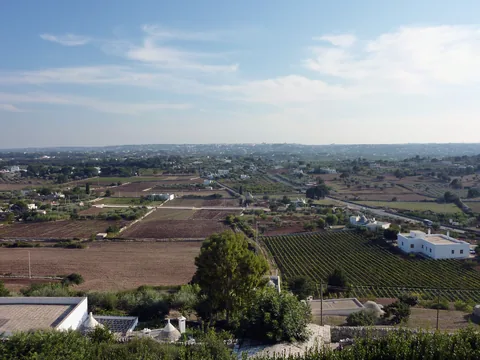
In Castellana the landscape changes without leaving the same territory: from an olive grove into a cave system, then back to town and its traditions. Underground scenery is more than a spectacle of shapes. Water builds and alters rock, explorers name the formations, and residents make discovery part of their history. The visit connects geology, people and the surface.
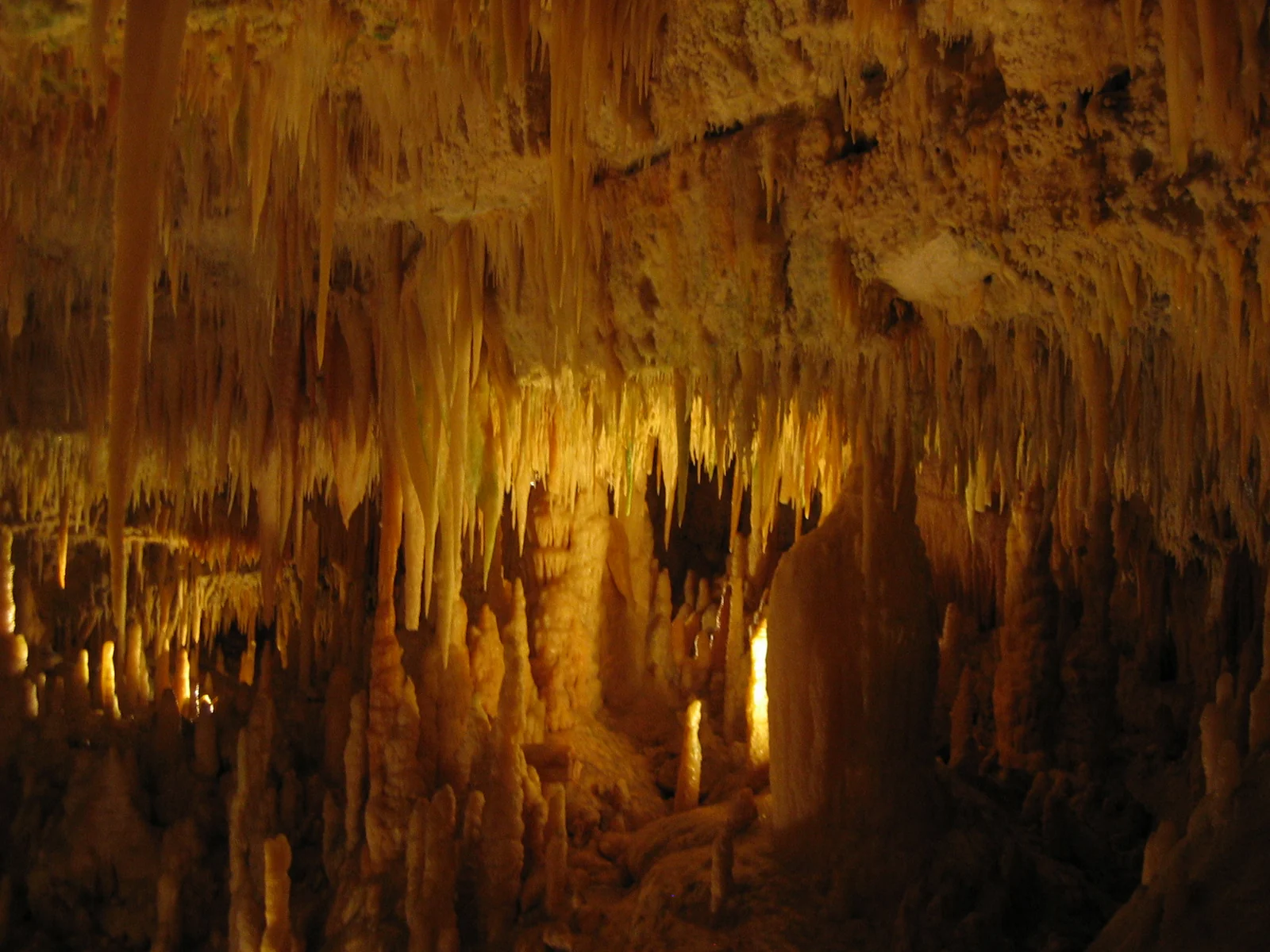
Photo: ReMagio at Italian Wikipedia · Wikimedia Commons · Public domain · Resized and converted to WebP.
Rock transformed by water
Karst develops through rainwater acting on limestone. Cavities and formations describe different stages: space opens, then deposits coat walls and floors. Stalactites hang from the roof, stalagmites grow from the ground; meeting formations can become columns. Flowstone and curtains reveal other ways water moves. Recognising these differences gives shapes meaning beyond the resemblance to animals or monuments suggested by chamber names.
Anelli and Matarrese: a shared discovery
In January 1938 Franco Anelli descended into the Grave and found a passage into a large inner chamber. Local worker Vito Matarrese joined subsequent explorations. Anelli surveyed the caves; Matarrese continued exploring and reached the White Cave in 1939. The story belongs to more than one scientist’s name: expertise, local knowledge and perseverance together made a place associated with fear and legends intelligible.
The chambers: choosing what to notice
The Grave is the large entrance chamber naturally connected to the outside. The complete route reaches the White Cave; the partial route offers a shorter reading of the system. Chambers and corridors differ in shape, size and formations. Names recall the first explorers’ imagination, but the useful question is how environments differ: light, walls, passages and deposits. Moving between a large chamber and a tiny formation belongs to the experience rather than being an interval before the final cave.
Back on the surface: memory and devotion
Memory of discovery lives alongside town traditions. The Fanòve bonfires and devotion to Maria Santissima della Vetrana recall deliverance from plague in the local religious account. The White Cave’s eightieth-anniversary celebration connected that civic memory with Matarrese’s work. These are different stories: one concerns exploration of a natural site, the other protection attributed to the Madonna. Together they reveal how a community remembers turning points, without confusing devotional tradition and scientific explanation.
Sources: Grotte di Castellana — Matarrese e la memoria della Vetrana
Our approach: a passage rather than a race
Make the caves the centre of the day, choosing the route’s depth around the group. The two explorers’ story provides orientation beforehand; underground, look for three recognisable elements such as a column, a curtain and a change of chamber. Afterwards leave a meal break and an urban walk: moving immediately to another major attraction makes distinctions harder to remember. Clothing and footwear should suit the cave environment; mobility and route length belong to the concrete proposal alongside the pleasure of discovery.
Connections: Putignano or the valley landscape
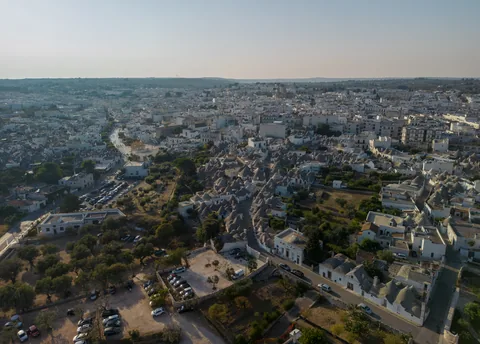
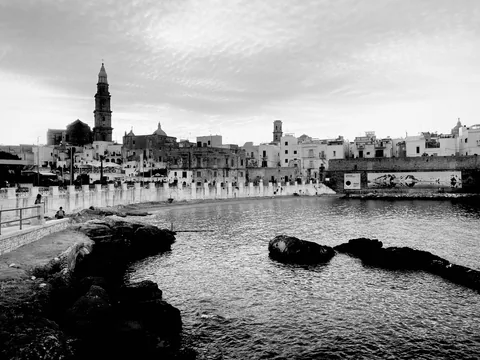
Putignano continues the theme of people shaping materials, moving from rock to papier-mâché. Valle d’Itria instead shifts perspective from natural cavities to buildings and countryside walls. Choose one continuation around craftsmanship or rural landscape. Alberobello adds stone construction; Monopoli can take the journey towards the sea. Connections do not require fitting everything into one day: they preserve a question across different places.
YOUR JOURNEY
How to shape a journey here
We can arrange a stop connecting caves and town, a meal and a continuation towards Putignano’s crafts or the Valle d’Itria landscape.
Talk to us about it