APULICA / Stories, people and traditions
Dry stone: landscape shaped by work
Walls and shelters organise the countryside: studying the arrangement of stones reveals work and purpose.
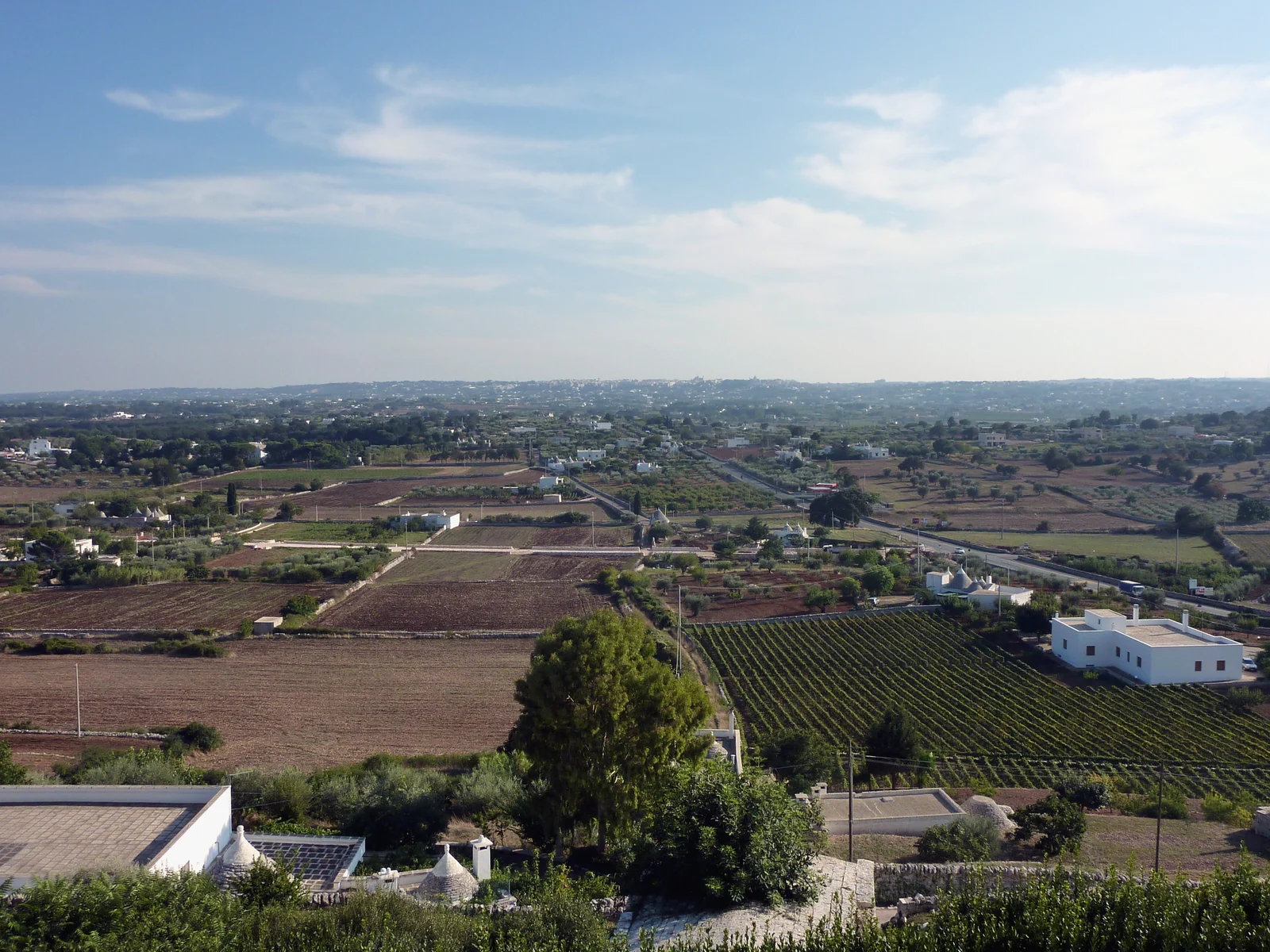
Photo: Adbar · Wikimedia Commons · CC BY-SA 3.0 · Resized and converted to WebP.
Place and history
Dry-stone construction uses stones without binding material. Selecting and arranging blocks allows structures to adapt to the terrain. UNESCO recognition concerns knowledge and techniques passed on by communities; it does not automatically designate every individual wall.
Sources: Pietra a secco — fonte istituzionale
A way to recognise it
In central Salento, the regional landscape framework describes small plots separated by a dense network of walls, alongside exposed rock, pasture and small wooded areas. Stone shelters have different names, including pagghiare and furnieddhi. They are not isolated objects: wall, land and shelter together organise the countryside. Studying the boundary between two plots also helps explain a rural building. Stone is a material to arrange and reuse, while becoming a visible expression of work and the division of space.
Sources: Regione Puglia — Tavoliere salentino
Look at the wall near and far
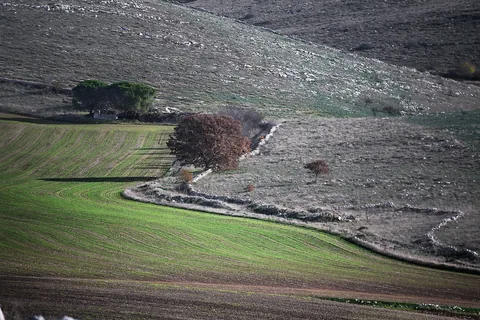
Close up, observe stone sizes, interlocking, changes in texture and the top of a wall. From a distance, it becomes a line organising the landscape. One view concerns building gestures; the other concerns what a structure connects or separates. A curve, passage or repair can reveal more than a uniform stretch. Pair a broad photograph with a detail and a question about function.
From shelter to cultivated land
Across Valle d’Itria, Murgia and Salento, compare shelter, boundary and field. Look at the whole before asking which feature supported a particular use. A local building name introduces investigation rather than a label for every structure. Tasting an agricultural product afterwards recalls that landscapes were not made only to be admired. Material, work and cooking connect without making every stop identical.
A walk with a few clear questions
Take a small notebook: draw the wall’s line, one shelter detail and its relationship to the ground. Architectural expertise is not required. Choose the period around outdoor time, alternating walking with reading or a town visit. Compare two examples through one question: how does form change with terrain or function? One carefully observed difference can organise the whole day.
A thread for your journey
On a walk, notice changes in stone patterns, curves and repairs. This connects architecture with agricultural work without confusing structures from different periods and with different purposes.
Talk to us