Puglia / PLACES, FOOD, CULTURE
Taranto: two seas and archaeology
A museum object and a waterside view can speak to each other: move between the scale of the collection and the city.
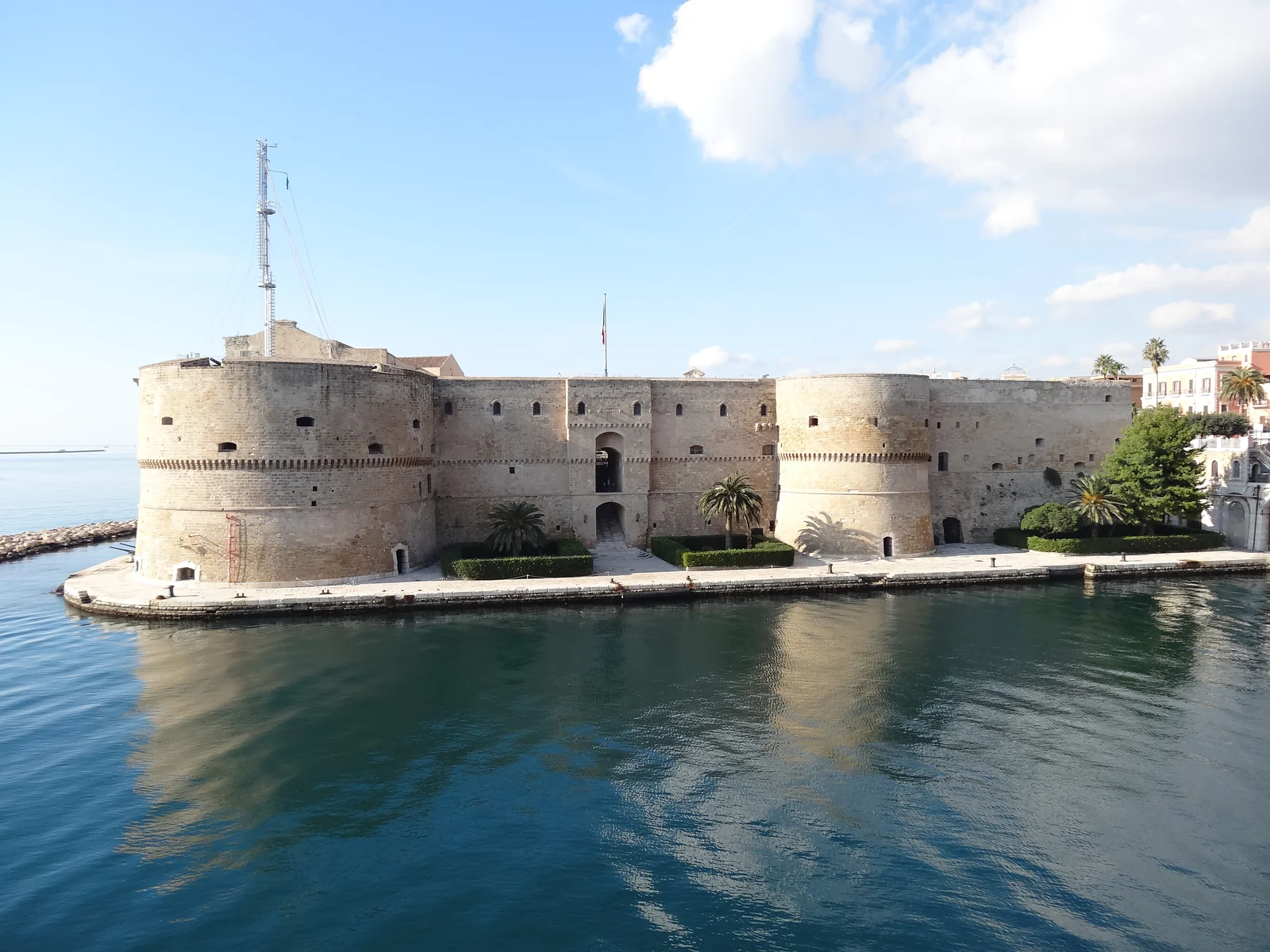
Photo: Livioandronico2013 · Wikimedia Commons · CC BY-SA 3.0 · Resized and converted to WebP.
Two seas and Magna Graecia heritage
Mar Grande and Mar Piccolo explain the shape of the city. Links between the old and new town include the swing bridge. MArTA holds gold objects and finds relating to Magna Graecia; mussels belong to the local food tradition.
Sources: Taranto — fonte istituzionale
A mirror between silver and gold
The MArTA’s gold objects tell more than a story of wealth. A case mirror from the Tomb of the Gold combines silver, a thin gold sheet and a scene worked in relief. Its female figure, theatrical mask and musical instruments raise questions about imagery, identity and taste in ancient culture. A personal object brings Magna Graecia closer to individual lives. Consider material, technique and subject before moving to other cases: close attention to one detail makes the collection more intelligible.
The castle: forms responding to artillery
The Italian Navy describes the Aragonese castle’s reconstruction between 1487 and 1492: lower, heavier round towers responded to changing artillery compared with earlier fortifications. Profile and thickness explain its military shape beyond a waterfront photograph. Interior restoration begun in 2004–2005 sought to distinguish the Aragonese configuration from earlier and later structures. This is another layered history rather than a building left unchanged.
From a small object to the waterfront city
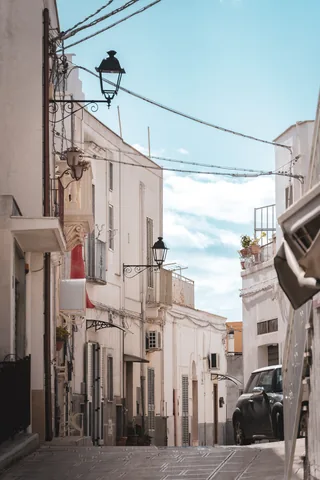
Begin at MArTA with the mirror described by the museum, noticing technique and imagery in one object. Gradually widen the scale: a gallery, the bridge and two seas, then the castle. The contrast between personal object and fortification brings different questions to history instead of a sequence of dates to memorise. A break in the old town adds the everyday scale of thresholds and shared spaces. Leave part of the collection for another visit rather than exhausting the museum before seeing the city.
The table and a return inland
Continue the mussel theme through a cooked dish retaining clear flavour and texture. Ask about preparation and supply rather than inferring every ingredient’s origin from proximity to the sea. Grottaglie extends the object-focused day into contemporary ceramics; Crispiano opens a rural chapter of masserie and preserved harvests. Taranto connects these worlds rather than becoming simply a beach stop. Give the museum and walk generous time. Apulica can arrange guiding, meals and transfers around that sequence, making the sea part of the story.
YOUR JOURNEY
How to shape a journey here
Use the museum as an introduction before returning to the waterfront city. At the table choose cooked mussels: experiencing local flavour does not require eating them raw.
Talk to us about it