Puglia / PLACES, FOOD, CULTURE
Castellaneta, ravine and film memory
Castellaneta brings together two images: a town overlooking a deep cut in the rock, and the memory of an actor who became an international icon. The most rewarding visit connects both scales. Begin with the landscape shaping the town, then explore objects telling cinema’s story, before a meal where bread, vegetables and festive traditions bring the journey back to everyday life. Take your time here: this inland Puglia stop can lead naturally into the landscapes of Basilicata.
Photo: Archeolucia · Wikimedia Commons · CC BY-SA 4.0 · Resized and converted to WebP.
Read the ravine before descending
Gravina Grande wraps around the old town. The municipality describes limestone channels shaped by water, usually dry today but carrying runoff after intense rain. The largest reaches roughly 145 metres deep, changing how the streets above are perceived. Rock settlements and the Montecamplo ravines connect geology with habitation and vegetation differing from the surface. Viewing from above and walking the bottom are distinct experiences: an urban stroll is not a gorge excursion.
Sources: Comune di Castellaneta — Le Gravine
The museum: objects, images and a clear admission price
The Rodolfo Valentino Museum displays the actor’s childhood bed, film posters and a reconstruction of The Son of the Sheik set. A film connects his career and public life, moving from personal objects to the construction of celebrity. The official page checked on 2026-10-06 lists €3.50 admission and possible group arrangements, without a guaranteed discount. This covers museum entry, not guiding or a journey. The Foundation gives its address as Via Vittorio Emanuele 117/119.
Bread, vegetables and the household calendar
The municipality’s food account describes cialledda: softened bread with tomato, oil, garlic and oregano. It associates onion, olive, caper, raisin and anchovy calzone with Good Friday, and grape-jam, walnut and almond pastries called falle with Saint Joseph. Fermented ricotta forte appears in seasonings. These are community traditions rather than an everyday menu: choose a preparation and learn its context instead of chasing every speciality in one meal.
Sources: Comune di Castellaneta — Gastronomia
A visit alternating scale and pace
Begin in the historic centre, finding a viewpoint that explains how the ravine influences the town’s shape. Give the museum a quieter period: first an object, then an image, and the changing face of the actor. Lunch can continue that attention to detail by asking how a dish is made and which ingredient defines it. For a walking-focused day, spring or autumn would be my choice of pace; summer visitors can explore during cooler hours. Choose accommodation around the next stage rather than travelling to the coast simply for a bed.
Towards Matera: living in stone, preserving memory
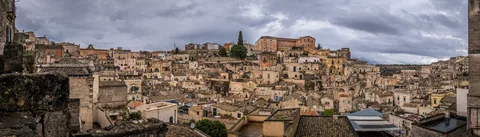
The connection with Matera works through a shared theme: how landscape meets human life, and how a place tells its story through cinema. Avoid repeating the same visit. In Castellaneta, focus on the contrast between ravine and celebrity image; in Matera, on spaces of habitation and contemporary storytelling. Polignano offers another cultural direction for travellers continuing towards art and coast. Apulica can shape the sequence through local guiding, transfers and a selected meal, giving every stop enough time to retain its character.
YOUR JOURNEY
How to shape a journey here
An inland Puglia day connecting landscape, cinema and home cooking, leading towards Matera or a coastal cultural journey.
Talk to us about it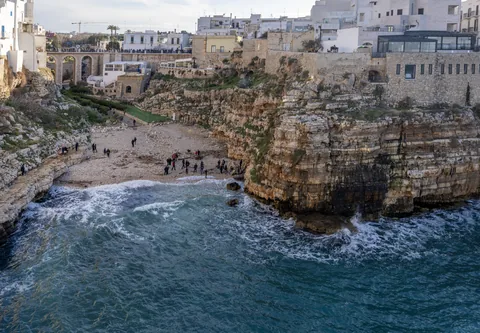

.jpeg)
