Puglia / PLACES, FOOD, CULTURE
Monte Sant’Angelo: the cave and Junno quarter
In Monte Sant’Angelo I would follow two gestures: descending towards the cave and breaking bread. One leads into pilgrimage history, the other into the town’s material life. Between them lie a doorway, a baptistery, museum tools and bakery work. This stop gains meaning when it extends beyond its main monument. For travellers who already know San Giovanni Rotondo, the comparison distinguishes periods, spaces and forms of devotion.
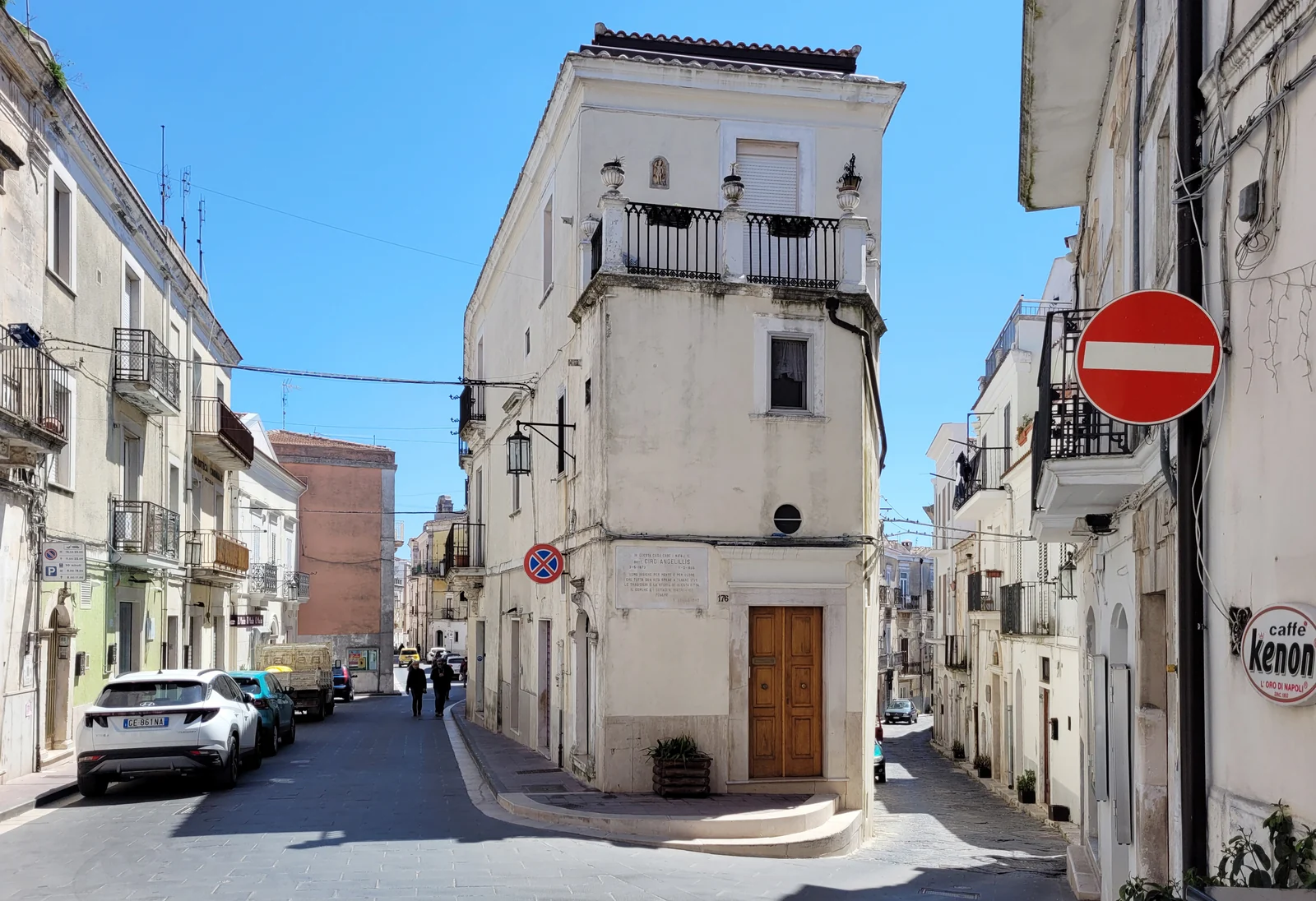
Photo: Bernard Gagnon · Wikimedia Commons · CC0 · Resized and converted to WebP.
A threshold between Gargano and the Mediterranean
The sanctuary route descends through stairs and an atrium towards the cave. The doors commonly called bronze were made in Constantinople in 1076 for the Amalfi merchant Pantaleone; twenty-four panels depict biblical episodes and the site’s history. This links the visit to Mediterranean movement of people, commissions and objects. Before crossing, examine a scene and its representation: the doorway is also a readable surface. The cave then calls for a pace respectful of worship.
Sources: Basilica Santuario San Michele — porte di bronzo · Basilica Santuario — grotta e percorso
A baptistery with a misleading name
San Giovanni in Tumba is known as the Tomb of Rotari, but the municipality traces that name to a mistaken reading of its founders’ inscription. It may have begun as the nearby San Pietro’s baptistery: a square base rises through octagonal and cylindrical layers to a dome. Read the building vertically and distinguish the impression created by its name from what the monument shows. Form, openings and overlapping volumes provide a more memorable encounter than a list of attributions.
Sources: Comune — San Giovanni in Tumba
Working objects at the Tancredi Museum
The Giovanni Tancredi Museum of Gargano Popular Arts and Traditions preserves craft tools and everyday objects; its collection grew from the local researcher’s work and occupies a former Franciscan convent. After the religious visit, it turns attention to people living and working here. Choose a few objects: what did they do, which skills and materials did they require? The museum then bridges landscape and food rather than becoming a separate detour, especially for travellers interested in crafts and cooking.
Sources: Biblioteca comunale — Museo Tancredi
Large loaves and an identified bakery
Monte Sant’Angelo bread uses soft-wheat flour and sourdough, making large round loaves with crisp crust and compact crumb. The municipality connects it with pancotto and other stale-bread preparations: its life continues after baking. Panificio Moretti, at corso Pietro Giannone 7, is an identified municipal-guide reference, not a partnership. Compare a slice with a preparation reusing it, exploring how one product supports several meals and how texture and moisture change its use.
Sources: Comune — Presidio del pane di Monte Sant’Angelo · Comune — Panificio Moretti
Staying on the mountain
Hotel Santangelo presents itself on the road towards Pulsano, about one kilometre from town, with rooms, panoramic terraces and a restaurant. This is an editorial accommodation reference rather than an appointed supplier. Its position may suit travellers spending more time on landscape; those wanting evening walks from their door can choose accommodation in town. Match location with transport so that selecting a room only for its view does not complicate the planned days.
When to go: an unhurried visit or a festival
For monuments, museum and bakery I suggest spring or autumn. Travellers seeking communal celebration can consider the patronal festival period: the official 2026 programme documents festivities from 27 September to 1 October and the Sacred Sword procession on 29 September. This is a past edition, not next year’s schedule. We can design interpretation, a food encounter and accommodation, continuing to San Giovanni Rotondo or Foresta Umbra. Give Vieste’s coast another day so mountain, forest and sea do not become mere transfers.
YOUR JOURNEY
How to shape a journey here
We can arrange Monte Sant’Angelo through cave, architecture and bread making, with a mountain stay and a continuation towards pilgrimage, forest or coast.
Talk to us about it


.jpg)