Puglia / PLACES, FOOD, CULTURE
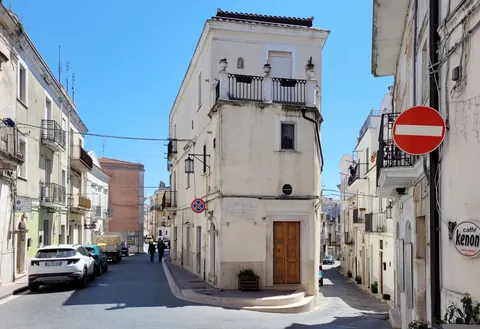
Vieste: old lanes and fishing structures
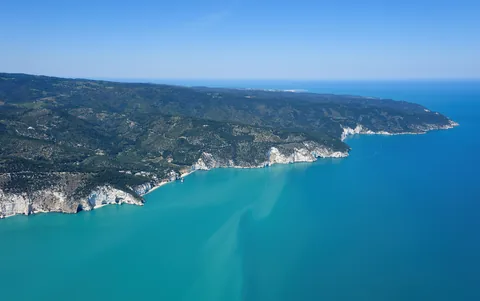
In Vieste, the sea can be read through work rather than only through beaches. Our route connects inhabited space, archaeology and fishing machines, bringing questions to the table. A coast seen from above, a preserved anchor and a lifted net describe different relationships with water. Vieste can provide a Gargano stay base when sightseeing and sea days each have their own time. The town should be more than somewhere to return for dinner.
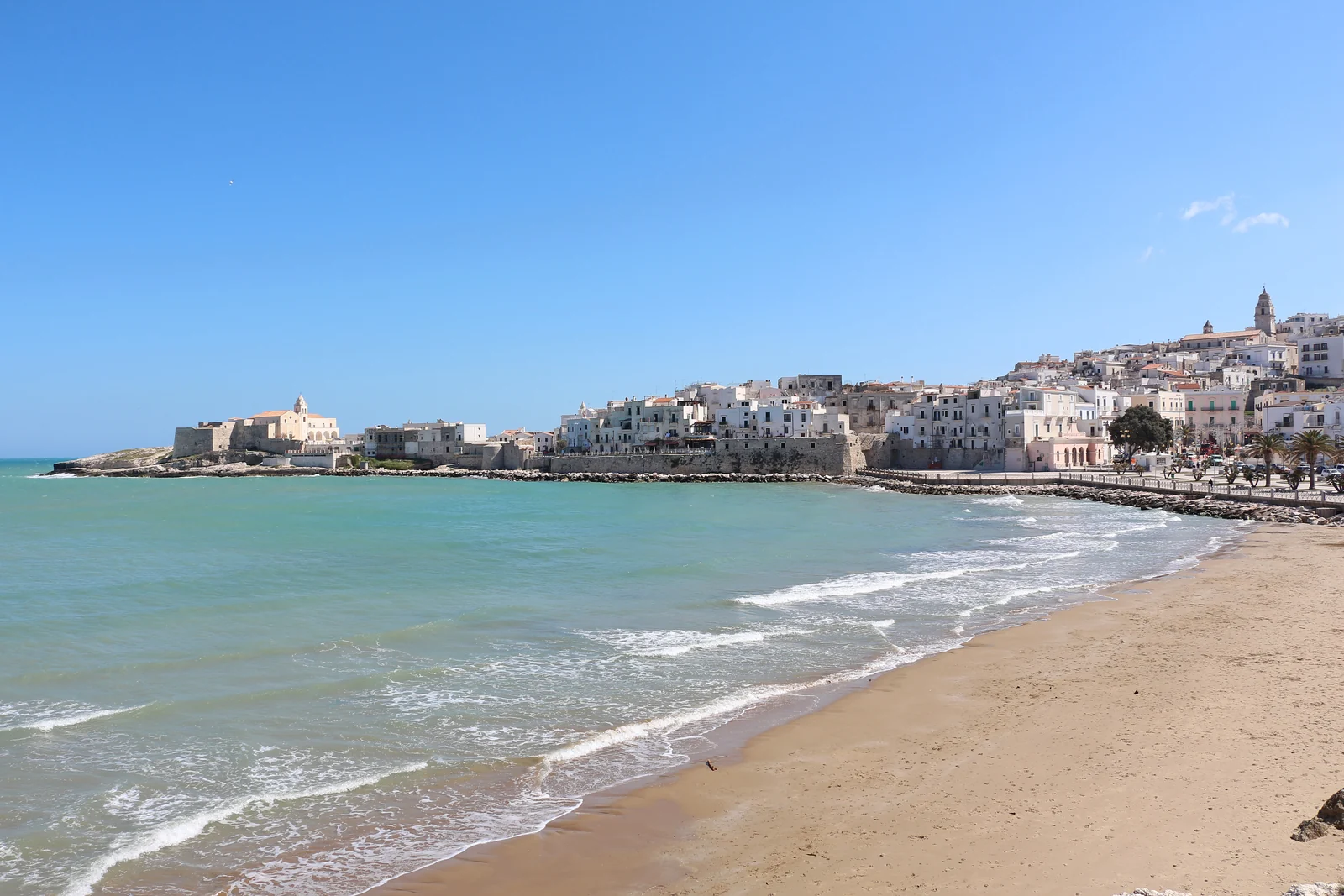
Photo: Bernard Gagnon · Wikimedia Commons · CC0 · Resized and converted to WebP.
A walk between town and coast
The regional presentation places Vieste between Peschici and Mattinata’s coast and connects its medieval centre, castle, cathedral and piazzetta Petrone sea viewpoint. Use that sequence to read town and coast rather than visit every monument at once. Observe position, thresholds and the passage from street to opening. A separate day in another Gargano town lets Vieste retain a distinct memory.
Sources: Regione Puglia — Vieste, AI Smart
The museum: anchors and tools, not just objects
Museo Michele Petrone occupies the former Capuchin convent. Transport amphorae and anchors explain maritime activity; pottery, tools and lamps from the Defensola flint mines reveal Neolithic miners’ work. Compare transporting and digging: different actions requiring tools, materials and knowledge. Concrete objects make people understandable without turning archaeology into dates, giving the sea seen earlier a historical dimension.
How a trabucco works
The municipality describes a platform with long arms, winches and ropes supporting a net, anchored to sea-facing rock and requiring coordinated work. Follow a rope’s path and the net’s movement: understanding a mechanism differs from recognising a picturesque silhouette. Even non-fishers can read tool, place and gesture together, distinguishing a historic machine from a venue merely using its name.
Sources: Città di Vieste — I trabucchi
Who preserves the craft
La Rinascita dei Trabucchi Storici was founded in Vieste in 2012 with older trabucco practitioners and enthusiasts to restore and rebuild the structures. Its site also presents September–May activities. It is an identified contact, not a presumed Apulica partner. An interpreted encounter can anchor a day: begin with construction and maintenance, then operation. A demonstration does not promise a catch or a meal made from it.
Sources: La Rinascita dei Trabucchi Storici — associazione e attività
An identified table in the centre
Al Vicoletto, at via F. A. Nobile 1, presents family cooking with fish, pasta, caciocavallo and paposcia. This is an editorial stop reference, not a partnership. Continue the sea-and-country comparison with one preparation, without assigning unproven origin to each ingredient. Accommodation in town or by the coast should follow stay length: being close to an evening walk and close to a beach meet different needs.
When to choose it and how Apulica connects it
For walking, museum and crafts, I would suggest spring or autumn; summer travellers can keep the town visit separate from a beach day. We can arrange cultural interpretation, a trabucco encounter, food and accommodation. Peschici compares inhabited coast; Foresta Umbra changes environment and pace; Monte Sant’Angelo turns towards pilgrimage history. Choose one continuation per day, leaving encounters enough time and giving the sea the role chosen by the traveller.
YOUR JOURNEY
How to shape a journey here
We can arrange Vieste around town, museum and trabucco work, with a table in the centre and sea days separate from sightseeing.
Talk to us about it


.jpg)