Puglia / PLACES, FOOD, CULTURE
San Giovanni Rotondo: pilgrimage and town
San Giovanni Rotondo rewards a clear question: are you interested in pilgrimage, town history or architecture serving a religious community? We propose connecting those perspectives without confusing them. A place of reflection calls for attention to people using it; the town can open a conversation about everyday Gargano life. For travellers with different interests, we can design a day with room for faith and cultural interpretation, rather than a sequence of unrelated stops.
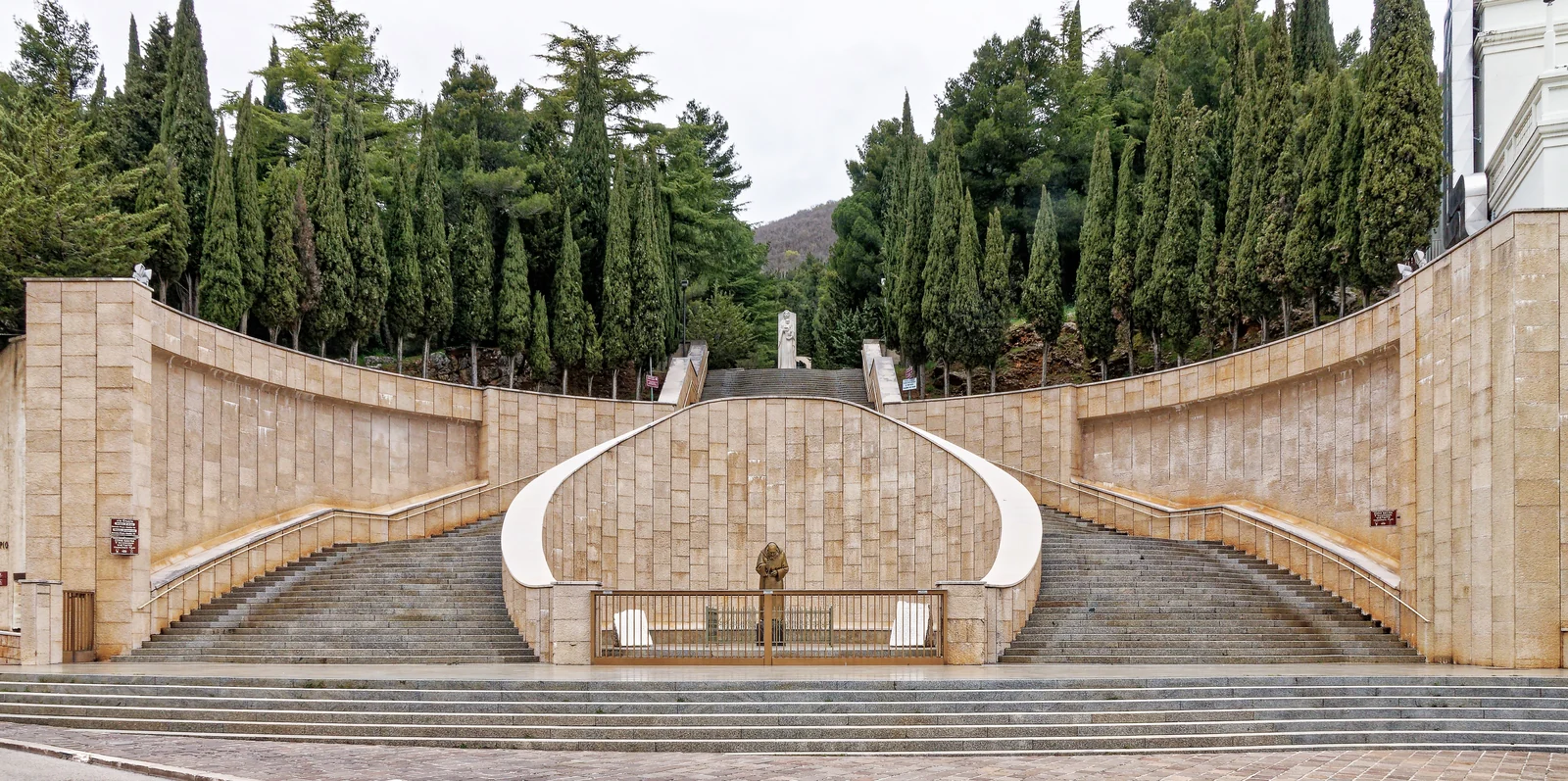
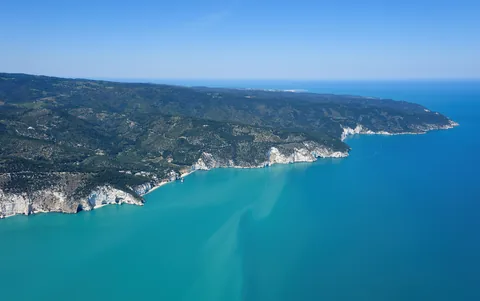
Photo: Holger Uwe Schmitt · Wikimedia Commons · CC BY-SA 4.0 · Resized and converted to WebP.
The town before the sanctuary
The name refers to the circular baptistery of San Giovanni; the centre retains a medieval layout with lanes, small squares and remnants of Angevin walls. Its urban history predates contemporary pilgrimage. Begin with the compact core and its thresholds: a defensive trace, a changing street width, a church interrupting the houses. This prepares a comparison with spaces for large congregations without reducing the town to the sanctuary’s waiting room.
Three scales of religious life
The Capuchins have occupied the convent since 1540; Padre Pio arrived in 1916. His cell and the old church choir return the story to everyday scale. Santa Maria delle Grazie, designed by Giuseppe Gentile and consecrated in 1959, responds to growing pilgrimage with three aisles and a large apse mosaic. Seeing intimate rooms before the larger church distinguishes personal memory, convent community and the reception of pilgrims, including for cultural visitors.
Sources: Convento Santuario Padre Pio — il convento · Convento Santuario — Santa Maria delle Grazie
Renzo Piano: architecture serving worship
The church of San Pio is Renzo Piano’s work, with liturgical design overseen by Crispino Valenziano. The sanctuary presents it as a response to receiving worshippers and celebrating the Eucharist. Read how people enter, orient themselves and gather rather than treating it simply as an architect’s signature. A cultural visit can compare space and religious use: attention, movement and moments requiring quiet. Taking part in worship remains a personal choice.
Pancotto and pasta with chickpeas: another memory
The municipality’s collected recipes describe bread, pulses and vegetables. Lu panecotte combines stale bread, potatoes and field greens finished with raw olive oil; lajene e cice pairs cut sheet pasta with chickpeas. These are useful prompts for family-cooking conversations without claiming every household follows one recipe. Compare textures: absorbent bread, firm pasta and substantial pulses. A simple lunch can move the conversation from monuments to people.
A reference for food and accommodation
Hotel Vittoria, at via Santa Vittoria 4, presents a restaurant welcoming non-residents, local and national dishes and a panoramic terrace. This identified editorial reference is not an Apulica partnership. Consider it when concentrating visit and break in the same part of town; travellers wanting the town walk at their doorstep can choose a different base. Accommodation should follow the purpose of the stay: reflection, cultural exploration or a continuation into the Gargano.
When to go and how to connect it
For cultural exploration I suggest spring or autumn and an unhurried day; religious visitors can choose a period matching their personal journey. We can arrange interpretation, transfers, meals and accommodation while respecting reflection time. Monte Sant’Angelo offers a comparison between pilgrimage traditions; Foresta Umbra turns towards landscape. Choose the continuation around the main interest instead of automatically adding both, keeping the sea for a separate day when it belongs in the trip.
YOUR JOURNEY
How to shape a journey here
We can design a visit connecting town, convent and contemporary architecture, with food and accommodation matching pilgrimage or cultural travel.
Talk to us about it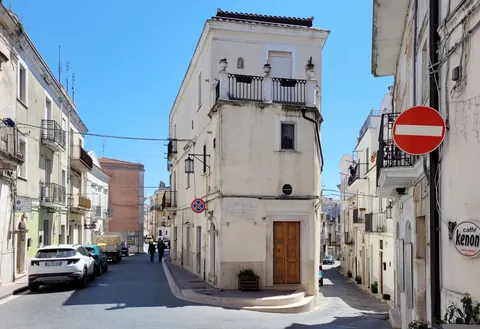


.jpg)