APULICA / Stories, people and traditions
Petruzzelli: Bari’s stage history
The theatre’s history belongs to the relationship between auditorium and city: audiences, artists and stage work give the building meaning.
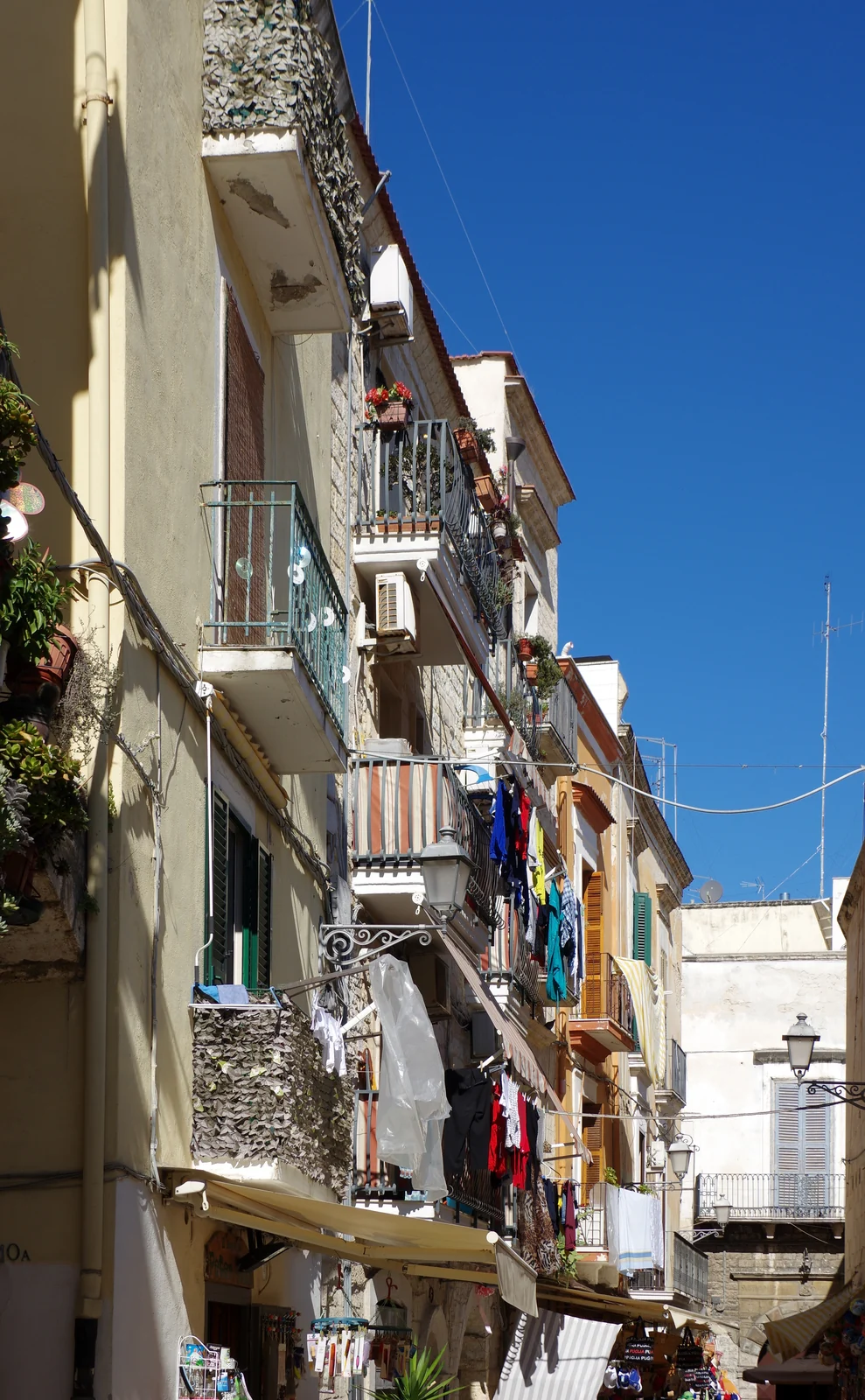
Photo: Berthold Werner · Wikimedia Commons · CC BY-SA 3.0 · Resized and converted to WebP.
Place and history
The theatre grew from the project of brothers Onofrio and Antonio Petruzzelli and opened in 1903 with Meyerbeer’s Les Huguenots. The 1991 fire interrupted its artistic life; reconstruction returned the theatre to the city in 2009. The project also responded to demand for a larger auditorium than the Teatro Piccinni. Engineer Angelo Cicciomessere, later Messeni, designed it; merchants, civic administration and musical life converged in the new theatre.
Auditorium and theatre machinery
Plans published by the Foundation distinguish the stalls, upper tiers and fly grid: the theatre comprises the audience’s space and the machinery supporting performance.
Sources: Fondazione Petruzzelli — piante e documenti tecnici
From entrance to auditorium
Follow the audience’s journey before examining the stage. Entrance, foyer and auditorium mark changes of pace: meeting, settling and taking a seat. Attention then moves from decoration to the relationship between spectator and scene. Plans help compare stalls with upper levels. Ask how a change of viewpoint alters the experience, rather than only which seat offers the best view.
Choose a performance for its content
Begin with what you want to hear: a voice, orchestra, sung story or dance. Then match that interest to the actual programme. Listening beforehand can illuminate the evening; time afterwards allows discussion of sound, staging and pace. The theatre becomes a substantive chapter of Bari rather than only a photographed interior. Architecture matters, and performance adds another way to understand it.
A Bari day with a change of pace
Combine an urban walk with an evening performance as separate rhythms. Daytime reveals streets and collective spaces; evening brings concentrated attention. Leave room around a meal for that transition. Here the artistic calendar matters more than a generic tourist season: one production can motivate a visit. An architectural journey might instead compare Petruzzelli with Teatro Margherita and other spaces for performance.
A thread for your journey
Petruzzelli adds a different urban history to Bari’s old lanes. Treat the theatre as part of understanding the city, choosing any performance for its programme as well as its setting.
Talk to us