Basilicata / PLACES, FOOD, CULTURE
Viggianello: above the Mercure valley
Valley, village and woodland meet through collective actions: understanding the rituals reveals a lived landscape rather than scenery alone.
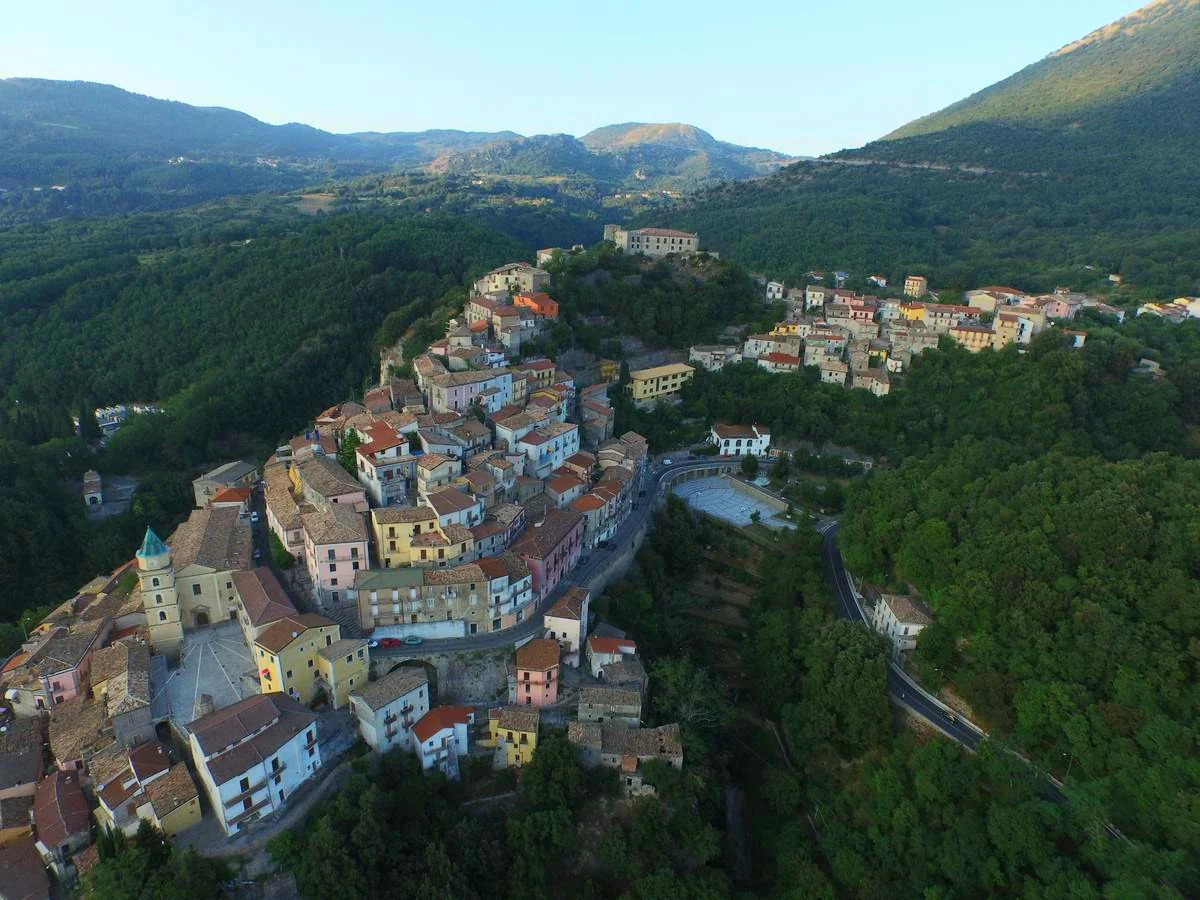
Photo: Millucci0 · Wikimedia Commons · CC BY-SA 4.0 · Resized and converted to WebP.
What to notice
Houses spread across the slopes of Monte Serra above the Mercure valley. The river continues into Calabria under the name Lao. Portals and historic houses sit alongside the memory of tree rituals.
Sources: Viggianello — fonte istituzionale
A detail that changes the visit
The pitu and rocca distinguish trunk and crown in local tree rituals. The former may be a beech or Turkey oak, the latter a fir: the tradition is not simply about selecting a tree but joining elements through community work. Transport involves people and animals, and the rituals take place in different contexts including Viggianello’s centre, Pedali and Zarafa. Knowing these names avoids flattening the tradition into one generic festival. The relationship between village and woodland becomes a collective action, as well as a view.
Sources: APT Basilicata — La Pitu e la Rocca
A river with two names
The local tourism association identifies the Mercure spring near the centre and explains its continuity with the Lao: the same watercourse changes name between Basilicata and Calabria. A tale about a lost ring accompanies the place; it belongs to oral tradition, not a historical explanation of the village. Water and remembered stories provide two different ways to read one landscape feature.
A route through village, spring and ritual
Give the visit three moments: a village walk, an encounter with the water landscape and an explanation of the tree ritual. A ritual need not be taking place to be interesting: photographs, testimony and an account of the gestures can reveal how a community works together. If the journey coincides with a celebration, allow it its own time rather than treating it as a show scheduled for visitors. At the spring, observe the transition towards the river and compare the setting with a map. This allows travellers to know Pollino without devoting the entire day to a high-altitude route.
When ingredients cross a border
Pair Viggianello with Rotonda for a day linking landscape and cooking, or with Morano to compare villages on different sides of the massif. A regional border should not interrupt the journey or erase differences. At the table, ask which ingredients come from nearby cultivation and which through preservation. A fresh preparation and a preserve can explain different times within the same landscape. Choose an overnight base around the following walk or visit rather than moving every evening. Apulica can integrate guiding, pauses and transfers on that basis: a mountain understood through communities and people, not simply a sequence of views.
YOUR JOURNEY
How to shape a journey here
Read the town between valley and mountain: alternate a town walk with a landscape viewpoint without turning every stop into a hike.
Talk to us about it