Northern Calabria / PLACES, FOOD, CULTURE
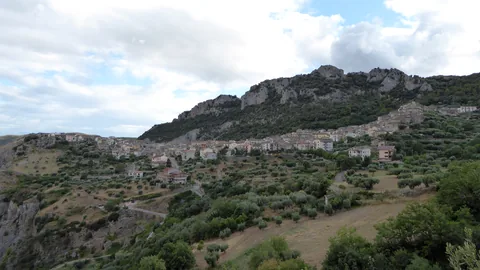
Morano Calabro, village and mountains
Morano reveals itself through the shape of the town: houses rising up the hill, passages and changing perspectives. A cultural stop in conversation with the Pollino landscape.
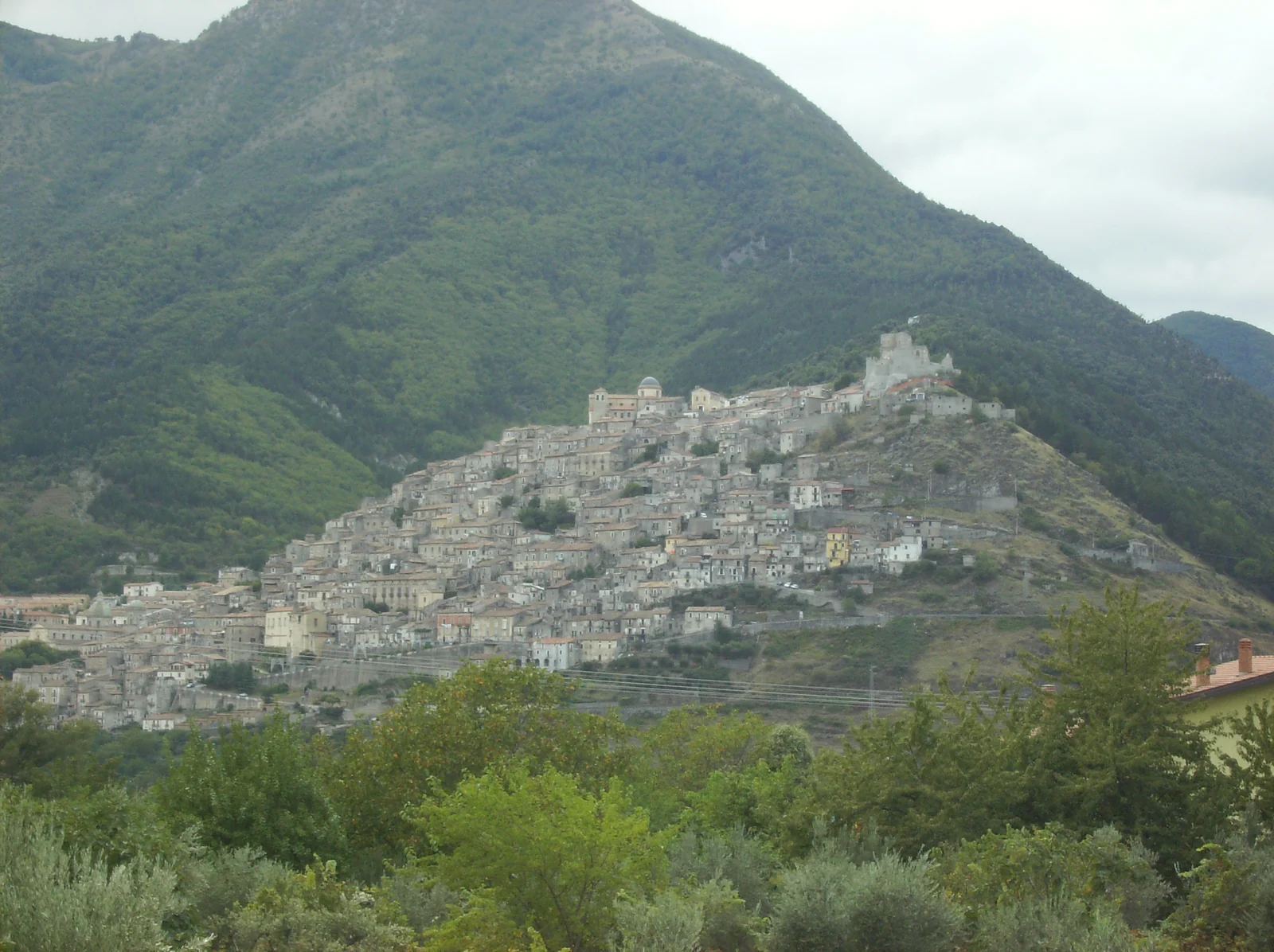
Photo: Pigr8 · Wikimedia Commons · Public domain · Resized and converted to WebP.
Houses on the hill
Italia.it describes a late-medieval centre with closely grouped houses along the hillside and Pollino behind it. Walking reveals more than a panorama: how the town occupies the slope and shapes its spaces.
Sources: Italia.it — Morano Calabro
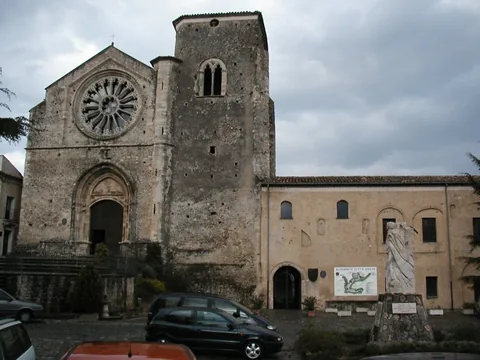
San Bernardino: two portals, stone and wood
The municipal description presents San Bernardino as Franciscan late-Gothic architecture. Its portico has four front arches and one at the side, with fragments of frescoes dated 1499. Two yellow-stone façade portals differ: pointed for the church, lowered for the cloister. Inside the single nave, exposed stone, wood and bare walls create restraint contrasting with more decorated churches. Observe the comparison at the threshold: the passage’s form introduces the space’s function.
Farmers and shepherds beyond the view
The museum of agriculture and pastoral life is housed in Palazzo Salmena. The Ministry of Culture describes displays combining objects with photographs, documents and maps. It is more than a collection of curious tools: it connects work with territory. The ministry’s record lists closure; this guide describes the heritage without assuming entry is possible.
Sources: MiC — Museo agricoltura e pastorizia
A climb with pauses and details
Look at Morano from below to recognise the pattern of houses, then begin at San Bernardino’s portico. Comparing its portals gives the walk a clear question: how does an entrance differ between religious building, home and public passage? Continue uphill in short stretches, looking back across roofs already passed. The final view then explains the town rather than replacing it. Those preferring less strenuous walking can still make a complete visit through one carefully read building, a stretch of street and its relationship with the hillside.
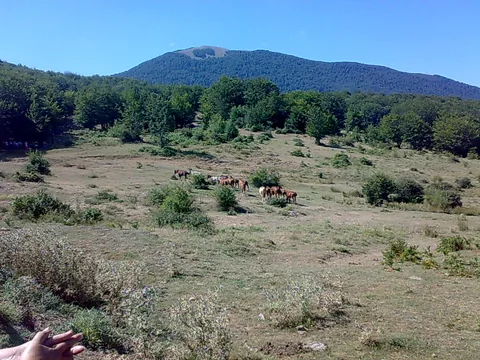
From townscape to mountain work
Pair Morano with a Pollino day, or with Civita. The first connects environment and work; the second compares ways of organising village life. The rural theme can continue at the table with questions about handmade pasta or a cheese: not just its name, but its preparation and the occasions associated with it. Avoid a long tasting list without context. Morano can stay in the memory through the relationship between an object, a described gesture and an observed landscape, with the town at the centre rather than simply in the background.
YOUR JOURNEY
How to shape a journey here
Town and mountains, with Civita or Pollino as connections. Access and services are defined for the visit.
Talk to us about it