Northern Calabria / PLACES, FOOD, CULTURE
Altomonte, art and bread inland
Altomonte brings artistic heritage together with bread culture. The centre and its views help explain the relationship between inland towns and the landscape towards the Ionian Sea.
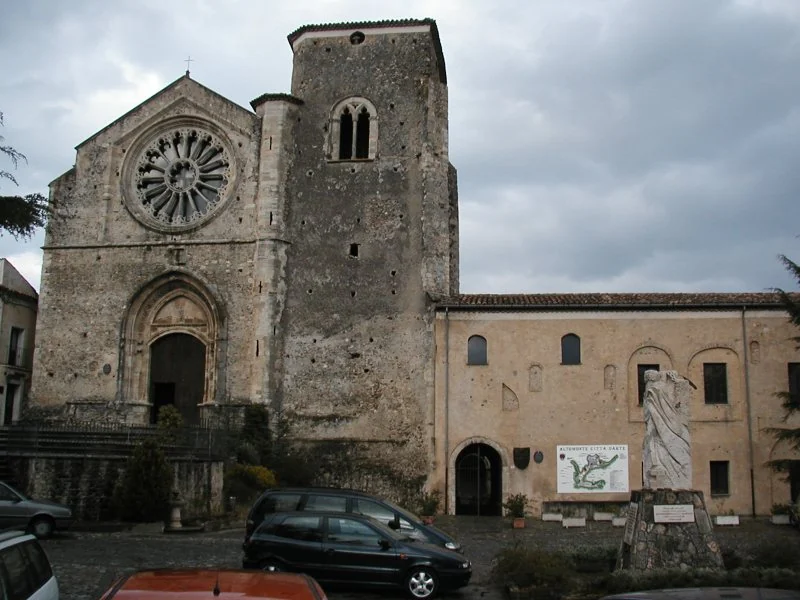
Photo: The original uploader was EdoM at Italian Wikipedia. · Wikimedia Commons · CC BY-SA 3.0 · Resized and converted to WebP.
Art around the square
The regional portal presents Santa Maria della Consolazione as an example of Angevin Gothic architecture. The Dominican convent and civic museum provide further cultural references. These places offer a way to understand the town’s artistic identity beyond a scenic walk.
Sources: Regione Calabria — Altomonte
Lanes and landscape
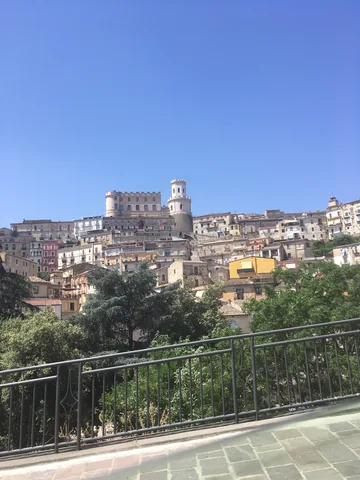
The regional village guide describes lanes, stairways and views towards Pollino, the Sibari plain and the Ionian Sea. The town connects mountains, plain and coast within one landscape. Pausing to observe this geography gives context to later stages of a journey.
Sources: Regione Calabria — Historic centres and old villages, Altomonte
Bread culture
Calabria’s tourism authority also presents Altomonte as a town of bread. It provides a recognisable food theme alongside art: everyday work, the table and the story of a product. A visit can follow this thread rather than append a generic tasting.
Sources: Regione Calabria — Altomonte
Stonework, a rose window and theatre
The municipality connects medieval lanes with Santa Maria della Consolazione, its portal and rose window, and the open-air theatre. It also identifies Altomonte as a City of Bread. These elements give the village several registers: monumental art, public space and food culture can be read together rather than reduced to a single facade photograph.
Begin with one detail
Choose the rose window or portal as the first detail, then widen the view to the square and the buildings’ proportions. A thoughtful visit does not require mastery of every architectural style: observe what draws the eye, how stone changes in the light and how a facade relates to the space before it. Treat an art collection as a deeper exploration, not an obligation to exhaust. Finish by returning to the square without immediately taking photographs: connect what you have seen and decide which part you would like to revisit. Here the pace matters as much as the number of stops.
Bread and art in one story
Bread offers a useful question for a pause in Altomonte: how does a crust differ, what texture do we seek, what would we eat alongside it? Prefer a simple taste and a precise explanation to a meal built only around the idea of typicality. Continue to Morano if the theme remains village and mountain, or Corigliano-Rossano to compare different artistic and food traditions. There is no need to prove these places are alike: the sequence gains meaning through their differences. Altomonte can teach us to move from an important artwork to an everyday gesture while keeping the same level of attention.
YOUR JOURNEY
How to shape a journey here
Art and bread in an inland town. Producer encounters require agreement; no existing partnership is assumed.
Talk to us about it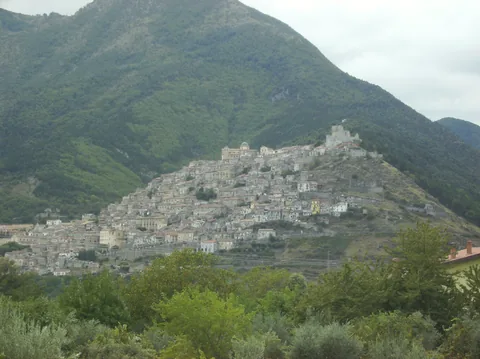

_luglio_2021_f01.jpg)