Northern Calabria / PLACES, FOOD, CULTURE
Civita, an encounter with Arbëreshë culture
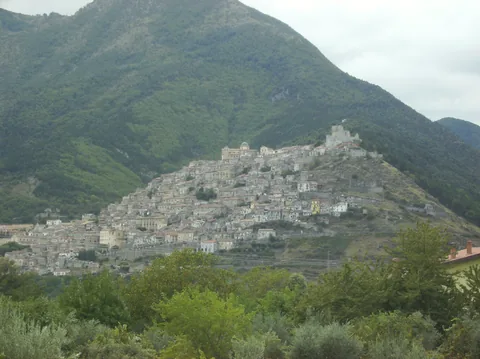
In Civita, Arbëreshë culture meets the Pollino landscape. Its interest lies in the details: how houses are arranged, the traditions they express and the village’s relationship with the mountains.
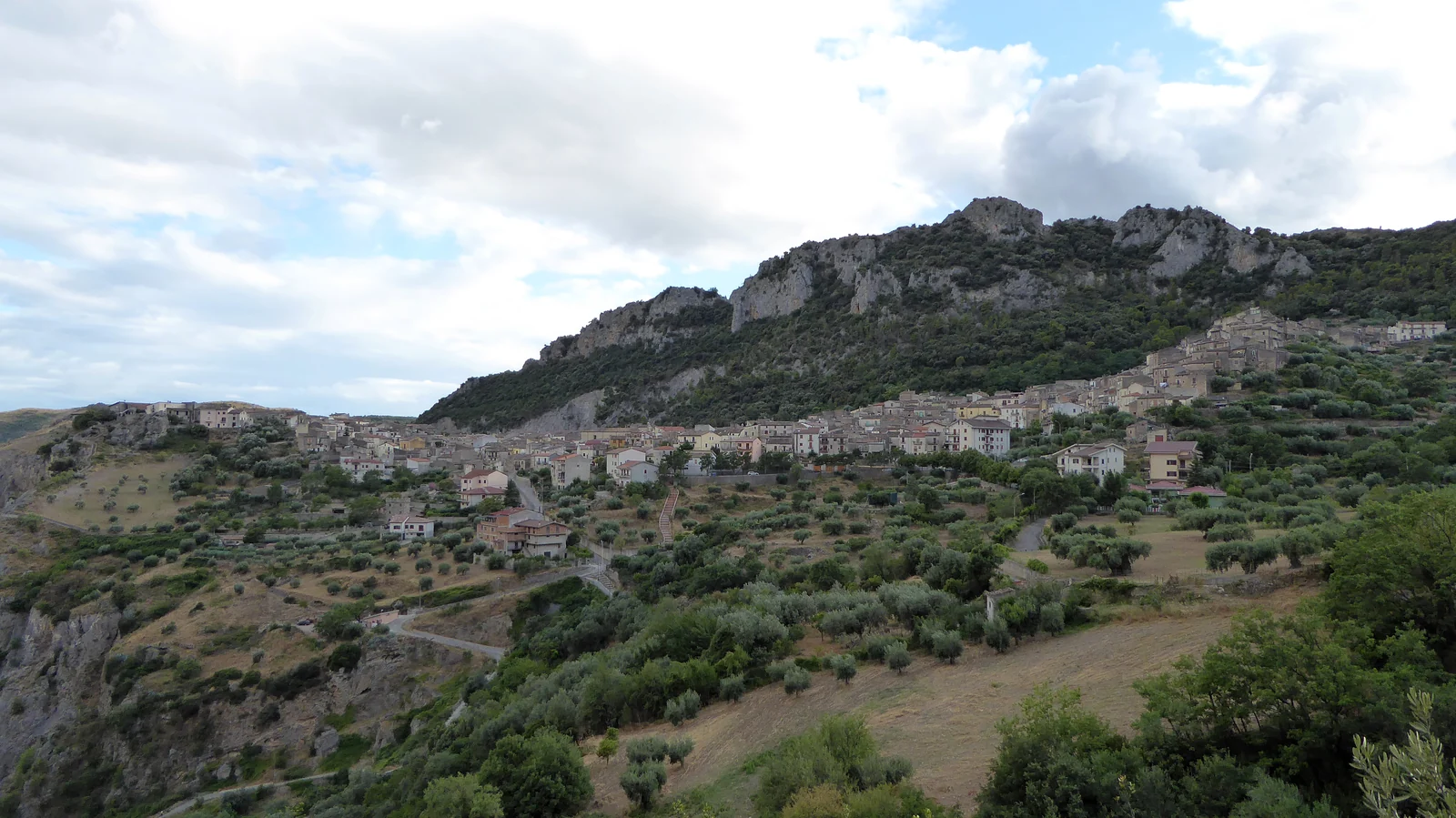
Photo: DonGatley · Wikimedia Commons · CC BY-SA 4.0 · Resized and converted to WebP.
Arbëreshë culture in the houses
Civita is a centre of Italo-Albanian culture. Its Kodra houses, with openings suggesting faces, and gjitonia spaces give the settlement a distinctive character. Santa Maria Assunta adds a religious reference. Together they explain a particular cultural identity beyond the image of a mountain village.
The Raganello setting
Italy’s national tourism portal places Civita within Pollino National Park and the Raganello Gorges reserve. Its position connects the village with a landscape worth pausing for. Understanding that setting from the village can be part of a visit, distinct from an excursion into the gorges.
Sources: Italia.it — Civita
A museum as an introduction
The museum of Arbëresh culture provides context for the village’s Italian-Albanian identity. Italia.it connects this heritage with the chimney trail, Kodra houses and Devil’s Bridge. Facades suggesting a human face and the shapes of chimneys make domestic architecture part of the visit, rather than merely a photographic backdrop. The bridge introduces a different relationship, with the Raganello landscape: two ways of reading the same village.
The village before the gorge
Begin with the square and spaces between houses, considering how neighbourly life becomes an urban form. Then choose a few details: one chimney, a facade, the transition from a lane into a small open space. If the museum is part of the day, use it to frame questions about language and family life, then return to the streets with a more informed eye. Give the Raganello landscape a separate moment: a viewpoint is more than the final photograph of a cultural visit. This sequence connects community and environment without treating Civita solely as a hiking stop.
A conversation with Morano
Civita and Morano belong in the same journey because they offer complementary readings of Pollino: Arbëresh identity and neighbourhood here, a vertical townscape and rural working life in Morano. Connect them through a question — how does a community change when ways of building and dwelling differ? — allowing each its own walking time. At the table, ask concrete questions: a preparation’s local name, who made it in the family, the ingredient that gives it character. This is a conversation worth seeking, rather than a folklore performance to demand or an encounter claimed to be already arranged.
YOUR JOURNEY
How to shape a journey here
Arbëreshë culture and the Pollino landscape. Visits and activities are agreed for the period and group.
Talk to us about it