Irpinia / PLACES, FOOD, CULTURE
Montella, the landscape of chestnuts
In Montella, chestnuts help explain rural landscape, work and food. Cultural heritage and nature add further threads to the visit.
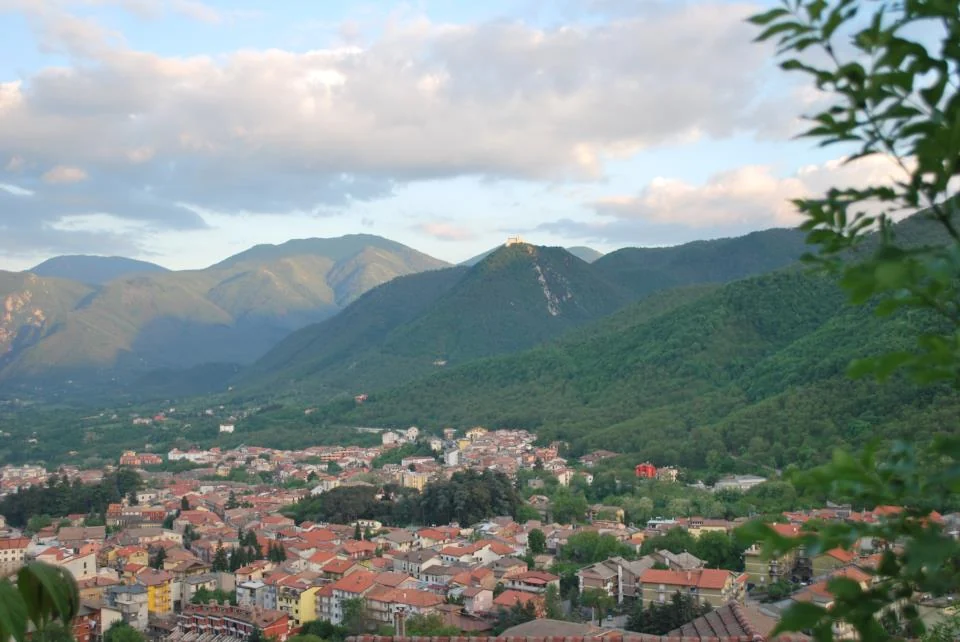
Photo: Mies me at Italian Wikipedia · Wikimedia Commons · Public domain · Resized and converted to WebP.
Castagna di Montella PGI
The region links Castagna di Montella PGI with the Terminio-Cervialto area, including Bagnoli Irpino and other municipalities. Chestnuts are used fresh and processed. They express a cultivated landscape and its food, offering a thread through the territory rather than only an autumn tasting.
San Francesco a Folloni
The complex includes a church, convent, cloister, museum and library. The provincial account connects it with the local Franciscan community. It adds specific cultural heritage to a rural landscape, giving a day two different registers and showing that local heritage is more than food products.
Sources: Provincia di Avellino, Sistema Irpinia — San Francesco a Folloni
The valley and Picentini landscapes
Sistema Irpinia places Montella in the Picentini mountains and Calore valley, identifying Verteglia and waterfalls among its nature references. Landscape can become part of a stop alongside town and food. A connection with Bagnoli follows the wider territory without requiring the same food theme to be repeated.
Chestnuts as a working culture
Sistema Irpinia’s brochure includes MUCAM, the Montella Chestnut eco-museum, alongside San Francesco a Folloni and the Santissimo Salvatore sanctuary. Cultivation and processing form part of its subject. Food therefore gains an interpretive setting: beyond flavour, there are cultivated landscapes, techniques and the memories of people who worked with the product.
Sources: Sistema Irpinia — patrimonio e MUCAM
From church to chestnut landscape
Connect a cultural visit with the chestnut theme without asking one day to exhaust the whole territory. Folloni can provide the programme’s first focus; a conversation about the product then moves from monumental to everyday history. Ask about stages of work and differences between fresh and preserved fruit. If the journey includes contact with a grower or processor, this is the interesting centre of that encounter. The landscape becomes more than greenery: it becomes a system of choices, timing and gestures. A walk and a meal can then speak about the same place without repeating the same experience.
Montella and Bagnoli explain each other
Montella and Bagnoli work together when the theme is inhabited, working mountain country. They should not be identical food stops: chestnuts lead here, while Bagnoli opens the truffle and Laceno connection. Cooking offers a place to compare textures and preparations, letting one simple dish explain an ingredient. Avellino adds the register of collections and city life. The journey can alternate museum, landscape and table, with an overnight stay that keeps the stops from becoming a race. The interest lies in continuity between experiences, rather than in the number of products collected.
YOUR JOURNEY
How to shape a journey here
Chestnuts, heritage and nature, with experiences chosen for the season. Routes and services are defined for the travellers.
Talk to us about it
.jpg)
