Basilicata / PLACES, FOOD, CULTURE
Miglionico: a castle and eighteen painted panels
Miglionico offers two distinct reasons to stop: a political story connected with its castle and a painting that deserves close attention. More than a detour from Matera, it brings together history, art and time spent in a smaller town.
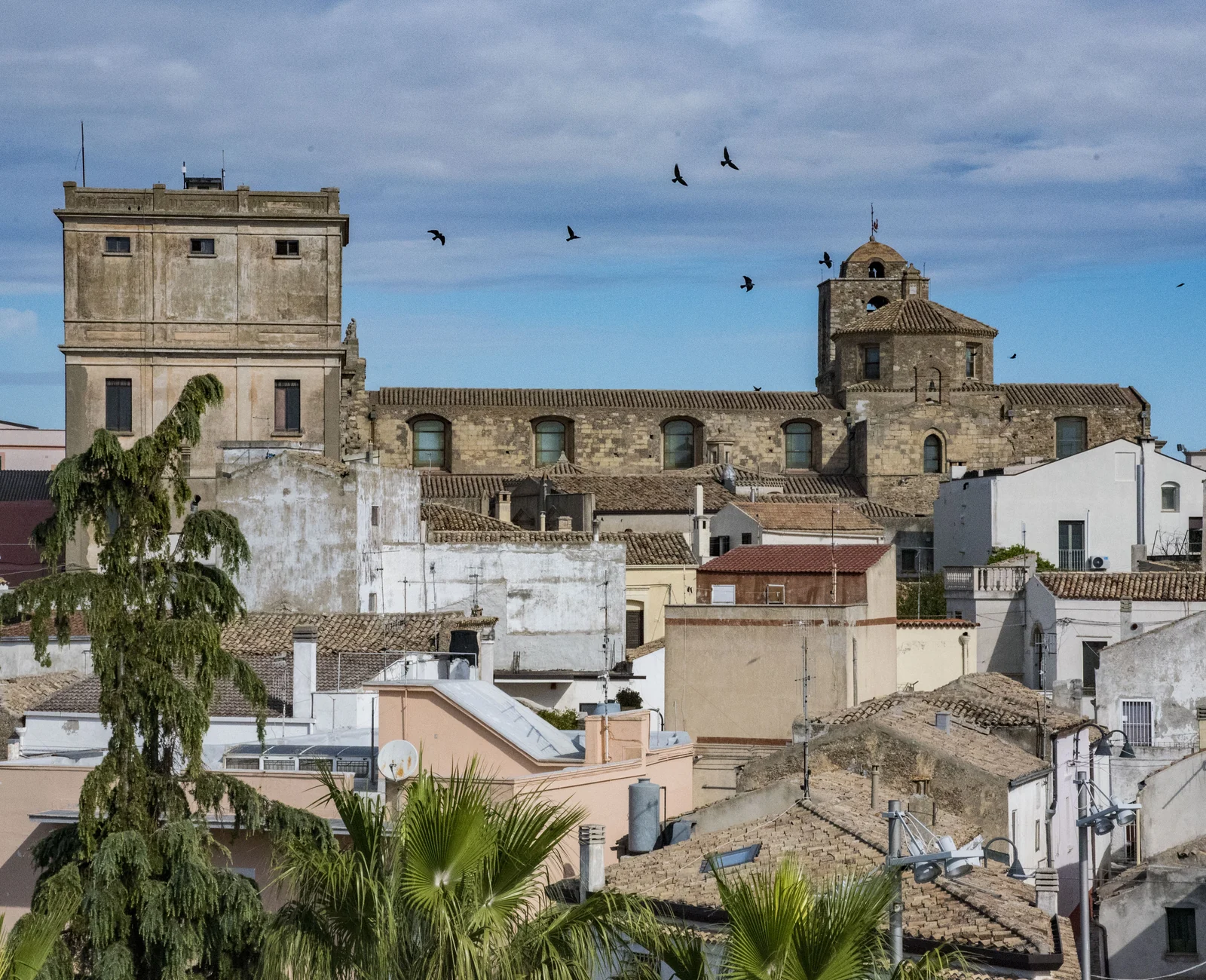
Photo: Cinzia astorino · Wikimedia Commons · CC BY-SA 4.0 · Resized and converted to WebP.
Malconsiglio and the politics of the kingdom
Malconsiglio Castle is connected with the Barons’ Conspiracy of 1485 against Ferdinand I of Aragon. Its presence dominates the town and provides a tangible starting point for exploring power in southern Italy. The multimedia exhibition described by the national tourism guide recounts that episode through the people and decisions involved.
Sources: Italia.it — Miglionico
Cima da Conegliano in Santa Maria Maggiore
Santa Maria Maggiore preserves Cima da Conegliano’s 1499 polyptych, made up of eighteen panels. It is a reason in itself to visit Miglionico: taking in the whole work before looking closely at individual paintings changes the pace of your visit. The town also has an agricultural tradition associated with olives and figs, eaten fresh or dried.
Sources: Basilicata Turistica — Miglionico
The lake in the Bradano landscape
San Giuliano Reserve covers parts of the territories of Matera, Miglionico and Grottole. Its artificial lake and river stretches sit alongside vegetation and wooded margins. This setting offers a change of scale after the castle and church, taking the journey from the town’s history into its surrounding landscape.
Sources: Basilicata Turistica — Grottole e Riserva di San Giuliano
An artwork the community wanted back
A regional council account describes the polyptych’s transfer to conservation storage and the parish priest’s efforts to bring it back to Miglionico. It is more than an unexpected artwork in a small town: its history reveals relationships between conservation, community and place. This adds another reason to pair the castle with the church.
A day between power and images
The castle and polyptych offer different themes: political history and interpretation through figures and colour. Keep them distinct, with a walk between visits. In the castle, ask about space and the decisions associated with it; before the panels, choose one figure, observe its position and relationship with the others, then look at the whole again. Knowing every saint’s name is not a prerequisite. A guide can explain the context while leaving time to observe. Spring and autumn are worth considering for walking and landscape; when art is the central interest, access arrangements can shape the calendar.
A stop that widens the Matera journey
Miglionico can widen a Matera-based stay towards a quieter Basilicata less dominated by the Sassi panorama. The connection is not only geographical: both ask us to move from a view towards a place’s meaning. Craco changes the subject again towards memory and abandonment. Give each a different rhythm: time for an artwork in Miglionico, a reading of dwelling in Matera, landscape and displacement in Craco. Meals and thoughtfully selected accommodation can connect these moments across several days, with guiding and transport where genuinely useful. Every monument need not have an artificial food experience attached: lunch can simply be a good pause in the town.
YOUR JOURNEY
How to shape a journey here
Journey idea: give Miglionico its own time alongside Matera. The castle introduces history; the polyptych asks for slower observation. A pause in town completes the contrast before continuing towards Craco.
Talk to us about it
.jpeg)
.jpeg)