Basilicata / PLACES, FOOD, CULTURE
Craco: a town shaped by its landscape
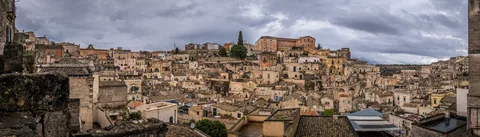
Craco first catches the eye through the relationship between its houses and the ground beneath them. The town’s silhouette seems suspended above an almost bare landscape. Its appeal goes beyond appearance: the history of the settlement and the story of the land are inseparable.
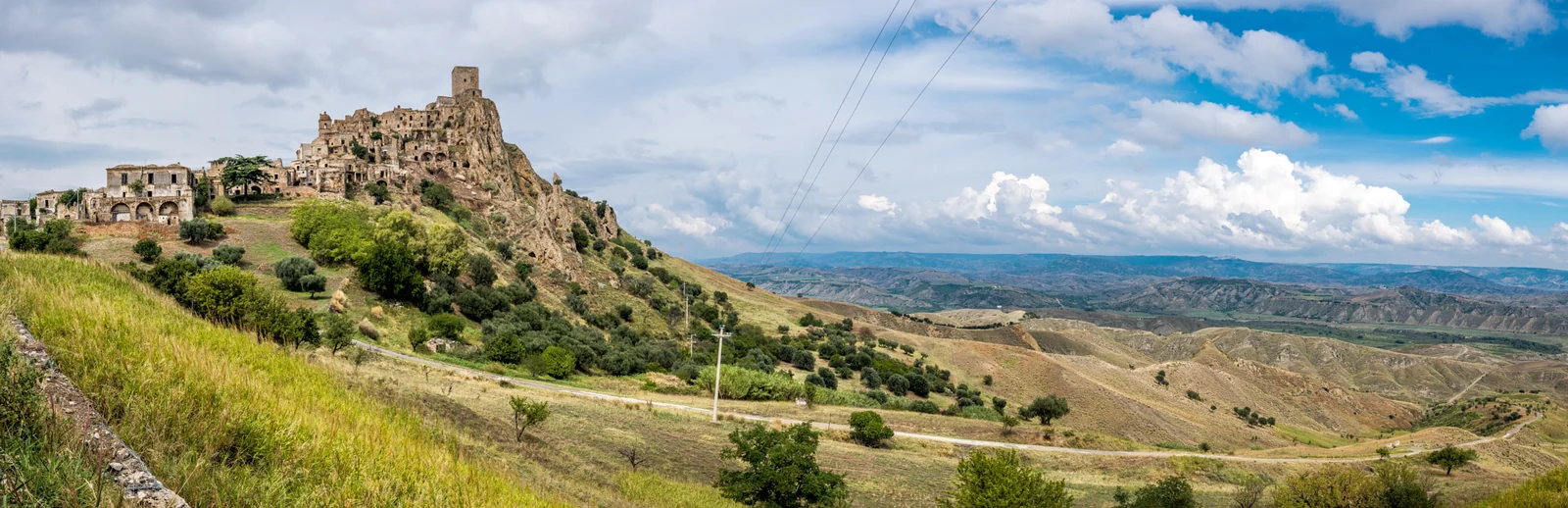
Photo: Giuseppe Milo · Wikimedia Commons · CC BY 3.0 · Resized and converted to WebP.
The landslide and the old town
The 1963 landslide began the abandonment of the old centre and the relocation of residents towards Craco Peschiera. Stone houses, palaces and a square tower remain in the historic settlement. An accompanied visit helps you recognise these spaces as places where people lived, rather than simply picturesque ruins.
Sources: Basilicata Turistica — Craco
Among the clay hills
The town looks out over calanchi, clay hills cut by erosion whose shapes change with the light. The contrast between solid buildings and deeply scored ground makes Craco particularly rewarding for travellers interested in landscapes. Time spent simply looking can be a meaningful part of the visit.
Sources: Italia.it — Craco
A cloister beside the abandoned village
The regional inventory describes San Pietro monastery just outside Craco Vecchia, among olive groves, prickly pears and clay badlands. It notes the seventeenth-century cloister’s columns and carved figures supporting the arches. This widens the story beyond village ruins: buildings, cultivation and decorative details reveal a landscape that people inhabited and worked.
Sources: Regione — Monastero di San Pietro
Looking at ruins without erasing people
Craco has immediate visual force, but an interesting visit goes beyond the sensation of a film set. Start with the whole to distinguish streets, houses and monuments, then look for everyday functions: an opening, stairs, a building’s relationship with a slope. Emptiness changes meaning when understood through displacement rather than as scenery created for travellers. Accompaniment explaining that history gives substance to the walk. In spring or autumn, pair it with a reading of the badland landscape and time at viewpoints. Access needs a managed route: this is not a place for improvised detours among unstable buildings.
Craco and Aliano: two ways of remembering
Aliano makes a coherent continuation: a related landscape is remembered through a voice and a book. Comparing the places shows that inland villages do not all tell the same story. Miglionico introduces a living town and a different artistic heritage. In an Apulica route, meals and overnight stays can be based in an inhabited centre, giving Craco the visiting moment and other stops time for local life. This avoids suggesting accommodation in the ghost village and keeps landscape, memory and community connected. Film references can accompany the historical reading without replacing it.
YOUR JOURNEY
How to shape a journey here
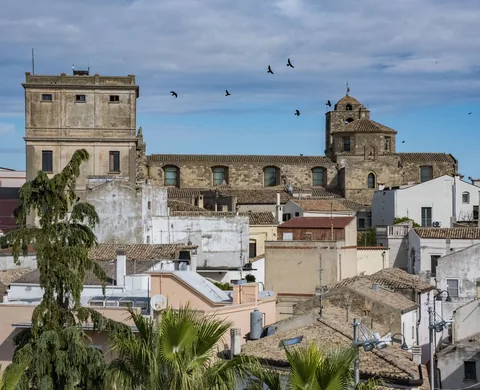
Journey idea: pair Craco with Matera to compare different destinies of living in stone. Miglionico adds another perspective: an inhabited town with an artistic heritage worth exploring.
Talk to us about it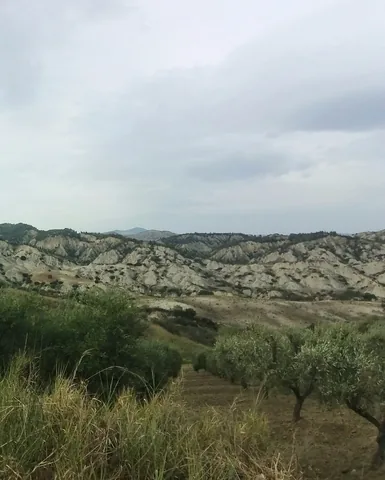


.jpeg)