Puglia / PLACES, FOOD, CULTURE
Martignano, courtyards, water and village culture
Martignano has a scale that rewards close attention. The thread runs from shared to domestic spaces, from water collected for the town to olive-oil production. Its interest lies in the relationship between different places rather than in a single isolated monument.
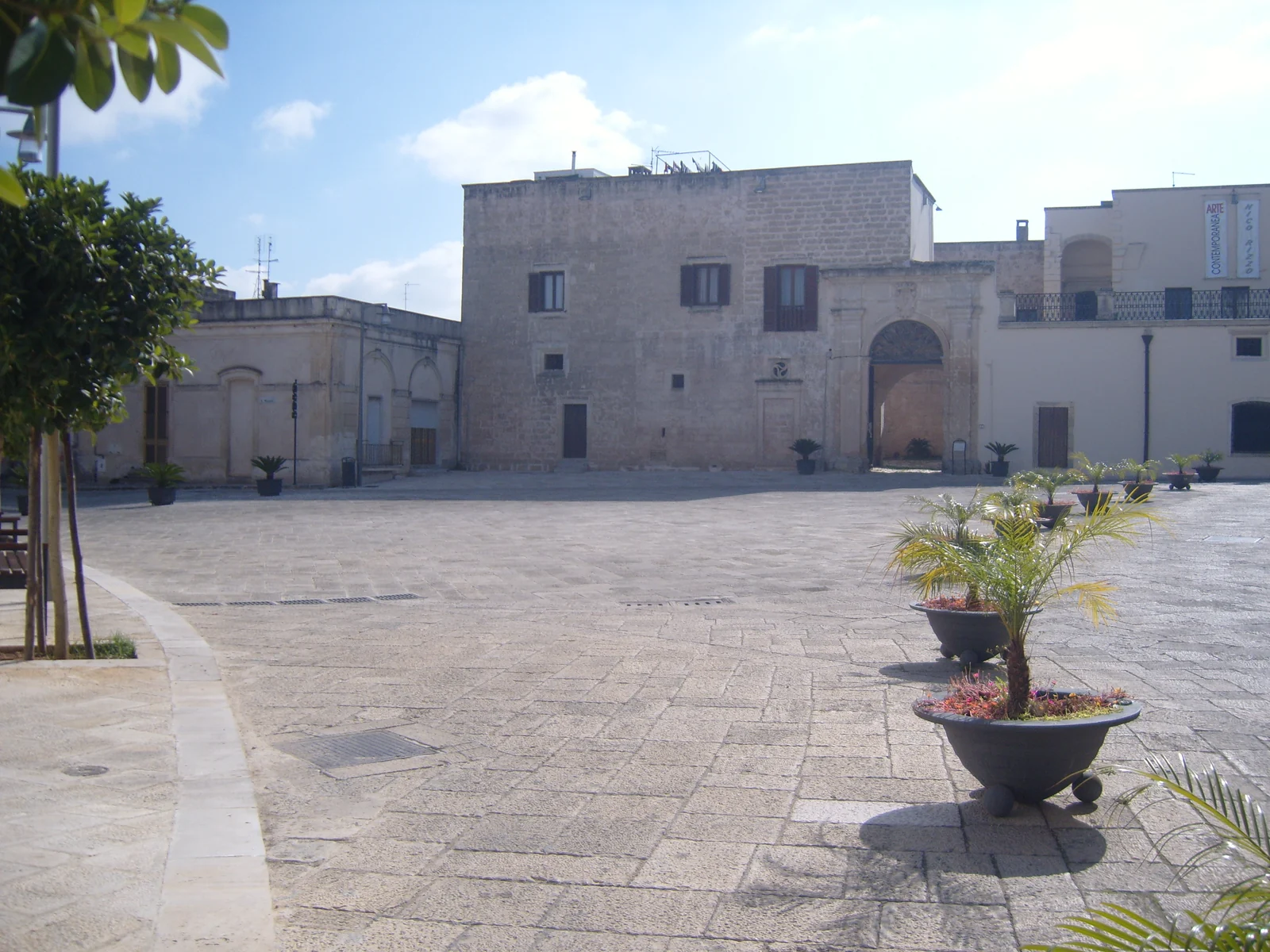
Photo: Freddyballo · Wikimedia Commons · CC BY-SA 3.0 · Resized and converted to WebP.
The San Pantaleo wells
The pozzelle are associated with collecting rainwater and supplying the town. The San Pantaleo wells make a basic need of everyday life visible: keeping water available. These spaces offer a way to understand the town through a resource and how a community organises it.
Sources: Unione dei Comuni della Grecìa Salentina — Martignano
Via Chiesa and Palazzo Palmieri
The municipality describes courtyard houses and decorated doorways along Via Chiesa towards Piazza Palmieri. Palazzo Palmieri combines a garden with a partly underground olive mill. Moving between street, courtyard and production space connects architecture and work: small details that give a visit a clear focus.
Sources: Comune di Martignano — Via Chiesa e Piazza Palmieri
A palace that still serves its community
The regional record presents Parco Palmieri as a cultural and tourism centre in the palace on the square of the same name. It connects rooms, garden, old oil mill and the frescoed chapel of San Giovanni; the building’s history also involves the Granafei, associated with nearby Sternatia. Its interest lies in continued use: heritage linking knowledge, welcome and village life rather than merely an object to look at.
Sources: Regione Puglia — Parco Palmieri
Follow two resources: water and oil
Start at the pozzelle and continue towards the oil mill for a clear narrative. One concerns storing a gathered resource, the other transforming a crop. Before technical detail, notice how spaces sit within the village and street. Via Chiesa then introduces courtyards and doorways, moving from collective necessity to domestic life. A garden pause returns to the subject without adding another monument. A guide can connect work and social relationships; families might begin with two questions: where does collected water go, and what happens before pressing?
Few kilometres, substantial themes
Pair Martignano with Sternatia to compare oil-making spaces, or Calimera to shift towards Griko culture. Two visits and a meal leave room for conversation; adding every nearby village does not. In a spring or autumn programme, favour walking and outdoor time; on a summer day, place more demanding parts before a longer pause. Let ingredients and preparations at lunch connect with the working spaces already visited. Apulica can coordinate a cultural contact and guided visit, giving Martignano its own inland chapter rather than an interval between beaches.
YOUR JOURNEY
How to shape a journey here
Water, courtyards and olive-oil history. Interior access and guiding are arranged for the visit.
Talk to us about it