APULICA / Stories, people and traditions
Actors, towns and public memory
A familiar name can open a conversation about a territory without replacing knowledge of the place. The theme works when it leads to a building, a film or a concrete public story. An actor in a film shot in Puglia was not necessarily born in its filming town.
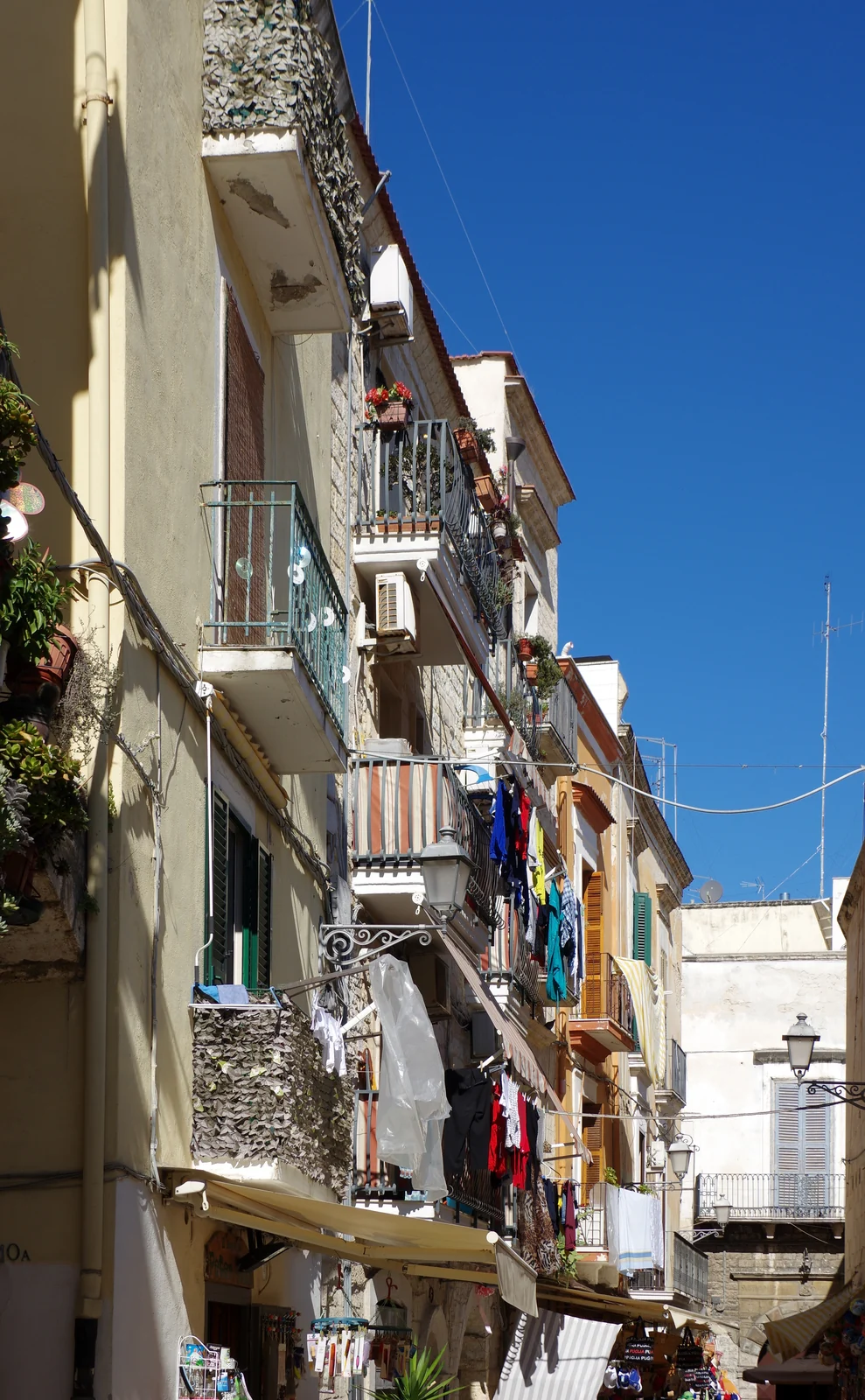
Photo: Berthold Werner · Wikimedia Commons · CC BY-SA 3.0 · Resized and converted to WebP.
Lino Banfi and Canosa
Canosa’s municipality documents naming the Teatro Raffaele Lembo foyer after Lino Banfi and recalls his early artistic steps in the theatre. This is a public trace of the actor’s relationship with the town, rather than availability to meet him or evidence that a new museum is open.
Checco Zalone and Capurso
Capurso’s municipality presents its connection with Checco Zalone, Luca Medici’s stage name. This offers a reference to local comic heritage. It can introduce the town before attention turns to what can be observed during a visit and stories with other protagonists.
Rubini, Scamarcio and Placido on screen
Apulia Film Commission records Rubini and Scamarcio in L’uomo nero and Michele Placido in Io che amo solo te. These credits do not establish a birthplace or biography in the filming locations.
Sources: Apulia Film Commission — L’uomo nero · Apulia Film Commission — Io che amo solo te
A biography opens a question about a town
Begin with a familiar face and a question about person and place. A theatre preserves a different memory from a film: one belongs to public urban space, the other constructs a story through images and performers. A document, plaque or building can introduce local history before attention widens to its surroundings. The famous name provides an entrance rather than occupying the entire itinerary.
Comedy and storytelling: choose one thread
Choose one comic moment or scene and ask which gesture, word or situation makes it recognisable. In the town, turn curiosity towards theatre, language and meeting spaces. Compare responses from those who know the artist and those encountering them for the first time. A meal provides time for this. The useful question is which story sharpens observation of one place, rather than who ranks highest.
A route through public memory and cinema
Treat this as a choice between chapters rather than a catalogue of every Puglian actor. Canosa can organise a day around theatre and Banfi’s memory; Bari or Polignano can introduce film. Leave each its own urban history. A published theatre programme may provide a date; reading public spaces follows the traveller’s rhythm. Return with one understood connection rather than a longer list of celebrities.
A thread for your journey
A theme connected with documented places and film, without private itineraries or promised meetings.
Talk to us