
Puglia / PLACES, FOOD, CULTURE
Spongano, inland Salento and the history of oil
Spongano takes the journey into southern Salento through town life and work. It offers a perspective distinct from Grecìa Salentina: the connection is a route through local stories, not an overlap of identities. A focused stop helps make these differences clear.
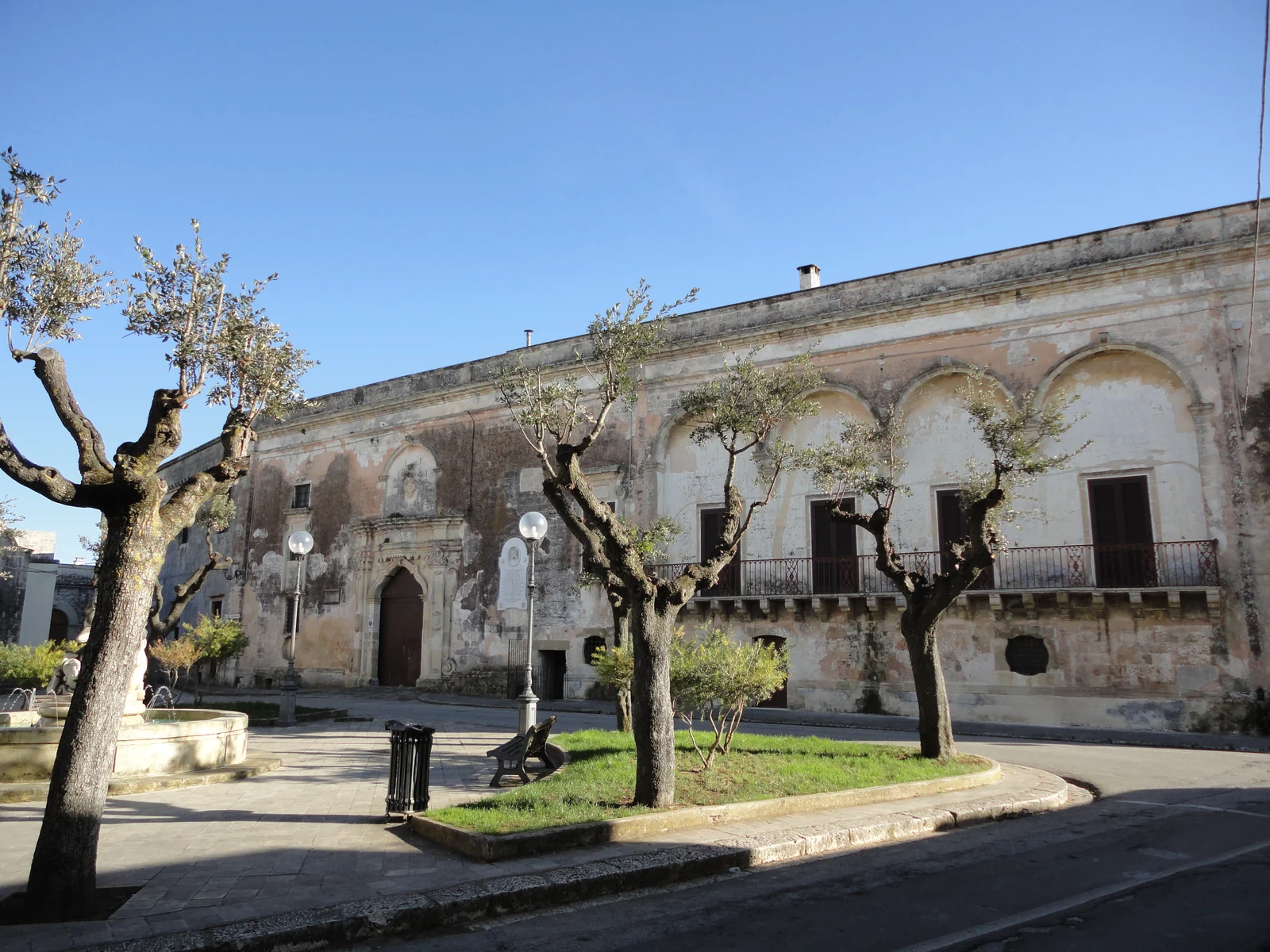
Photo: Lupiae · Wikimedia Commons · CC BY-SA 3.0 · Resized and converted to WebP.
Palazzo Bacile and San Giorgio
The municipality presents Palazzo Bacile di Castiglione, the parish church of San Giorgio and the Calvary monument in local limestone. They offer different points along a town walk: civic architecture, a religious building and a sign of devotion in public space. Together they reveal several aspects of local life rather than placing the whole visit around one monument.
Filippo Bacile and olive-oil production
The municipal biography of Filippo Bacile describes changes to the family mill: brighter and airier working rooms, clean equipment and attention to processing quality. This history opens a theme beyond the product itself: how working spaces and practices change. It provides a historical perspective alongside the town’s heritage.
Sources: Comune di Spongano — Personaggi illustri e produzione dell’olio
A sober façade, a lively doorway
The municipal record describes Palazzo Bacile as a sixteenth-century building altered by Baroque ornament. Its eighteenth-century doorway facing the square is slightly convex, with a broken arch and a fringe-like motif. Look for this specific detail during the walk: it contrasts the building’s substantial mass with movement introduced through decoration.
Sources: Comune Spongano — Palazzo Bacile
Quality also begins in working spaces
The family mill’s history introduces an unusual question: what improves quality before tasting? Light, air, cleanliness and equipment organisation belong to processing. Observe the palace façade and connect it with this account, distinguishing what can actually be visited from historical narrative. Church and Calvario add devotion without requiring another complete itinerary. For a first stop, choose a few places and a conversation about oil work. A small centre need not mean a short visit: details linked to a person, gesture or change give time a purpose beyond collecting monuments.
An inland base, with the coast as contrast
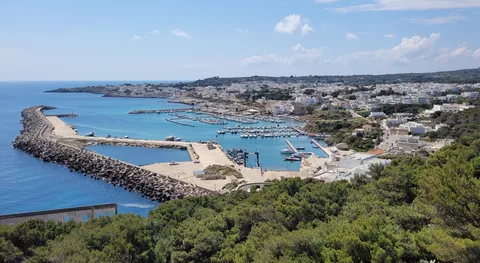
Spongano can enter a southern Salento journey without changing accommodation every evening. Oil links it editorially with Sternatia while preserving different local histories. Choose one centre and a meal for the day, allowing a coastal pause to change the setting. At the table, look for understandable preparations and ingredients whose origin and season a restaurateur can explain. Villages remain interesting without an event in progress. Apulica can help choose a base, guide and transfers around the actual journey length, so the town is more than a passage towards the sea and lunch is not squeezed in after time has run out.
YOUR JOURNEY
How to shape a journey here
Heritage and production history in southern Salento. Interior visits and encounters are arranged for the journey.
Talk to us about it


.jpeg)