Basilicata / PLACES, FOOD, CULTURE
Grumentum: reading a Roman town
Objects and spaces explain each other: museum and archaeological area invite concrete questions about life in a town.
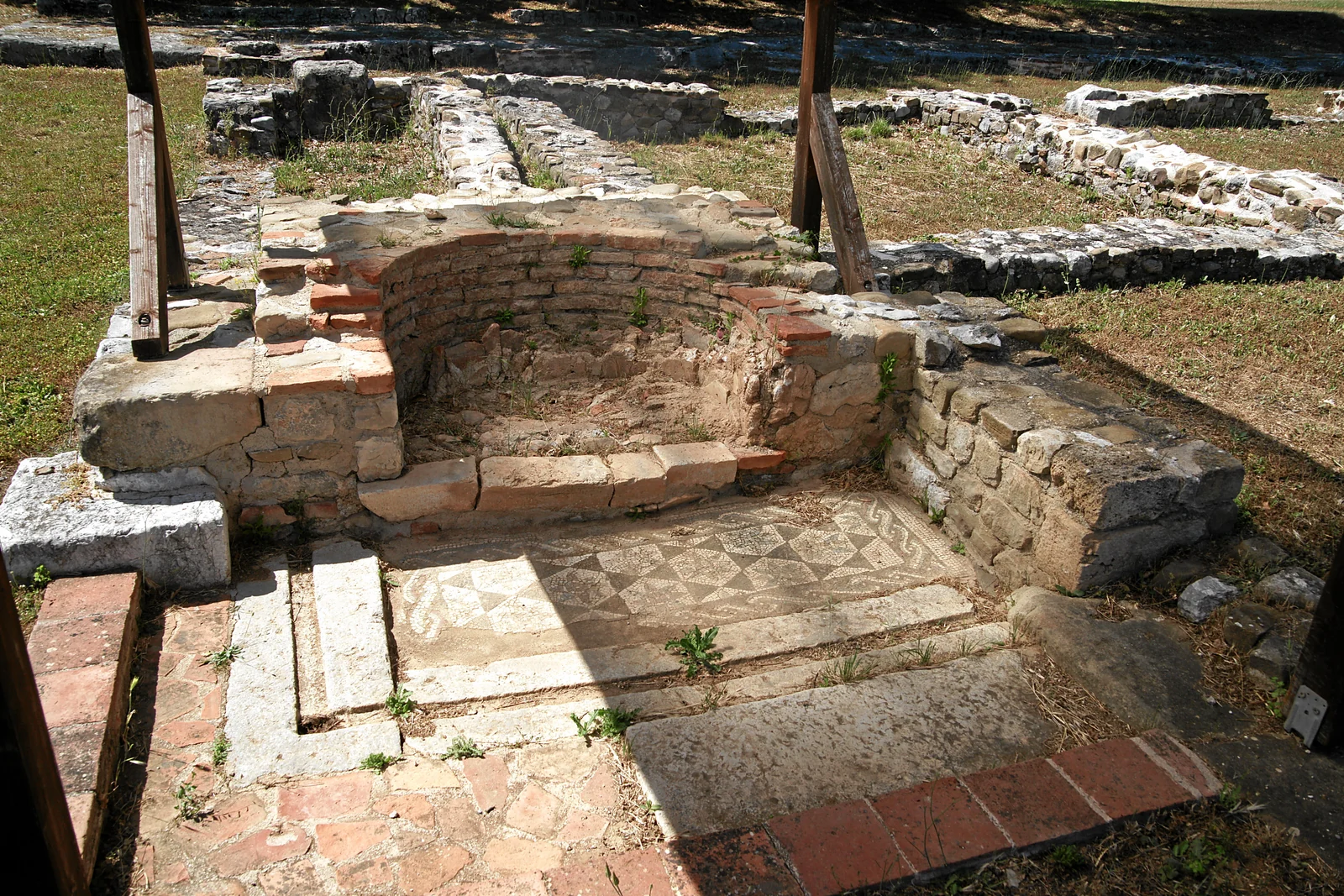
Photo: Mboesch · Wikimedia Commons · CC BY-SA 4.0 · Resized and converted to WebP.
What to notice
The archaeological area includes a theatre, forum, baths and amphitheatre. Houses preserve geometric and floral mosaics; the arrangement of buildings helps explain public functions and domestic life in a Roman town in Val d’Agri.
A detail that changes the visit
The museum collection extends the view beyond the Roman town. Fossils, Bronze Age material and grave goods from Lucanian communities reveal a valley inhabited across different periods. Armour, dining objects and cosmetic vessels distinguish purposes as well as styles. Offerings associated with Mefitis introduce worship. Among Roman finds, the marble head of Livia and objects from the forum and baths connect the museum with spaces in the archaeological area. Comparing object and building makes the reconstruction of urban life more tangible.
Sources: Ministero della Cultura — Museo dell’Alta Val d’Agri
The museum looks beyond Rome
The service charter distinguishes material from the upper Agri valley from finds belonging to the Roman city. Collections include Bronze Age pottery, grave assemblages and objects from a Lucanian sanctuary; urban excavations add statues, inscriptions and mosaics. Two mosaics come from a villa near Viggiano. This arrangement places Grumentum within a landscape inhabited at different periods rather than presenting it as an isolated Roman monument.
Walk through a city by its functions
In the park, go beyond an inventory of buildings and choose three functions: meeting, dwelling and using water. The forum introduces public life; the domus connects the home with representation; baths open questions of engineering and everyday routines. Visit the museum beforehand to contextualise objects, or afterwards to find material no longer in its original outdoor position. For families, imagining one person’s route through a Roman day can be more useful than memorising names. Distinguish reconstruction from surviving evidence: the account works when it explains what is visible and what must be imagined.
The Agri valley over two days
Pair Grumento with Viggiano to move from the ancient city to the valley’s musical and devotional memory. Give the archaeological day its own time, with a pause after the outdoor route, rather than allowing it to consume the second visit. At lunch, seek a few dishes with clear ingredients and origins without assigning the village an undocumented speciality. Accommodation should support the next stage: a valley base may be more useful than continual changes of property. Apulica can coordinate guiding, transfers and pauses so the landscape is more than a backdrop between monuments. The next day changes the subject while retaining a recognisable geographical direction.
YOUR JOURNEY
How to shape a journey here
Try reconstructing a daily route from a house to the square and baths. This question makes the remains easier to read than a simple sequence of ruins.
Talk to us about it

_(2).jpg)