
APULICA / Stories, people and traditions
Tratturi: reading Puglia through pastoral routes
A pastoral line tells more than a route: pastures, stopping places and institutions reveal the territory through the history of work.
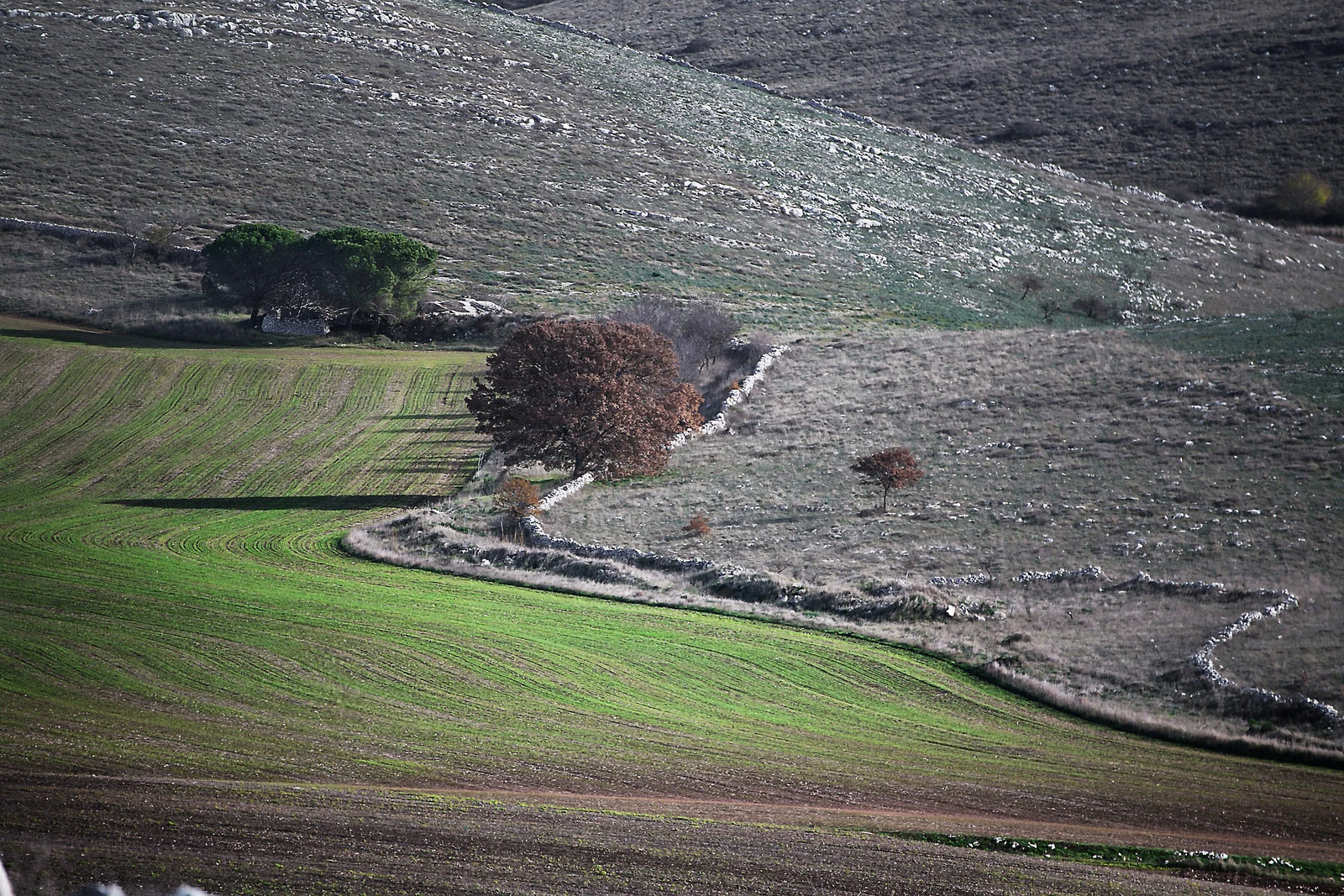
Photo: Acquario51 · Wikimedia Commons · CC BY-SA 4.0 · Resized and converted to WebP.
Place and history
The Puglia section of the Pescasseroli-Candela route crosses Monteleone di Puglia, Anzano di Puglia, Sant’Agata di Puglia, Rocchetta Sant’Antonio and Candela. Other historic connections link Foggia with Gargano: a pastoral network illuminating relationships between plain and mountains.
A way to recognise it
The pastoral network branched through the fiscal Tavoliere, under the Royal Customs Office for sheep movement in Puglia. Livestock were counted at the general resting grounds to determine the payment due. Animal movement therefore had an economic and administrative organisation: pastures, stops and routes formed a system. This history changes the reading of a line on a map. A tratturo is more than an old path; it records relationships between work, territory and institutions, inviting questions even without following the whole network.
Sources: Regione Puglia — rete tratturale e Tavoliere fiscale
A line telling more than a walk
Start with a map and choose one node: a settlement, junction or relationship between plain and hills. On arrival, ask what that position could do. The drove road becomes a way of reading space without following an entire long route. Compare passage, edges and land uses, distinguishing historical evidence from present observation. The revealing detail is often a relationship rather than a destination monument.
Shepherds, towns and the table
Link landscape observation, a town stop and a considered cheese tasting in northern Puglia. Work connects movement, stopping and transforming a raw material. Compare fresh and matured products without assigning every recipe an automatic pastoral ancestry. Ask which traces of movement remain in settlements or objects and which have changed through later uses. This gives a large historical system a human scale.
Choose one stretch and allow time for stops
Build a territorial chapter rather than measure the trip in kilometres. One network point and one town may connect map and landscape. Give walking, reading and lunch separate time. Choose timing around the outdoor experience you want; transhumance history does not imply flocks passing on a particular date. Comparing dry-stone construction can add another chapter about work shaping land.
A thread for your journey
A tratturo can be read through its edges, junctions and the relationship between settlements and fields. We do not present the whole route as one continuous trail: its history can guide the choice of individual places.
Talk to us
.jpg)
