Basilicata / PLACES, FOOD, CULTURE
Pietrapertosa: the Arabata quarter
The rock silhouette is only part of the visit: compare settlement spaces with interiors for a fuller reading.
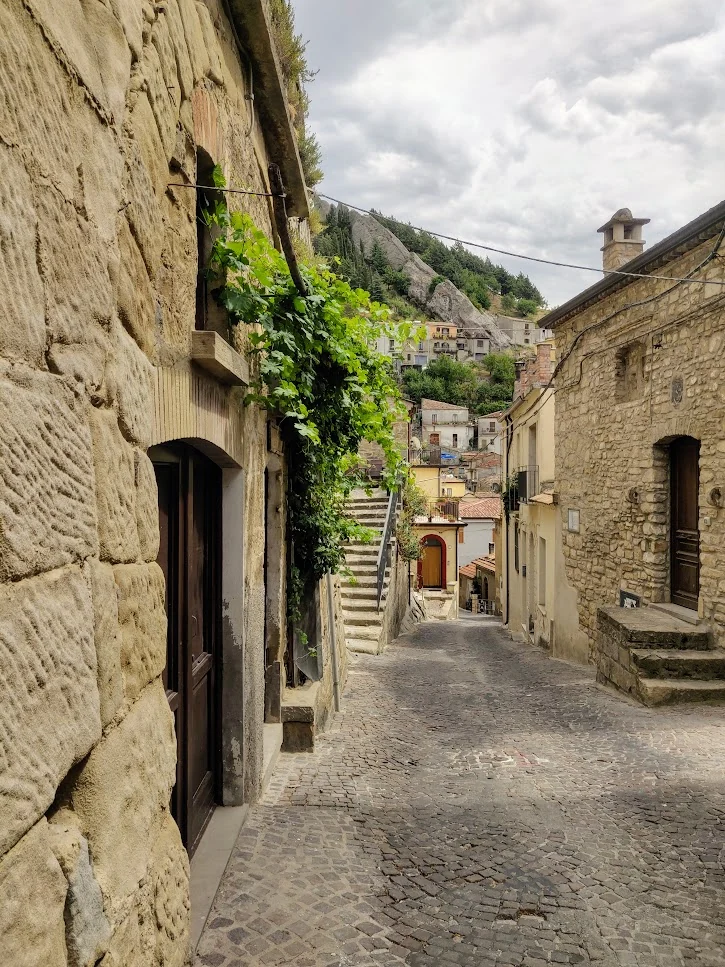
Photo: Camelia.boban · Wikimedia Commons · CC BY-SA 4.0 · Resized and converted to WebP.
What to notice
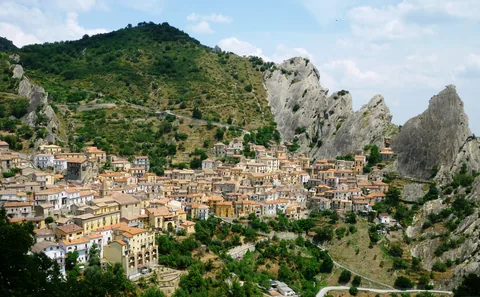
The Arabata quarter unfolds among houses, steps and rock below the castle. Its setting in Gallipoli Cognato Park connects the town with the Little Lucanian Dolomites and neighbouring Castelmezzano.
Sources: Pietrapertosa — fonte istituzionale
A detail that changes the visit
The church and convent of San Francesco reveal another language of the village, different from the Arabata’s rock. Paintings, frescoes and wooden furnishings recall artists including Giovanni Luce da Eboli and Giovanni Todisco. Religious heritage makes it possible to read Pietrapertosa through interiors as well as the castle silhouette. Consider how a depicted scene relates to its setting: a painted wall and a wooden furnishing serve different purposes. This attention connects streets, places of worship and landscape within the same visit.
Sources: APT Basilicata — Basilicata sacra
Reading the castle as a building
Italia.it presents a castle layered through Norman and Swabian periods, with an earlier history connected to an Arab presence. Its excavation account mentions masonry, a tower used as a prison and cisterns collecting rainwater. These details make the fortress more tangible than a panoramic silhouette: defence also involved construction, confinement and sustaining life in a high, demanding setting.
Sources: Italia.it — castello normanno svevo di Pietrapertosa
From Arabata to the fortress
Begin in the Arabata quarter and let the castle provide the visual conclusion. Observe how streets climb, where small spaces open and how houses approach the rock. Cisterns turn attention to water; the tower to the organisation of power. Such details give substance to the view. If a route does not suit everyone, choose a compatible shared walk first and distinguish any additional stretch. Reaching a high point is not obligatory for understanding the village: from below, buildings, walls and access routes still reveal why the settlement took this shape.
An inhabited mountain, not an empty backdrop
Connect Pietrapertosa with Castelmezzano to compare forms and materials, or with Accettura to explore village and woodland. Do not add both directions to one afternoon. A meal should also reveal life beyond tourism: asking which dishes are cooked at home and which ingredients come from nearby makes lunch part of the visit. Choose the season according to the programme: walking, village time and landscape need a different rhythm from one sporting activity. Apulica can integrate guiding and transport around that balance, giving the village a complete visit rather than merely the interval before departure or after arrival.
YOUR JOURNEY
How to shape a journey here
Walk slowly through the steps and notice how the viewpoint changes. Understanding two quarters carefully is better than collecting every viewpoint.
Talk to us about it