Basilicata / PLACES, FOOD, CULTURE
Oliveto Lucano: wood, stone and Monte Croccia
A crafted door can tell as much as an ancient structure: compare materials, purposes and scales before moving on.
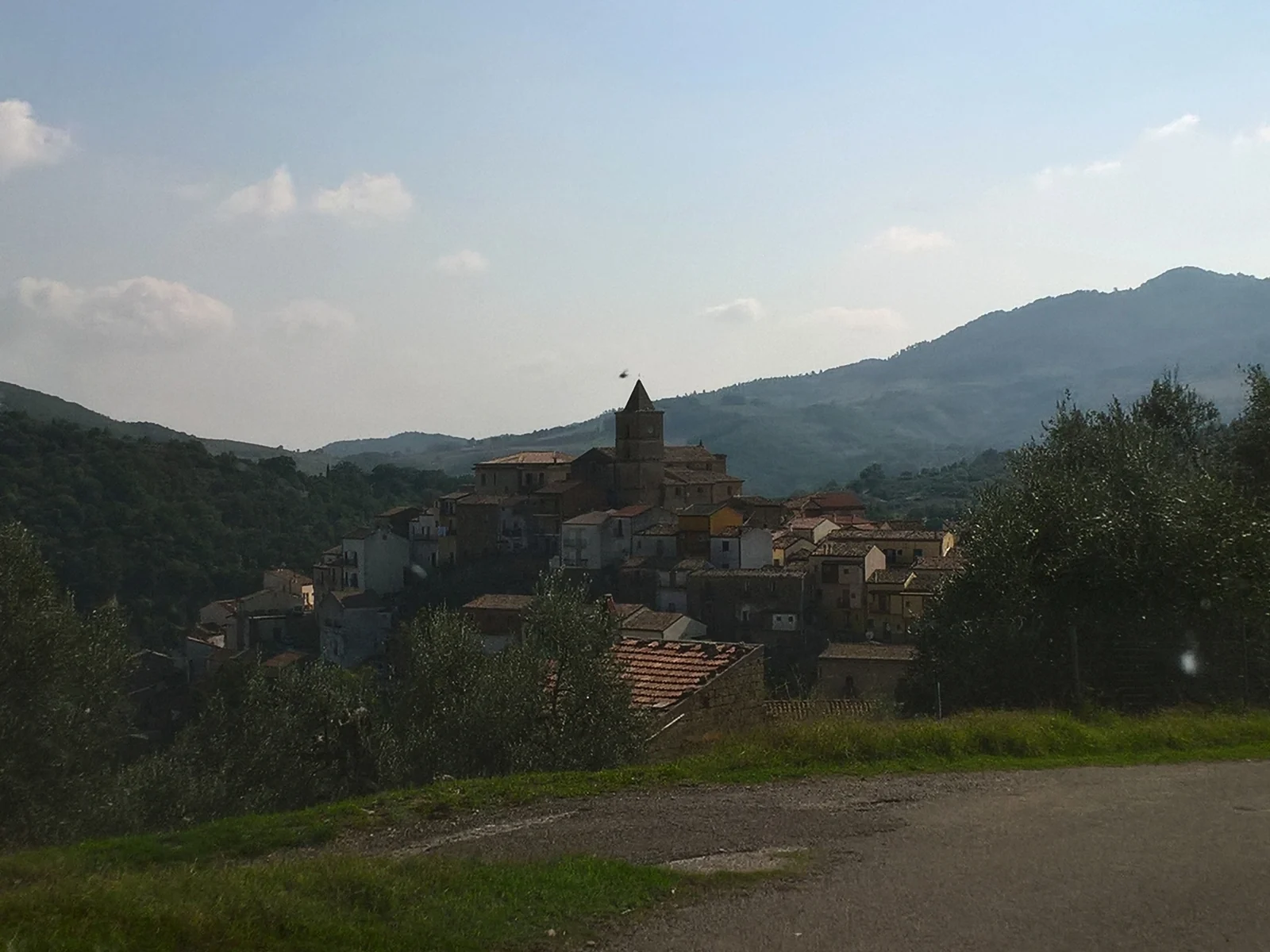
Photo: Asia · Wikimedia Commons · CC BY-SA 4.0 · Resized and converted to WebP.
What to notice
Carved wooden doors and local stone give the centre its character. Nearby Monte Croccia preserves traces of a fortified Lucanian settlement. The Maggio Olivetese links the community with the tree traditions of Gallipoli Cognato.
Sources: Oliveto Lucano — fonte istituzionale
A detail that changes the visit
The Gates of Bacchus in Via delle Grotte are cellar doors crafted in geometric patterns by local woodworkers around the late nineteenth and early twentieth centuries. Madonna delle Grazie church preserves a painted wooden altar.
Sources: APT Basilicata — Oliveto Lucano
An ancient settlement among trees
Monte Croccia reserve preserves the fortified settlement of Croccia-Cognato. Italia.it describes a wall of large dressed blocks built between the sixth and fourth centuries BC on a height above a thousand metres. The area also contains earlier evidence and the group of stones known as Petre de la Mola. Begin with a concrete question: how was a place selected and defended before the Roman city?
From doorway to wall: reading workmanship
In the village, look for workmanship described by the sources: doorways, materials and objects easily missed when seeking only a view. The subject is the work required to build and maintain a settlement. At Monte Croccia the question changes scale, from domestic detail to fortification. Following this comparison does not require seeing every point in one day. A village walk and a selected outdoor visit, suited to terrain and group, are preferable. A guide can distinguish visible evidence from archaeological reconstruction. Woodland becomes the context of the story rather than merely somewhere to walk.
Trees, community and the route towards Accettura
Connect Oliveto with Accettura to compare ways of placing trees at the centre of collective life. The aim is not to say all rituals are alike, but to notice differences in gestures, places and people. Outside festivities, conversation and landscape observation can retain the theme; during an actual edition, the itinerary should adapt to the community’s calendar. A meal then shifts the account from forest to pantry. Choose the Lucanian Dolomites for another day if the relationship between rock and settlement is the direction you want. Apulica can organise a clear thread while preserving what makes each village different.
YOUR JOURNEY
How to shape a journey here
Look for the conversation between the town’s materials and its landscape: a carved doorway and an ancient structure show different ways of inhabiting the same area.
Talk to us about it